 Sidney would have been 91 years old today.
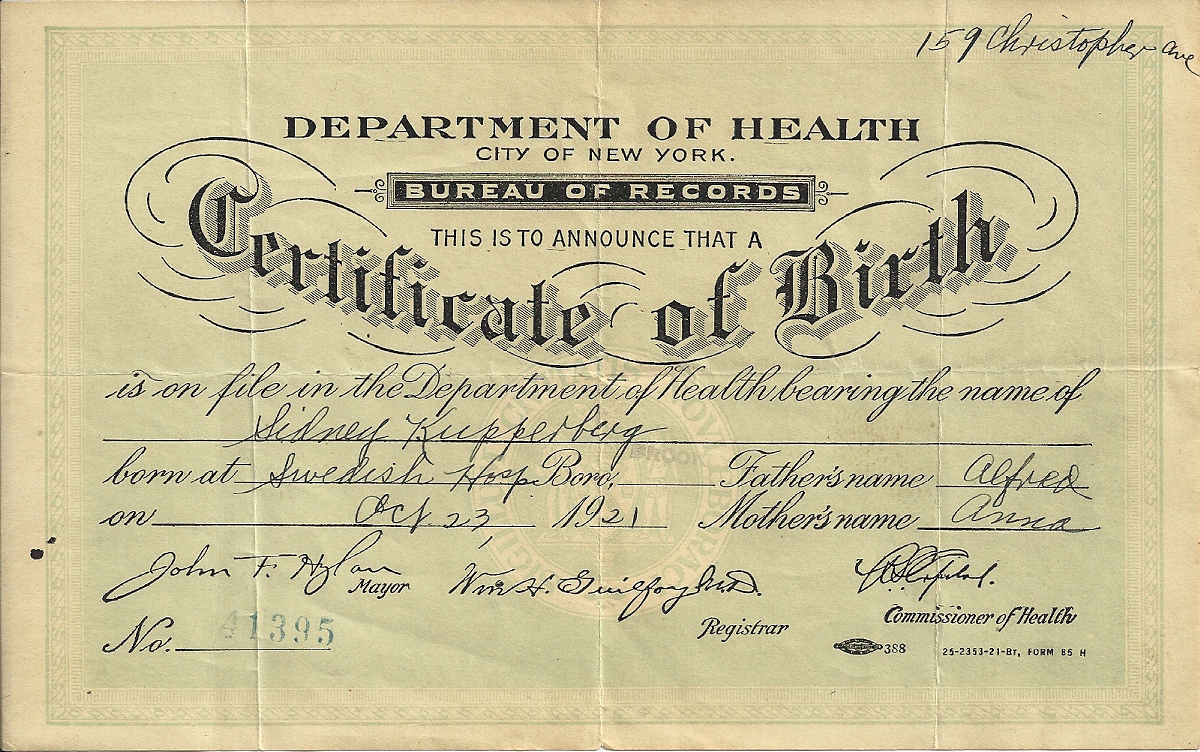
Thoughts of my old man never fail to make me smile. He was a loving father, a good husband, a hard worker, one of the smartest men I knew, and the life of the party. He was born October 23, 1921 at Brooklyn’s Swedish Hospital on Sterling Place and Rogers Avenue to Alfred and Anna Kupperberg. He grew up in the Brownsville section of Brooklyn, surrounded by a close and loving family (which came to include his sister Phyllis); my grandfather Alfred was a licensed electrician who made a good living as a projectionist in local movie theaters and for Paramount Studio’s Brooklyn studios; when he died suddenly and unexpectedly in 1930 at the age of 26, he owned his own car (a 1927 two door Nash sedan, purchased for $385 in 1929), an apartment full of furniture (bought, on time, for $225 from N. Tennenbaum House Furniture in 1919), and had over $2,200 in savings in the Brooklyn Trust Bank. He also left behind a life insurance policy from the Guardian Life Insurance Company of America that paid my grandmother $4,975.60.
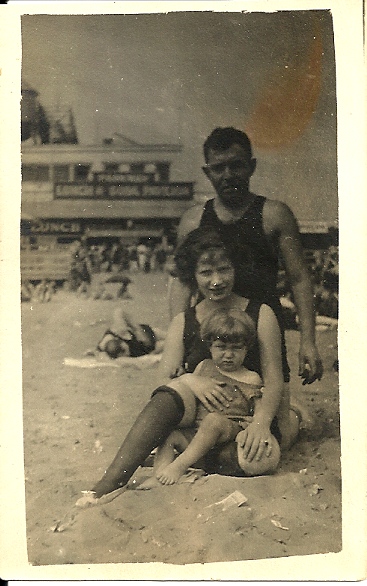
Alfred, Anna, and Sidney at the beach
Alfred dropped dead in that 1927 Nash in front of the Grenada Theater on Church and Nostrand Avenues, a movie theater I would work at as an usher in the early 1970s. The owner, Max Schering, who had himself been an usher at the theater, remembered my grandfather and grandmother, who had been a box office cashier and had trained Irene, the white haired old lady who still sold tickets in our box office, in her job.
My father was nine years old and bedridden with rheumatic fever when his father died. Rather than tell the sickly boy what had happened, the family told him instead that his loving and beloved father had gone away. I don’t think Sidney ever got over the sense of abandonment this lie left him with.

Sidney (front left) and some pals on St. Johns Place in Brooklyn, sometime in the 1930s
Dad was an average to mediocre student, and he dropped out of high school (Brooklyn’s Samuel J. Tilden High, which I later attended with similar average to mediocre grades, graduating in 1973) to help support his family during the depths of the Great Depression. My grandmother, an artist frustrated in following her muse by a stern father who wouldn’t allow her to attend art school, was something of a spendthrift and seemed to have lost whatever money was left to her by opening a small business, the NetAnn Gift Shoppe at 881 Eastern Parkway with her sister, Nettie. Sidney held a wide variety of jobs, in stock rooms and shipping docks, belonged to several different unions, and, come World War II, was declared 4-F by the draft board, unfit for service due to a heart murmur. He developed a keen interest in photography and became an accomplished amateur photographer, eventually processing and printing his own pictures.
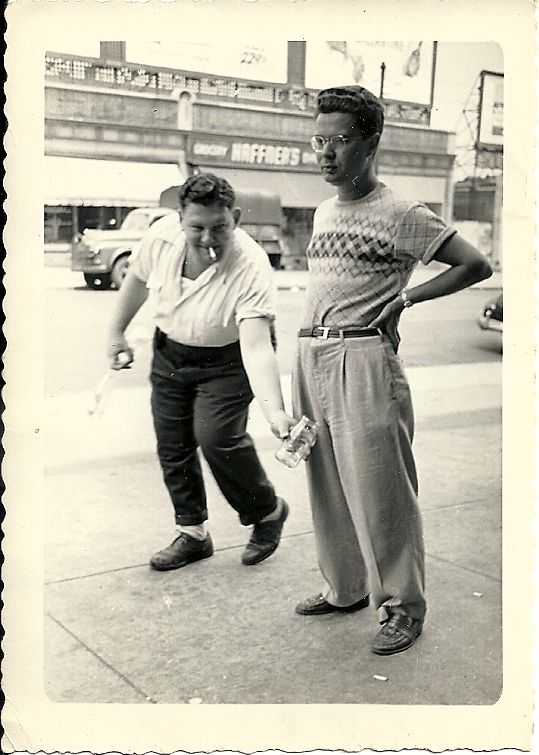
On St. Johns Place, this one is labeled on the back, “Clown & Sid, 1949”
Sidney was, by all accounts, a bit of a ladies man, and was still unmarried at the age of 29, a somewhat rare occurrence for the day and age, but that all changed when he met Lottie in 1951 at a meeting of a Brooklyn photography club. Not that she had any particular interest in photography herself; the 19-year old bookkeeper had gone there with a friend who wanted to meet guys, not take snapshots. Regardless, it seemed to have been love at first sight, Sidney smitten by the young lady’s looks, Lottie taken by the suave, handsome smooth talker with a Leica.
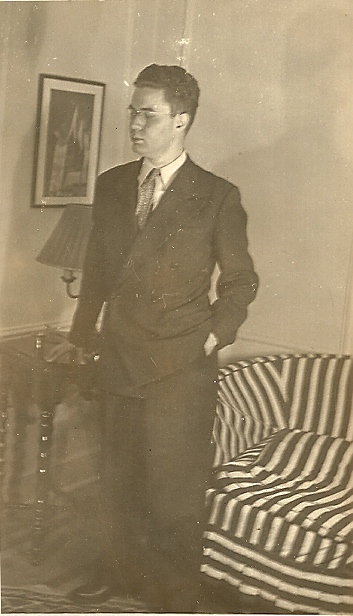
Dashing! Sometime in the 1940s
Lottie and Sidney were married on June 24, 1951 and moved into an apartment in 261 Buffalo Avenue; in the next building over lived Sidney’s mother Anna and his grandmother, Bubbe, Lottie’s mom Rose with her younger brother David, and Sidney’s sister with her husband Mitzi (Milton). Alan Edward came along on May 18, 1953; I joined the party on June 14, 1955, and Lewis Neil completed the quintet on February 9, 1958.
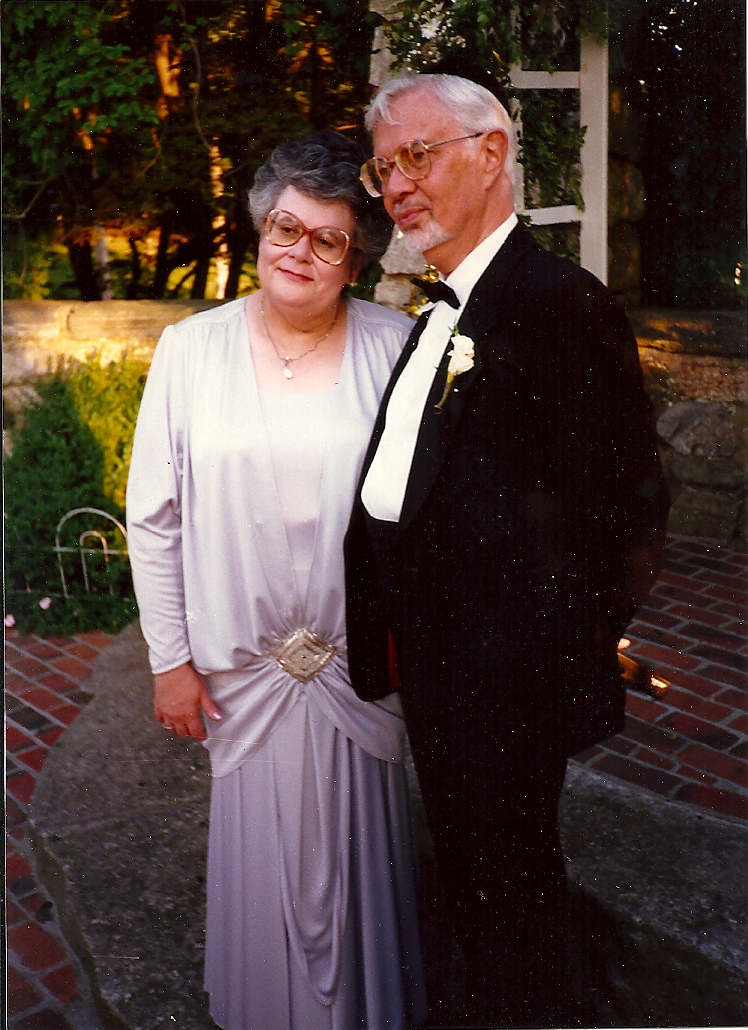
Lottie and Sidney, at my wedding, July 9, 1991
By the time I became aware of the world, Sidney worked for a company called Kleer-Vu Plastics, but prior to my birth, he and his mom ran Ann Kupperberg & Company (“Artists – Hand Decorators”) at 240 Grand Street in Manhattan. Sidney sold and Ann, along with a small crew of “girls” did the hand decorating, painting plastic chotchkes ranging from baby rattles to umbrella handles. The company name was still painted on the side of the building well into the 1960s.
In 1961, we were uprooted from Brooklyn and plopped down in Grafton, West Virginia, at the foothills of the Blue Ridge Mountains, population 5,000, maybe ten of which were Jewish (I was asked more than once by other kids to show them my horns). Dad had accepted a position with another plastic company, Baby World, and was sent there as part of the factory’s management team. It was about as alien a place as big city natives could imagine; the telephone system still had party lines and operators (“Sarah, get me Mr. Wyatt at the Feed & Grain store, willya?”), kids ran around barefoot in the summer, cows grazed in our backyard, and the schoolhouse was on top of a hill and had a bell in a tower that was rung to start and dismiss class, which consisted of four classrooms, each housing two grades taught by a single teacher.
After a year in West Virginia, we returned to Brooklyn. As I said, Sidney was a hard worker, but by this time he was forty-one year old without even a high school diploma, much less a college education in an increasing Gray Flannel Suit era. He always had a job, but as the years passed, he had more of them for shorter durations. He sold insurance, furniture, electronics, chemicals, and printing. He did whatever was necessary to support his family, even years in telemarketing, but I don’t ever recall hearing him complain. The rent was always paid, there was always ample food on the table, and if we didn’t live extravagantly, we weren’t aware of wanting for much.
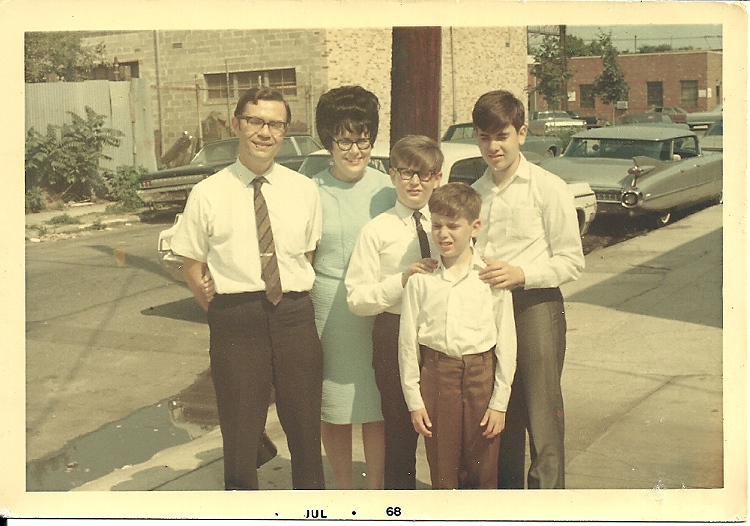
Sidney, Lottie, me, Alan, and Lewis, outside our apartment on East 89th Street in the East Flatbush section of Brooklyn, 1968
In 1979, I moved to Chicago. In an age of expensive long distance phone calls, before email, people still communicated by snail mail…not that I was much of a letter writer. Sidney would write frequently (“Dear Sir, We have in our custody an elderly gentleman all shrunken and with white hair. He is quite vague about most things, but on one point he is very lucid. It seems that due to the fact that a real or imagined son residing in Chicago failed to call an wish him Happy New Year, he shrank several inches in size, his hair turned white over night and his genitals lost their former heroic proportions… (signed) Very truly yours, The Sisters of Charity”), letters that were funny and just guilt-inducing enough to get me to write back.
After a long string of unsatisfying jobs, including many in sales that required him to spend long hours on his feet, Sidney eventually landed a position with Bank of New York, in the customer service department. He liked the work, was liked by his employers and co-workers, and, eventually retired from the bank.
He filled his retirement years with reading, cooking, listening to music (he liked classical, but also listened to a fair amount of pop stuff; one of his favorite songs was Simon and Garfunkle’s “The Boxer”), and assorted classes at the local Y, including some in creative writing.* My mother, ten years his junior, still went to work every day in Manhattan.
Dad had long suffered from arthritis, and the last year or so of his life did not find him in the best of health. He had a bout with prostate cancer a few years earlier, and his final months saw him in and out of the hospital, the last time with an unspecified infection that had knocked him for a loop and which the doctors were unable to successfully treat.
I was at work, in my office at DC Comics late in the morning of April 23, 1993 when I got the call from my mother: Sidney’s heart had given out.
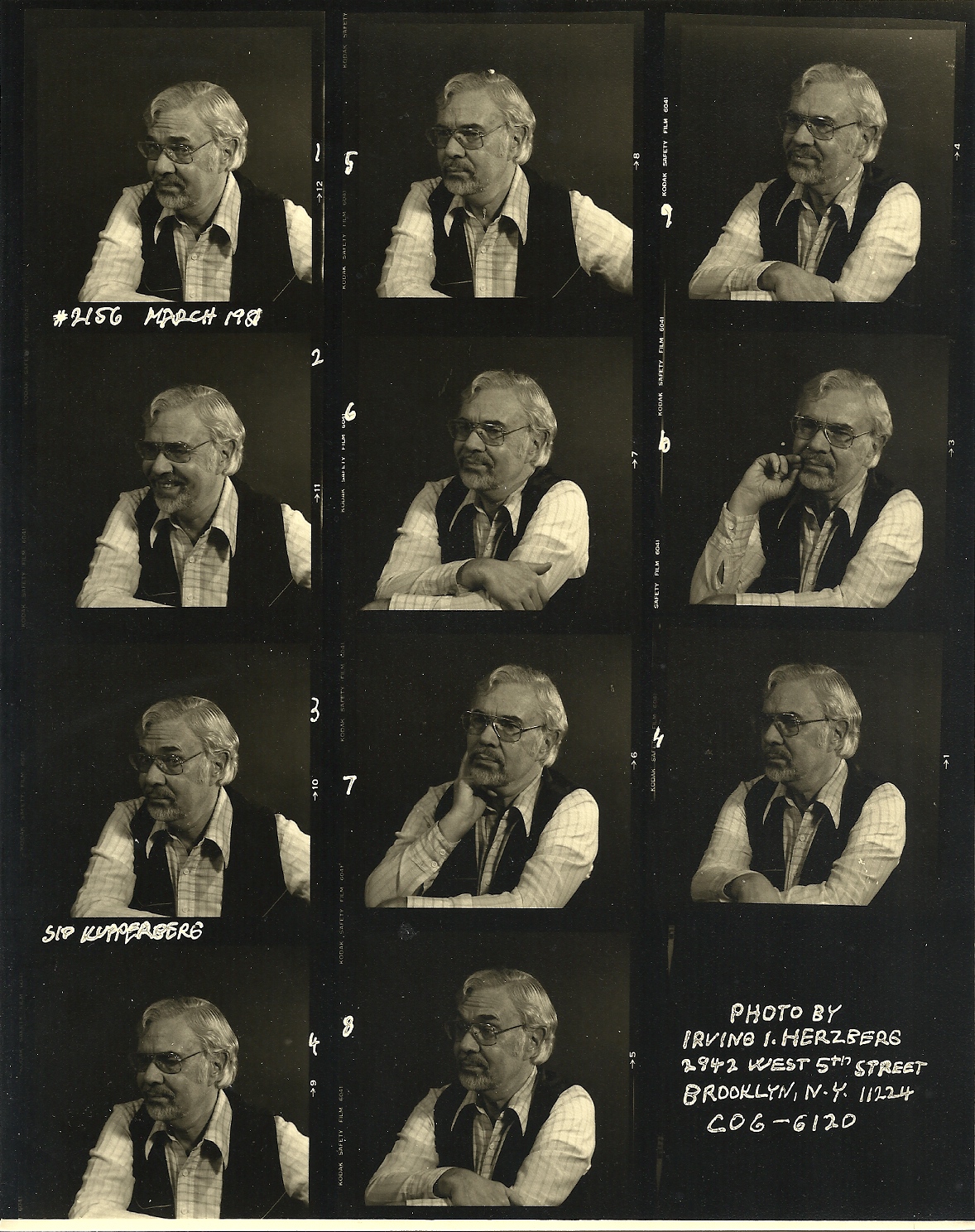
The Many Moods of Sidney, from the late-1980s
All fathers and sons have different and sometimes difficult relationships. Sidney and I went through our bad spots, the worst of which was instigated by my first wife, who was jealous of any and all relationships that weren’t with her. But after we were divorced, my father and I sat down and talked it out and, as far as I can recall, never had another problem.
A day hasn’t gone by in the last nineteen and a half years when I don’t think about Sidney. Of course, it’s hard for me to look in a mirror and not see his face staring back at me. It’s tough to think of the grandchildren he didn’t live to meet or the accomplishments of his sons he never got to celebrate.
Sidney would have been 91 years old today. What I wouldn’t give to have him here to celebrate that.
* “The Attic of My Mind,” his musings on life and memory, is an essay Sidney wrote for one of those classes:
My attic used to be full of memories. Each one like a twinkling tree light. But lately, the lights dim and, one by one, go out. I can’t tell you what thoughts are gone. I’ve forgotten. But my attic gets emptier all the time.
Some fragments lie about, parts of things that must have been important at one time. Pulsing like a dying Tinkerbell.
There are faces of long gone relatives and friends of Grandma. People who came over from Russia-Poland at the turn of the century. Grandma had an open door on the weekends.
People came in, sat down, and ate. Who was that man with pockmarked face? And that heavy woman? I think Bubbe told me she was a bricklayer in the old country. Thinking she had cramps, she gave birth to a baby on the toilet. Never knew she was pregnant. Had a pushcart on Belmont Avenue.
Dozens of tales, never to be told now. What were their names, how were they connected to me? I could ask Bubbe, but she’s not here any more.
One thing I recall, they all loved me. What a fuss they made over me. I was the first boy child.
Time, you thief, put that in your book. Say I’m wasted, say I’m old, say that life has passed me by. But say I was loved.
At that time, Bubbe lived in Brownsville, in what was called a coldwater, railroad flat. Big coal burning stove in the kitchen. She owned the building. Six apartments, two stores. And the gaslights still worked. The place had been wired, but if I was especially persuasive, my uncle would turn off the electricity and light the gaslight. What a dear recollection.
But my uncle, hardly more than a young man, is gone now. And all my aunts and uncles, “gone, gone.”
Those people sitting around the table, drinking tea. Talking about those terrible times. Pogroms. Plagues. Dead brothers and sisters, parents. Lost children. Gone. Ghosts in the attic.
The only other person I have from those days is my sister. And We watch each other very carefully, fearful of what one of us must see eventually.
Of course, a lot of nice things are in my attic. But you know, hurt and rejection imprints itself on the gray matter more permanently than joy.
But some wonderful things remain. The first time I noticed Lolita. Her name is Lottie, but she was my Lolita. After more than forty years, three sons, and a lot of struggle, she’s my Lolita.
I should have written things down over the years. I’d have a book. But I seem to remember more than I thought. It’s good to go back like that. Makes some people come alive again. But when I’m gone, they will truly cease ever to have existed.
Paul, today was my brother Joel’s birthday too. He was born in 1950. I loved reading your lovely homage to your Dad. And how amazing to hear his words as well. Our family always spoke so highly of him. He was a gem.
A most beautiful and poignant tribute. I was crying. He left us too soon.
So many things to remember. I’ll never forget those visits to Lakewood with Sidney and Uncle Louie. They ultimately caused such a frenzy (which we loved) that my mother prohibited joint visits! Many other good thoughts and memories:Your dad’s picture of the man pounding on the restroom door is a classic; his great sense of humor.
Our parents, your grandmother, Uncle Louie and Aunt Betty and Aunt Nettie were from another time and age, too lost and forgotten. Hard scrabble lives, but not without rewards attained with difficulty: to wit, as in your case, the three of you and your families.
Now that we can first fully appreciate their experiences they are no longer here to relate them to us. Record your memories as you have done here so your progeny will have a permanent recollection.
Coincidentally, Raoul Felder has a new book which you should read. His courtroom vignettes are interesting, but his description of his growing up in Williamsburg and his brother Jerome’s bout with polio and the primitive treatment of the 1930’s are most moving. Not to be missed is the end of the last chapter, where he tells of a dream about his mother. Also can bring you to tears– the Jewish experience of the past.
Be well; we should meet in NYC
Dear Paul- Jon sent this to me. It is wonderful and like Marty it made me cry. I’m sending it to my kids and I’m sure it will move them too. Love, Bob
Just beautiful. Thank you for sharing.