Paul Kupperberg on June 18th, 2012

Writers don’t get no respect.

The other evening I was out with a friend and a group of people I was meeting for the first time. At some point I was talking to the twenty-something son of one of the group; the young man is a contractor, living in Texas, and, as twenty-somethings tend to be, quite full of himself and his knowledge of all things. Near the end of the evening, when I suppose he’d run out of things to say that started with “me” or “I,” he asked what I did for a living. I told him I was a writer.

He said, proudly, “Hey, I’m a writer too!”

I said, “Yeah, but I get paid for it.”

He said, “I mean, I write good. I wrote 540 pages of a novel, by hand, but it got burned up in a fire started by some guys after they burglarized my house.” He then went on to tell me of the dozens of short stories he’s started, none of which he’s ever finished.

I didn’t bother to tell him he meant he wrote “well,” because in all likelihood, he doesn’t. I didn’t bother to tell him I’ve written six novels (not to mention hundreds of stories, articles, essays, etc.), all of them paid for and/or published, and that actually finishing a piece of writing is a lot more difficult and important than starting it. I didn’t bother to tell him that the difference between someone who “writes too” and “a writer” is like the difference between a weekend cook and Julia Child.

(My son, who at sixteen is often funnier than me, provided me with the perfect riposte when I later told him the story: “You should have said, ‘I’m a contractor too! I once put together a table I bought at Ikea.’”)

No one ever says, when introduced to people in other professions, “I’m a doctor too, I put a band-aid on my skinned knee,” or “I’m a plumber too, I changed the washer in a leaky faucet,” or “I’m also an electrician, I plugged in my own toaster.” Any self-respecting professional who has spent years learning his or her craft would be insulted by the dilettante or dabbler who claimed membership in their fraternity. Most people recognize that and would never think to compare themselves to the trained doctor or plumber or electrician. But everybody thinks they can write; I’m not saying some of aren’t talented or couldn’t produce publishable prose, but most people can’t, just like they can’t remove an appendix or install plumbing in a building.

(Another related pet peeve is the individual who, upon hearing that I’m a writer, makes this offer: “I’ve got a great idea for a book but I just never had the time to write it myself. How about I give you the idea, you write the book, and we split the money, fifty-fifty? It’ll make a fortune.” To which I respond, “I’ll write the book for a flat upfront fee of $10,000 and you keep all the profits for yourself.” None of them ever say they couldn’t write it themselves, only that they’ve never found the time to get around to it, because, y’know, actually writing an entire book’s not that big a deal. And, FYI, no one has yet to take me up on my counter-offer.)

Just about every writer I know–and quite a few artists, as well–have heard this. I know I should just smile and say, “How nice for you,” but I’ve spent over thirty-five years trying to learn how to do what I do as well as I possibly can (you can debate my level of success amongst yourselves), and I take pride in my work. The idea that just because you can string a few words together to make a sentence that your girlfriend or mother tells you is good puts you on par with my level of experience is kind of insulting. Tell me you like to write. Tell me you do it as a hobby. Tell me you’ve had a few little things published in the community center newsletter…but “a writer”? How about you do the real work and learn the craft before you claim membership in the club.

I don’t say I’m an accountant just because I used to fill out the IRS income tax short form myself. Show writers the same respect, willya?

Tags: , ,

Paul Kupperberg on June 15th, 2012

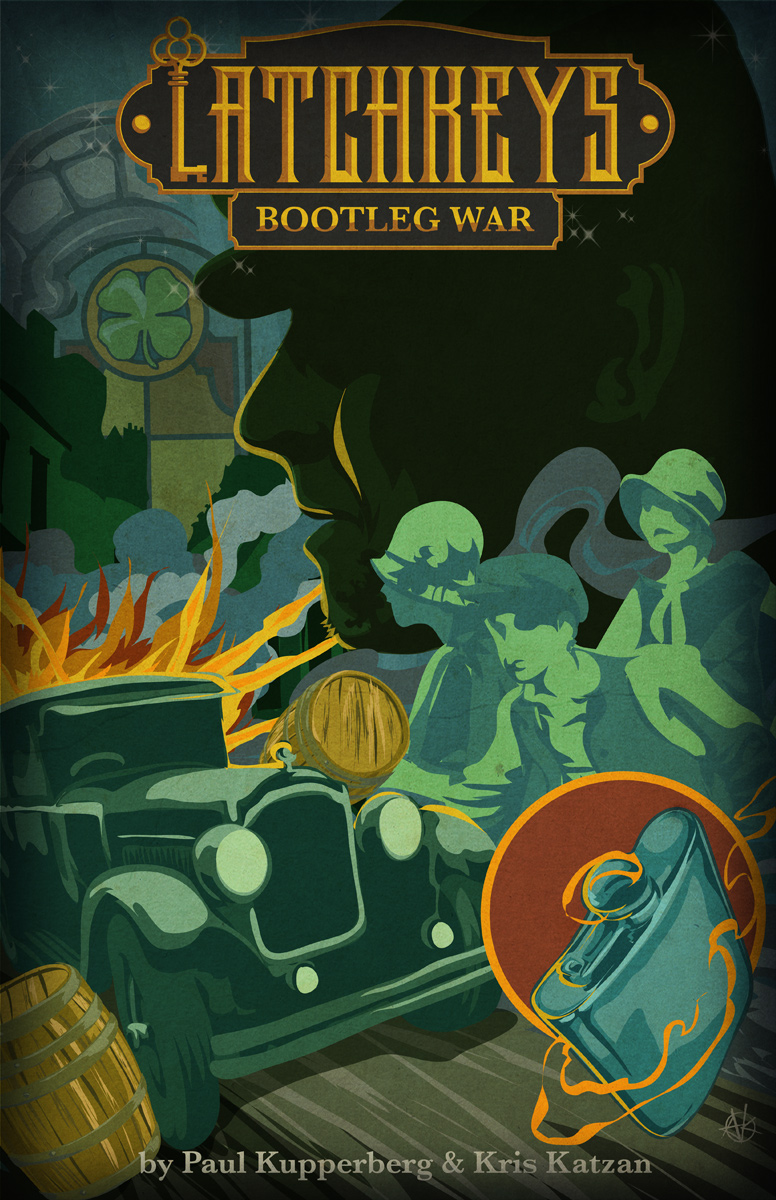
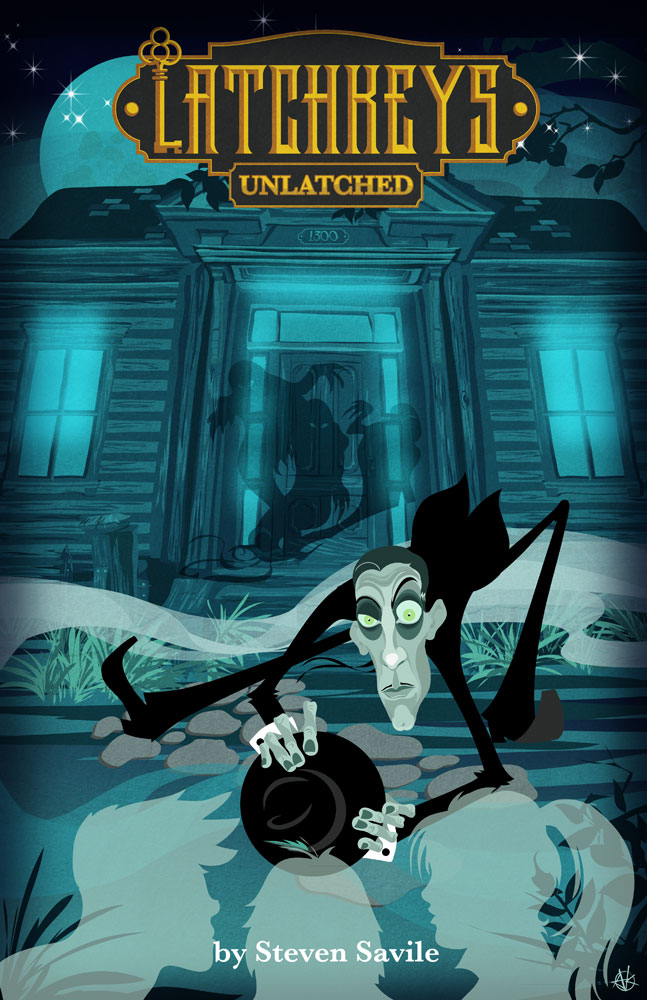
As I wrote a couple of weeks back, I’m part of a writers collective known as The Hivemind. Our first project, a young adult fantasy series called Latchkeys is up and running, and my first contribution to the story, Chapter 4: “The Bootleg War” (with Kris Katzen) is now available for downloading on Amazon’s Kindle and Barnes and Noble’s Nook for .99¢ (as are Parts 1, 2, and 3)! A bargain? Darn tootin’, skippy!

The covers for the series are by Vance Kelly. Here’s a little taste of what’s on tap:

“I don’t believe it,” said Mercy in a hushed whisper.

Behind her, Marguerite said, “What? Where are we?”

“We’re…we’re home,” Mercy said.

“Don’t be silly,” Marguerite said. “The newspaper we found says it’s 1921. We won’t even be born for almost seventy-five years yet.”

Mercy De La Fuentes stepped out of the narrow, dark corridor that they had followed from the restroom in which they had emerged after stepping through the Door. Her twin sister and the two boys followed her into the gloomy, stale smelling space.

“You live in a bar?” said Matt Fisher.

“I thought you guys had a house in Brooklyn,” said Jeremy Crest.

Marguerite gasped and reached for her sister’s hand.

“It…it is. I’d know it anywhere,” the short, dark haired girl said, her rich brown eyes going wide with surprise. “It’s the Mexicali Rose.”

“Look,” Mercy said, pointing at the back wall in which were inset three small decorative stained glass windows, each in the shape of a shamrock. “Those were still there when mom and dad bought this place. Remember? They took all those pictures before they renovated everything.”

The long, narrow room was dark, the single plate glass window next to the entrance painted black. A lamp with an exposed light bulb behind the bar was the only source of light.

Marguerite hurried over to the bar that stretched the length of the saloon. It was made of deep, dark mahogany and varnished to a silky sheen, with a brass rail footrest running along its face a foot off the tile floor and a padded red leather armrest ringing the marble top. Behind the bar, with its three sets of tall, elegant brass and porcelain tap levers spaced along its twenty-five foot run, was the mirror, a single piece of glass more than two dozen feet long and framed in matching mahogany. On the shelf under the mirror sat an array of liquor bottles and, dead center, a massive old cash register, also of brass, the metal stamped with elaborate decorations and scroll work, its twin rows of ten keys each marked with amounts ranging for one cent to ten dollars.

Mercy joined her sister at the bar and they exchanged looks of delight.

“The National TA332B!” they exclaimed in unison and erupted in peals of similar sounding giggles.

Matt and Jeremy also exchanged looks, but theirs were of confusion.

“Either of you care to let us in on what’s going on?”

Jeremy Crest, at seventeen the oldest member of the group, was tall and blond, with broad shoulders and an infectious grin and British accent.

“This is our parents’ restaurant,” said Marguerite. “At least the bar part of it. Sometime in the next few decades, somebody’s going to break through into the place next store and add the dining room and kitchen, but eventually our folks are going to buy it and turn it into the Mexicali Rose.”

“Of course, they’ve got to be born first,” said Mercy. “But the bar hasn’t changed a bit. We’ve even got the same old cash register behind the bar, although here it’s still practically brand new and isn’t just for decoration, I’m sure.”

“Jus a moment,” said Jeremy. The young Brit frowned in thought. “This is New York City, in 1921, correct? I thought it was illegal to sell alcohol and beer in the United States by then.”

“It was…it is,” said Marguerite. “The 18th Amendment banning it went into effect in 1920, I think. But a lot of bars stayed open in defiance of the law. I remember my father telling us that the Rose had been a speakeasy called the Shamrock during Prohibition.”

“A…what? Speakeasy?” said Jeremy.

Matt said, “It’s what these illegal bars were called. I think it came from some owner who used to tell her customers to ‘speak easy’ when they got too drunk and loud so they wouldn’t attract the attention of the police.”

Jeremy grinned and said, “So it could have been full of gangsters and bootleggers, just like in the old movies?”

“Well, probably not so much,” said Matt. “I think the customers were mostly regular people who didn’t agree with the law and just wanted to go out and have a few drinks.”

“Hey, as cool as being here is, we should really look for the Splinter and get back home,” Mercy said. “From the looks of things, we just happened to pop in while the place is closed, but there’s no telling when somebody could show up.”

“Good point,” said Jeremy. “Anybody picking up any vibes?”

The others exchanged glances and shook their heads, muttering negatives.

“Odd, don’t you think? The Door wouldn’t have opened into this time and place if it weren’t somehow linked to the missing piece.”

“That’s usually the way it works,” said Mercy. “Unless whoever’s got the Splinter in some other form has something to do with this location.”

“Well, we don’t want to be caught by them if and when they show up, so I suggest we find our way out of here and come back later,” said Jeremy.

“No problem,” said Mercy with a grin. “Marguerite and I know our way pretty well around this old joint. The front door opens on West 44th Street, and there’s a delivery entrance on the alleyway around the side. We should probably go out that way. There’s less chance of anyone seeing us.”

With a courtly bow from his waist and a sweep of his hand, Jeremy said, “Lead the way, ladies.”

And that was when they heard the voices and the sound of a key in the lock at the front door.

…Now read the rest in Latchkeys: Bootleg War!

Tags: , , , , ,

Paul Kupperberg on June 13th, 2012

In 1964, Bob Dylan wrote, “The times, they are a’changin’.”

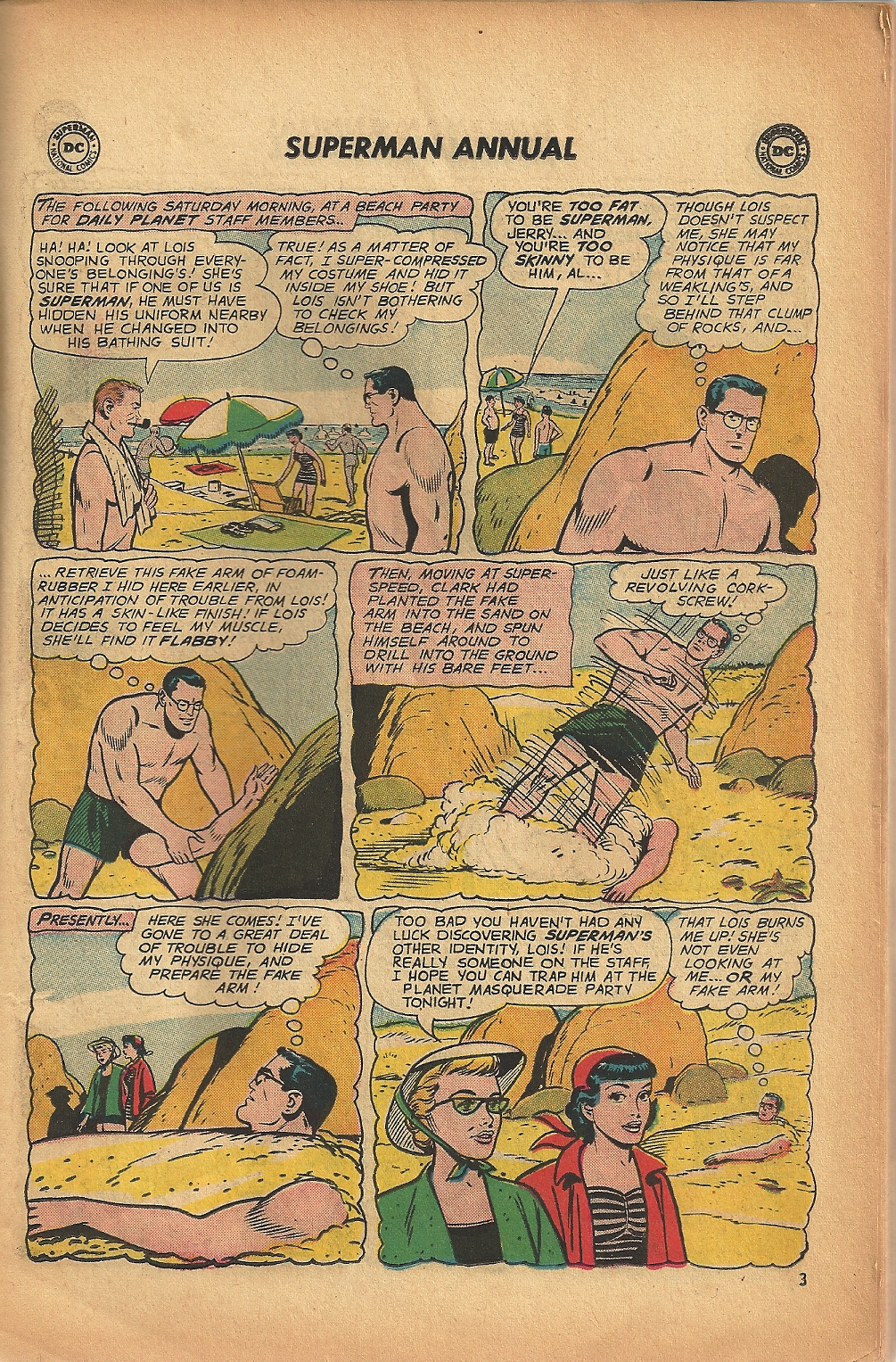
But forty-eight years ago, when I first read “When Lois First Suspected Clark Was Superman,” written by Jerry Siegel, with art by Al Plastino, in Superman Annual #8 (Winter 1963/1964), the times hadn’t changed yet. We were still living in a “Leave It To Beaver” world of relative naïveté and innocence, a situation reflected in all the media, especially comic books. We took that innocence for granted and, as a nine year old, I know I never gave the silliness of this story (originally published in Superman #135, February 1960) a second thought:

The staff of the Daily Planet is having a picnic at the beach where another employee comments in amusement to Clark Kent about Lois Lane’s “snooping through everyone’s belongings” because “she’s sure that if one of us is Superman, he must have hidden his uniform nearby when he changed into his bathing suit!”

Out of concern that Lois might notice his “physique is far from that of a weakling’s,” Clark came to the beach prepared. He’s brought a fake arm made of foam rubber, which he’s “hid…in anticipation of trouble from Lois! It has a skin-like finish! If Lois decides to feel my muscle, she’ll find it flabby!” Clark then buries himself in the sand, leaving only his head and the fake arm exposed. Lois, of course, doesn’t give the milquetoast Kent a second look; after all, how could that weenie be Superman?

Clark’s reaction to getting exactly what he wanted after having “gone to a great deal of trouble to hide (his) physique, and prepare the fake arm”? “That Lois burns me up! She’s not even looking at me…or my fake arm!”

If you are looking for a definition of innocence, you won’t find one much better than the Superman stories of the 1950s and early 1960s. Editor Mort Weisinger had an uncanny feel for what would click with his ten-year old readership. In fact, it was only years later, as an adult, that I recognized the genius of Weisinger’s approach: the stories were about what a ten year old would do with Superman’s powers! He would have great adventures in outer space, hang out in his secret Fortress of Solitude, and play tricks on his sister and mom. Just as the concurrent stories starring Batman and Robin were idealized father/son or big brother/kid brother tales (yeah, yeah, yeah, they slept in the same bedroom, Dr. Wertham, but so what? I shared a room with two brothers, didn’t I?), Superman was presented squarely from the point of view of his adolescent readers.

Flash forward a few decades.

Mort Weisinger is gone. Comic books, which once sold in the hundreds of thousands per issue, now sell in the tens of thousands (if they’re lucky), and ten year olds don’t read them anymore.

A story like “When Lois First Suspected Clark Was Superman” couldn’t be published today, at least not with a straight face.

Some would say that comics have grown up and matured.

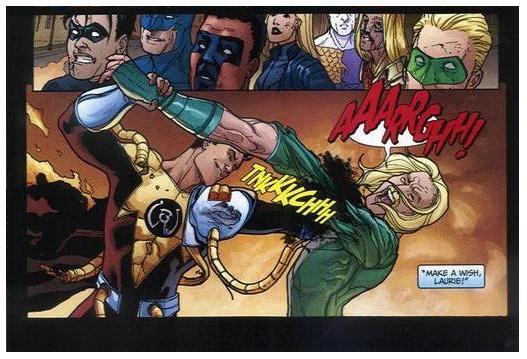
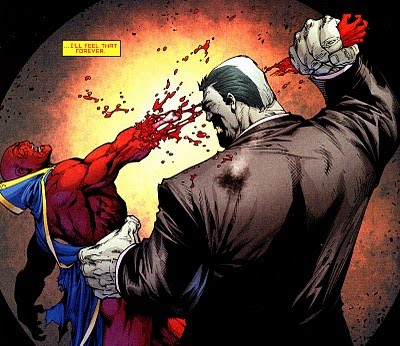
In the 1960s, if a character was shown holding a limb in a comic book, it was made of foam rubber.

In the 2000s, it’s flesh and blood, likely freshly (and graphically) ripped from somebody’s body.

I call it gratuitous and puerile.

And I think we’ve lost something important.

And not just our good taste.

Tags: , , , , , ,

Paul Kupperberg on June 9th, 2012

Yesterday, I was at my local Barnes and Noble, in Westport, Connecticut for one of my periodic browses. Checking out the new releases. Seeing what’s current in biography (mostly TV personalities, most of whom are completely unknown to me). Non-fiction. Essays and criticism. Mystery. And a look through the Graphic Novel section (all the way in the back, next to the bathrooms). DC. Marvel. Dark Horse. IDW. All the major publishers and a lot of minor ones represented with collected editions and original GNs, as well as a sizeable number of books about comics, like my friend Bob Greenberger’s The Essential Superman Encyclopedia.

But no Archie Comics collections.

No Archie Marries… , or Archie Americana, or Archie, The Very Best of Dan DeCarlo. And, most disappointing, no Archie: The Married Life, Volume 1 or Volume 2. Needless to say, as the writer of the Life With Archie monthly magazine (nominated for a 2011 Eisner Award as Best Publication for Young Adults…not that it’s relevant to the topic at hand; I just like saying it) from which these 300-plus page tomes are assembled, I was disappointed by its absence. Barnes and Noble in general, and this one in particular, carries Life With Archie on its magazine rack with the rest of a very good selection of comic books, displaying it right up front, on the middle rack at eye-level with your average kid, with a goodly number of copies available for purchase.

But no Archie Comics collections in the Graphic Novel section.

With a silent “I don’t get no respect!” I headed to the checkout, passing the Humor section along the way. Since B&N shelves comic strip collections (Peanuts, Dick Tracy, and the like) in Humor–alongside Woody Allen, Penn Gillette, and Fran Lebowitz–I paused to give the shelves a quick scan.

And that’s where I found Archie: The Married Life. One copy of Volume 1. Three copies of Volume 2. Several other Archie collections were scattered about the section, including Archie Meets Kiss and, right next to my books, a copy of The Very Best of Archie Comics.

I sighed out loud, which attracted the attention of a passing B&N employee, who asked if she could help me find anything in particular.

“Who shelves the Humor section?” I said.

“I do,” she said. “Is there something you’re looking for?”

“I’m just curious,” I said, taking one of the Archie: The Married Life books off the shelf. “Why is this here, in humor, instead of with the comic book graphic novels?”

“Well, it’s Archie,” she replied brightly. “They’re funny.”

“This one isn’t. It’s more of a soap opera thing, like Archie meets Melrose Place. The characters are all grown-up and married.”

“Okay,” she said, wondering why I was telling her this.

“I mean,” I said quickly, already sorry myself that I had started the conversation, “I’m just saying, the stories deal with stuff like the death of Miss Grundy, marital problems, financial difficulties, the characters facing the reality of growing up, health problems, stuff like that. It’s not funny.”

“Okay,” she said again. “Wait…Miss Grundy is dead?”

“In this storyline, yeah. She got sick and died.”

“That’s so sad.”

“Right! That’s my point. These aren’t funny Archie stories. I mean, there’s humor in them, but the stories are basically just as serious as any of the graphic novels in that section.”

“I loved Miss Grundy when I used to read Archie Comics when I was a kid. Why would anyone want to kill her?”

“Well, because people like her. Killing a character only has an effect on readers if they care about that character.”

She shook her head and said again, “That’s so sad.”

“Anyway…anyone looking for this would probably check the Graphic Novel section for it because it’s a comic book, not a humor strip…”

She shrugged and said, “We classify Archies as humor. Anyway, you found it, didn’t you?”

“Well, only by accident…”

“Okay. Anyway, what difference does it make?”

“Well, I wrote the stories and I just thought…”

But I stopped in mid-sentence as her eyes narrowed and focused on me with a white-hot glare of hatred.

You,” she snapped, “killed Miss Grundy?”

“Uhh…yeah, I did.” I thought about trying to explain to her the concept of alternate universes, that while Miss Grundy had died in the Life With Archie continuity, she was alive and well in the regular teenaged Archiverse, but I sensed that would be meaningless to her. So instead I went for a joke, hoping to lighten the mood, “But she pulled a knife on me first. It was self-defense.”

“That’s not funny,” she growled. She turned and stomped off, leaving me helplessly holding the wrongly shelved copy of Archie: The Married Life.

“I know,” I said to nobody. “That was kind of my point.”

Tags: , , ,

Paul Kupperberg on June 7th, 2012

I was interviewed yesterday by a staff writer for the Christian Science Monitor for an article about gay characters in comics called “Holy matrimony, Batman! Are comic books legalizing gay marriage?” Putting aside the obvious and easy “Holy fill in the blank, Batman” cliché (a particular peeve of mine; I refer you to my essay, “Some Days You Just Can’t Get Rid of a Bomb: The Legacy of Batman” in Gotham City 14 Miles: 14 Essays on Why the 1960s Batman TV Series Matters for a long-winded but scrupulously researched explanation), something else about the article bothered me:

The writer describes me as “the artist who drew the Archie issue.”

I spent over twenty minutes on the phone with the reporter who drew (sic) the article, out of which she pulled just one quote: “We were trying to be current. This is what our society looks like, and Riverdale [Archie’s fictional hometown] is an inclusive place.” That in itself isn’t a problem, but I am certain that I made at least half a dozen references to Life With Archie, “the comic book that I write.”

(6.8.12-I contacted the writer, who has subsequently corrected the error.)

Which leads me to my point: Why in the world should I accept anything in an article where the writer can’t get something as basic as my role in the creation of the Kevin Keller marriage story right?

And a second point: The article’s anti-gay bias.* Later in the piece, she quotes a “29-year old nurse, sitting at a Sherman Oaks café with her 2-year old daughter” as saying, “I’m not against the gay lifestyle, but…I don’t think it’s appropriate to be dangling something in front of kids that they might think the adult world is telling them, ‘this is something you could or should be aspiring to…like fight crime and be gay.’ I think it sends a confused message.”

Our 29-year old nurse is, of course, welcome to her opinion (although I’m not sure what she finds more disturbing, fighting crime or being gay), but at some point in the interview I said, “It’s not like a straight kid reading this is going to say, ‘oh yeah, that’s for me!’ You either is or you isn’t,” a comment that elicited a laugh from the reporter. If the point of the article was to explore the issue, why not present both sides? Besides, the very idea that a comic book–or movie or television–character can lead a kid astray (as if being gay is going astray) is ludicrous, but it remains one of the leading arguments in the bigots’ arsenal. And, frankly, considering the current state of the American comic book industry, it’s kind of ridiculous to think comics can influence kids.

Influencing children would require children to actually be reading them.

+ + +

*We also get this: “Dan Gainor, vice president for business and culture at the conservative Culture and Media Institute, is flatly opposed, saying via e-mail, ‘comics join movies, TV, music, and news media as part of the barrage of pro-gay propaganda that targets our nation every day.’ The goal of the media industry, he says, ‘is to overwhelm American morality and bully opponents into complete acceptance of the gay subculture.’”

Tags: , , , , , , ,

Paul Kupperberg on June 1st, 2012

Lottie at the Brooklyn Botanic Garden, Summer 1951

My mother has led a remarkable, if an unremarked upon, life.

Lottie Claire Blumenfeld was born in Cleveland, Ohio on March 11, 1931. She was still a baby when her family moved to New York, where her father Harry was from, and when she was three years old, she became big sister to my Aunt Maura. But by the time Maura was born, Harry was ill with tuberculosis–he was never to even hold his youngest daughter; the only time he ever saw her was through an observation window in the hospital. Shortly thereafter, Harry was shipped out to a TB sanitarium in Colorado, where he died in 1936.

It was the depth of the Great Depression and my grandmother Rose, widowed with two small children and alone in New York, was unable to support her family. She was forced to put her little girls in a Brooklyn orphanage where they lived for three years until Rose could get her life back on track and bring them home.

I don’t think my mom ever got over the experience of being “abandoned” at such an early age, even if her mother did visit her every week, without fail. I believe it formed the basis of her personality: quiet, shy, and somewhat reluctant to ask for help. She is the personification of the stereotypical Jewish mother, the one who would rather sit in the dark than bother her children to change a light bulb.

My mother grew up in the Bronx, attended Thomas Jefferson High School–where she was involved in the drama department, working behind the scenes in various capacities, from assisting the drama teacher to prompting the cast–and graduated with a commercial diploma. After school, she went to work in various clerical positions, and met my father, Sidney, in early 1951 at a meeting of the camera club he belonged to. Sidney was a talented amateur photographer, almost ten years the shy nineteen year olds senior. It may not have been love at first sight, but it came about soon enough. To the delight of both families, Lottie and Sidney were married on June 24, 1951. They took an apartment in 261 Buffalo Avenue, a pre-war apartment building in the Brownsville section of Brooklyn. In the adjacent building lived both my grandmothers (and my mother’s younger brother, David, from Rose’s second marriage), my great-grandmother, and my father’s sister, my Aunt Phyllis (on whose birthday I was born) and her husband Milton (Mitzi) Markowitz. Like her brother, Phyllis had three sons. Mom’s sister Maura, who returned to Cleveland after marrying Ernie Lieberman, also produced three boys. It wasn’t until she became a grandmother that Lottie would get the girl she wanted, my nieces Saralynn and Ruth. Within spitting distance of 261 lived something like a dozen other family members. This was back in the day when the nuclear family was a little less exploded and scattered.

Lottie and Sidney, Winter 1951

Alan came along in May, 1953. I followed in June, 1955, and Lewis rounded out our unholy trio in February, 1958.

We never had a lot, but Sidney was a hard worker and always provided for his family, even if it meant moving us to tiny Grafton, West Virginia in 1961 to follow an employment opportunity. Mom hated West Virginia. Never having learned to drive, she was trapped in a tiny apartment with three small children and a herd of cows outside our back windows. This Appalachian adventure lasted only a year before we found ourselves back in Brooklyn, this time in Canarsie and eventually East Flatbush.

Alan, Uncle David, Grandma Rose, me, 1956

Lottie began working outside the home around 1967. A temp job in the accounting department of Universal Terminal and Stevedoring at One Broadway in Manhattan lead to a career of almost thirty years with the company (later acquired by the Danish shipping company, Maersk Line). Mom was ahead of the curve of working mothers. While the family needed her income, we joked that she took the job to get away from her three sons, a collective handful of adolescent testosterone that I would not have wanted to try and corral and control.

Eventually, we grew up, moved away, and mom and dad were left to relax some. They moved into a small one bedroom apartment in Canarsie (another joke: one bedroom so none of the kids could possibly ever move back in with them), dad retired, they saw first me than younger brother Lewis marry, and all three of us settle into our own lives as adults.

When my father died in 1993, I worried about how Lottie would survive without him after nearly forty-two years of marriage.

That was the first time she showed us her amazing strength and resilience. Her grief was there and strong, but she continued, sailing on with life without missing a beat. She stayed in Canarsie for five years, commuting from the tail end of Brooklyn out to Newark, New Jersey, where her office had relocated several years earlier. She retired about sixteen years ago, and a couple of years later, when the house in which she rented her apartment was being sold, we found her a place near us in Stamford, Connecticut.

Lottie, September 2006

Mom remained an independent soul. Her apartment was located across the street from a strip mall that had a supermarket, a drugstore, a few small restaurants, and within a block or so was a beauty salon, a movie theater, and just about everything she needed. Not knowing how to drive, it was the perfect set-up for her. On the occasions when she needed a ride to a doctor’s appointment or to do some shopping beyond the immediate confines of her neighborhood, I lived minutes away; she always prefaced her infrequent requests with, “If it’s not a bother.” Of course, it never was.

When my son was little and my wife needed to work (she was involved in a family business), mom became our daycare center. In her late seventies, she took charge of three year old Max. I think she enjoyed every minute of it.

As the years passed, arthritis bent her back and twisted her left foot, making it somewhat difficult to walk. She started to use a cane, but come rain or come shine, she still made it to the beauty parlor every Friday for her hair appointment. The supermarket across the street from her apartment closed, so I would drive her to the more distant Stop & Shop every couple or three weeks. “I hate to bother you,” she would say on the phone, “but I’m running low.” Even after my divorce, the sale of the house in Stamford, and my move to Fairfield (about twenty minutes east of Stamford), my answer was always the same. “It’s never a problem, mom. Whatever you need.” She asked for so little, it truly never was a problem.

Lottie with her granddaughters Ruth and Saralynn, July 2010

About fifty years ago, she was hospitalized to have her gall bladder removed. In recent years, she encountered some (relatively) minor health issues–the aforementioned arthritis, a case of the shingles, and cataract surgery–but her health was overall pretty good. Most recently, she has had to deal with treatment for macular degeneration, an eye condition that necessitated receiving injections directly in the eye. At eighty years old, she walked willingly into the specialist’s office and submitted to that without complaint. I winced and squirmed just hearing about it.

My son Max, me, Lottie, our cousin Judy, August 2009

She never, in fact, complains about anything, not even when she should.

About a month ago, she began experiencing some pain in her side. In spite of the fact that we speak at least two or three times a week, she did not complain to me about it. She only brought it up after two weeks when she became too weak from dehydration to walk and her sister, worried and 800 miles away, badgered her into, finally, calling me.

The medical details are, in the end, irrelevant. Suffice to say, mom has been on a ventilator in the ICU for almost two weeks. Attempts to wean her off it have proved futile and the medical team agrees she is unlikely to ever breath again without assistance. Fully cognizant of her condition and situation, we put the choice to her. She did not blink, did not shed a tear. She scribbled a note to the doctor and me: “Live or die.”

Mom is in a horrible situation. Live, bedridden and hooked to a machine that does her breathing for her and another to feed her through a tube, forever robbed of her freedom and independence. Or disconnect the machines and die.

Mom has chosen to live the time remaining to her without, as usual, help.

Her strength and courage under these circumstances has left me speechless and awed. We don’t usually think of our parents in such terms. Familial familiarity breeds, in most cases, complacency. They are just there, mom and dad. We don’t see what goes into their lives, what it took for them to raise us, to see us through to places where we can at last care for ourselves and, ultimately, if we’re lucky, to care for them in turn. As hard and heartbreaking as these last two weeks have been, I would not give up an instant of the hours I’ve sat with her in this room, nor the moments that I’ve been given to tell her how much I appreciate, love, and respect her for all she’s done for me in my fifty-seven years as her child and how much I admire how she’s facing what’s to come.

My mom is an amazing woman. I needed to share a just a bit of her story, but not in an obituary, written in the past tense. But this way, in the present tense, as a tribute to someone who is still among us.

And who will stay with me, always.

Tags:

Paul Kupperberg on May 29th, 2012

I have been assimilated.

And not in any Borg or Dalek sort of way…no, this is far worse. I’ve been assimilated into the Hivemind Collective.

What is a Hivemind and how did we collect? It all started about three years back when members of the International Association of Media Tie-In Writers email list began discussing the possibility of collaborating on some projects set in shared universes that we would collectively create. Shared universes are the bread and butter of media tie-in writers; we’re the people hired to write the novels, short stories, and audio adaptations set in the established universes of such properties as Star Trek, Star Wars, Doctor Who, Murder She Wrote, Monk, etc.

The Hivemind came about, if I remember correctly, at the instigation of the prolific Steve Savile, whose acquaintance (and friendship) I made when I wrote a story for the anthology he edited for Big Finish Books, Doctor Who: Short Trips, Destination Prague. He solicited volunteers and concepts for new young adult shared universes (universi?), and thirteen of us raised our hands to join in the fun. We originally began developing three separate ideas, each meant to be a series of YA novels. But as we worked on the project, the publishing industry was falling into this bizarre and ever dwindling spiral, and hopes of actually getting these things published dwindled with them. And, with the market for the types of books we write shrinking, we were finally forced to suspend work on these speculative projects and focus our respective energies on actually earning livings for ourselves.

But the Hivemind had merely gone into hibernation. Last year, thanks to the rise in ebooks and the possibility of inexpensive self-publishing, the collective revived and revised its plans. While one of the original fourteen was forced to drop out due to prior commitments, the rest of us agreed to jump in and bring out Latchkeys, a series of interconnected short stories published under the aegis of Crazy 8 Press (the ebook imprint of Hivemind members Robert Greenberger and Aaron Rosenberg, among others).

What is Latchkeys?

Matt Fisher was a normal boy–until he found the Door. The Door that led to the House. The House whose Doors opened into places all over the world–and into worlds that had been, and would be, and even never were. But Matt wasn’t the only one who’d found his way in. Now he had something the man named Twig wanted, something that could sow the seeds to everything’s destruction. This first book in the spine-tingling Latchkeys series sets the stage for more adventures with Matt Fisher and the rest of the Latchkeys Kids!

The first three episodes have been published and are available for download for the Kindle and the Nook at just .99¢ each:

Latchkeys #1: Nevermore, by Steven Savile

Latchkeys #2: The Ugly Little Bloke, by Robert Greenberger

Latchkeys #3: Nevermore, by Debbie Viguie

Each is a self-contained story…but also a piece of a bigger tapestry leading up to a sensational “Season One” finale.

I just finished writing Latchkeys #4 (from a story by Kris Katzen), Speakeasy: The Bootleg War (currently in production), which will be followed on a monthly schedule by:

Latchkeys #5: Speakeasy: Roscoes In the Night, by James Reasoner

Latchkeys #6: Time Limit, by Aaron Rosenberg

Latchkeys #7: Slipping Through the Cracks, by Brandie Tarvin

Latchkeys #8: The Beast, by Steven Savile

Latchkeys #9: Differences, by Lorraine J. Anderson

Latchkeys #10: Past Imperfect, by Chris Reynolds

Latchkeys #11: Future Tense, by Matt Forbeck

Latchkeys #12: Shades of Gray, by Ben Rome

Latchkeys #13: Emmett, by Paul Kupperberg

Check ‘em out. Get assimilated into the Hivemind yourself.


Tags: , , , ,

Paul Kupperberg on May 26th, 2012

The other day, Jose Luis Garcia-Lopez posted on Facebook some photos he took at DC Comics in the 1970s, when the company resided in 75 Rockefeller Center. Among them was this one, snapped in the production department. On the left is letterer supreme Todd Klein; on the right is production maven and king of covers and colorists, Bob LeRose (June 3, 1921 – August 30, 2006).

Photo by Jose Luis Garcia-Lopez

More, er…seasoned fans will no doubt recognize the name from the credits on a ton and a half of beautifully colored stories from the 1970s through the early-2000s, everything from Superman and Batman to Jonah Hex and the Haunted Tank, and every other genre in between.

Bob was and remains one of my favorite people ever from my own long association with DC. I started at the company as a writer in 1975 and served a brief turn on staff in 1977 – 1978 doing public relations work (a job cut short by the infamous DC Implosion), right around the time Bob came on staff. During that time, I wrote a series of half-page filler pieces called “DC Profiles,” short bios of various staff and freelancers that ran in the books. This is the one I wrote about Bob sometime in 1978:

DC Profile: Bob LeRose

Over the last two years the name Bob LeRose has been appearing with ever increasing frequency over the colorists credit in many DC Comics. But just because Bob is new to our readers doesn’t mean he’s new to the field…in fact, he brings to his job 30 years of experience.

Born in New York in 1921, Bob’s only interest in the newspaper comic strips of the day was as a source of ideas from which he could practice his own drawing skills.

As with most young men of the time, World War II pre-empted several years of Bob’s life, but after his release from the service he enrolled in the New York Phoenix School of Design. It was there that he was able to study illustration, water colors and, for a change of pace, commercial layout.

After finishing school, it was that “change of pace” course which landed him a position as Assistant Production Manager at Johnstone and Cushing, an advertising agency specializing in comic ads. Bob’s immediate superior at the agency was Al Stenzel, the man in charge of producing ads in the form of comics.

Alongside such now legendary comics folk as Lou Fine, Leonard Starr, and Creig Flessel, Bob worked at the agency until 1950. It was also around the time he decided to give up illustration and focus his energies on the production end of comics. “I figured it was better to be a first-rate layout man than a second-rate artist,” Bob said.

It was in 1960 that Al Stenzel left Johnstone and Cushing to set up his own studio, taking Bob along as his right-hand man. Working alongside the man he calls “the Toscanini of comics” taught Bob virtually everything he knows about the production and business of comics

The following year, Stenzel’s studio began producing the comics section for Boys’ Life, the official magazine of the Boy Scouts. And, as the studio’s production manager, Bob gave a young artist named Neal Adams his first commercial comics assignment.

In 1976, Bob parted company with Stenzel and came to work in DC’s production department where he soon earned the title of Assistant Production Manager, in charge of covers, special material, and advertising. And, as if the responsibilities that go with that job weren’t enough, Bob fills what little free time he may have coloring many of DC’s top titles.

Bob’s philosophy has always been, “Find out what you do best and do it!” We think that’s pretty good advice for anybody, from newcomers to seasoned professionals … especially since we’ve seen how well it worked for Bob.

+ + +

In 1990, I returned to the DC staff, this time as an editor (there were a couple of short stints in PR and editorial in between; until the recent, uber-corporatized regime, I was pretty much happily joined at the hip with DC … but that’s a whole other story). For the next half dozen years or so, I had the pleasure and privilege of dealing with Bob LeRose on pretty much a daily basis. Bob was still in production, still in charge of covers. When I handed in an art, rough layout, and color guide, it was given to him to turn into an actual, workable cover. Since the colorist received only the base art, it was up to Bob to decide the color scheme of the logo, blurbs, and any other elements I added.

I quickly learned that my covers were in excellent hands. Bob’s sense of color and design were, as far as I was concerned, all but flawless. If he said the logo should be a blue and yellow of these specific values to work best with the color scheme laid down by the colorist, he was seldom wrong. And if by some chance he was, he would be the first to see it and make the change. Likewise, if he came to me with the cover laid out as I had called for and told me it didn’t work, I didn’t need for him to explain why. I trusted his instincts 100%. I can’t tell you how many times I told him, “Bob, if you think that’s the way it should be, do it. You are the master.” He was, after all the king of covers.

Bob admired the talented colorists whose work he shepherded through DC’s production department. I was fortunate enough to work with some amazing talents on many of my books, but the best example of an unbeatable team would have to be the run of covers created for Wonder Woman by Brian Bolland and colored by the breathtaking Tatjana Wood. To this day, I don’t think there have been many better colorists in comics than Tatjana (one-time wife of Wally Wood), whose work dated back to EC Comics and who was, in addition, an artist and textile designer. Bob, himself no slouch with a brush and a set of Dr. Martin dyes (the colored inks once used when comics were still colored by hand and not on a computer), admired Tatjana tremendously, but sometimes felt a change in her color guide was necessary in order to create the best effect. Bob would always make the change reluctantly and with just a smidge of guilt. Tatjana never once, to my recollection, objected to his changes. She trusted Bob.

I could go on with stories about Bob, but three anecdotes kind of tell it all:

One: I was in the production department waiting to talk to Bob about one of my covers. Ahead of me was a fairly new assistant editor, a guy in his early twenties new to the field and quite full of himself for being part of the team on a then-high profile character line of titles. Fancying himself an artist, the young assistant editor was explaining to Bob how and why this particular cover should be done the way he was asking, as if he were the seasoned professional and Bob was the wet-behind-the-ears newbie. Bob, with a straight face and in absolute seriousness, listened to this kid’s lecture on color theory, nodding in understanding. When the lesson was over and the kid had gone back to his office, I said to Bob, “Jeez, why do you let that arrogant little bastard talk to you that way. You’ve forgotten more about coloring than he’ll ever know.” Bob just shrugged, smiled his gentle smile, and, without a trace of malice, said, “He’s young. He’ll learn.”

Two: When my son was born in April, 1996, I lined my desk, as all proud papas will do, with photos. One day, I returned to my office to find a tissue paper wrapped gift waiting for me. It was from Bob; at some point, he had borrowed a picture from my desk, made a black and white photocopy of it on watercolor paper, and hand-colored and framed it as a gift. That picture has been on my desk or prominently displayed in my living room ever since and I never fail to think of Bob and smile whenever I look at it.

Three: Sometime in early 2006, my phone rang at home. When I answered, a familiar albeit weakened voice said, “Hello, is this Paul? This is Bob LeRose. Do you remember me?” Bob had semi-retired from DC in 1996 but still came into the office once a week until the emphysema from which he suffered prevented him from doing even that much. Bob’s wife, the mother of his three children, had died in 1992 and, in 2002, he married Veronica, the healthcare worker who had begun caring for him when the lung disease made it difficult for him to be on his own. “Of course, I remember you, Bob,” I said. “You’re a pretty unforgettable guy.”

We talked for ten or fifteen minutes; it was obvious he was suffering from some mild dementia, whether due to the emphysema or Alzheimer I don’t know. But he recalled much of his time at DC well enough and we talked about the good old days and some of the people we knew. By then, he was laboring for breath, so it was time to say good-bye. I told him how good it was to hear his voice again and hoped he was feeling better soon. He thanked me and, just before we hung up, Bob asked again, “You do remember, don’t you?” I assured him I did and he sounded relieved, as if in his present condition he needed that validation of his own existence. “That’s good,” Bob said, “because sometimes I’m not so sure I remember myself.”

Here’s to memories of Bob LeRose. Color me lucky to have them.

Tags: , , ,

Paul Kupperberg on May 23rd, 2012

“Nobody knows anything.”

In his indispensable book, Adventures In the Screen Trade, A Personal View of Hollywood and Screenwriting, novelist and screenwriter William Goldman famously revealed in his chapter on studio executives the dirtiest of dirty Hollywood secrets:

“Nobody knows anything.”

Not the screenwriter, not the star, not the producer or director, and certainly not the studio executive. “Not one person in the entire motion picture field knows for a certainty what’s going to work. Every time out it’s a guess–and, if you’re lucky, an educated one,” Goldman wrote.

Adventures in the Screen Trade is and remains one of the best books written on the business and art of moviemaking and storytelling. It’s at the top of most old pros’ lists of books recommended to young or wannabe writers, as well as one that this old pro periodically picks up for a reread; in a rare instance of their ‘getting it’ in the 1990s, DC Comics bought a shitload of copies of Adventures in the Screen Trade and handed them out to writers. Oh, that someone would do that for the majority of comic book writers today…!

Goldman, though he hasn’t written much in recent years–he’ll be 81 this summer–is an amazing writer whose credits you might be familiar with even if you don’t know his name. His screenplays include Harper, Butch Cassidy and the Sundance Kid, The Stepford Wives, The Great Waldo Pepper, Marathon Man, (the Academy Award-winning) All the President’s Men, The Princess Bride, Misery, Chaplin, Maverick, and Absolute Power. Among his novels are No Way to Treat a Lady, The Princess Bride (and its sequel, The Silent Gondoliers, both under the open pseudonym of S. Morgenstern), Marathon Man, Magic, TinselControl, and Brothers. He has also written for Broadway (Blood, Sweat, and Stanley Poole, with his brother James, playwright of the classics The Lion In Winter and They Might Be Giants, as well as the superb screenplay–among others–of Robin and Marian).

William Goldman is what I call a “mind-fuck” writer; he takes you straight down a path toward a very specific place and you don’t even realize until you reach the end that he’s veered off that path and brought you to a place you not only hadn’t realized you were headed for, but you had no clue even existed. Remember the twists and turns of Marathon Man? The iconic and breathtaking turn-around ending of Butch Cassidy and the Sundance Kid? Just another day at the office for Bill Goldman.

I got to thinking of his “nobody knows anything” dictum this week while working on an advertising custom comics job. I was hired to take characters based on the clients product and turn them into comics form. Working through an ad agency, I’m also managing the production of the project, hiring the artists, letterer, and colorist, and coordinating their activities and the approval process with the agency and the client. With more than eighteen years as an editor of comic books, magazines, and tabloids under my belt, this kind of work is second nature to me. (My secret? Hire really talented people, explain the job to them, then step back and let them do it.)

“Nobody knows anything,” and that, I will freely admit, includes me. When it comes to creative endeavors, we’re all guessing, whether it’s a movie or a comic book. In 1980, someone at United Artists thought Michael Cimino’s Heaven’s Gate was a good idea and that film pretty much sunk the studio. It remained the movie industry’s poster child for epic failure until this year, when somebody at Disney thought John Carter was a good idea. In the 1980s, I created a couple of series (Arion, Lord of Atlantis and Checkmate!) for DC that had legs, lasting three or four years each; in 1996, my Takion went under without a burble after only seven issues. I thought they were all good ideas but, hey, I don’t know anything.

And because nobody knows anything, everybody feels qualified to chime in on creativity. While you would never tell your surgeon, “no, no, I think you should cut here,” those who hire creative people have no qualms about telling us how to do our jobs. This client, who’s probably never even read a comic book doesn’t hesitate to tell me, who has written somewhere in the neighborhood of a thousand of them and edited probably another five or six hundred, how to do my job. He is, of course, signing the checks and it’s his prerogative to have it his way. When I go to McDonald’s, I don’t hesitate to tell them I don’t want mustard on my burger; I suppose the client is likewise entitled to the condiments of his choice. Even though I find mustard on hamburgers disgusting, I’m just the fry cook on this meal.

Was the approach I picked to represent the client’s characters the right approach? Or are the client’s changes to what I offered the way to go? On that level, “nobody knows anything” and, like I said, I don’t claim to be an exception to the rule. As far as that goes, my guess is as good as his or yours (or Michael Cimino’s or Disney’s)…but while I sat there making the requested changes, it occurred to me that even though we were both guessing, the difference was mine was an educated guess based on almost forty years of experience.

William Goldman was right: Nobody does know anything…but sometimes, some of us are better guessers than others. And wouldn’t it be swell if everybody would just let those with a clue make a few more of the decisions. Maybe that would lead to a few less Heaven’s Gates or John Carters.

But what do I know?


Tags: ,

Paul Kupperberg on April 4th, 2012

The nominees were announced today for the 2011 Eisner Awards, and Life With Archie has landed one in the Best Publication for Young Adults (Ages 12-17) category!

 Congratulations to Fernando Ruiz, Pat & Tim Kennedy, Norm Breyfogle and all the rest of the talented men and women who get this comic out every month. And thanks to publisher Jonathan Goldwater and editor Victor Gorelick for giving me the opportunity to do what I do on the title, and, of course, to Michael Uslan, who got the whole “Married Life” ball rolling!

Tags: , , , ,