Paul Kupperberg on August 6th, 2013

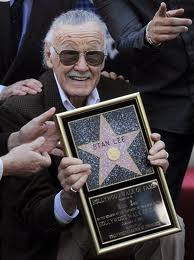
imagesWhat Would Stan Lee Do?

He would sell it, baby!

If we learned nothing else from Stan the Man at the dawn of the Marvel Age of Comics, it’s that there’s no such thing as too much promotion. Stan, a natural born hail-fellow-well-met type, used his personal bombast to elevate Marvel Comics from a second-rate publisher of whatever was popular at the moment to the premiere brand in the business. And in the process, raised himself from an unknown writer/editor on the brink of quitting his job out of embarrassment over what he did for a living to becoming the only name in the industry anyone outside of the industry recognizes.

Stan may or may not have known from the get-go (probably not) that he had a tiger by the tail with The Fantastic Four, Spider-Man, and the rest of the Mighty Marvel line-up, and he likely reasoned he had nothing to lose by becoming Marvel’s (and his own) biggest boaster, but however he got there, Stan recognized early on that the only way to insure Marvel’s success was to promote the bejeesus out of it, True Believers!

Excelsior!

I invoke Stan because I of late find myself in a position similar to his in the early days of Marvel. As a member of the publishing hub called Crazy 8 Press (along with fellow writers Russ Colchamiro, Peter David, Michael Jan Friedman, Robert Greenberger, Glen Hauman, Aaron Rosenberg, and Howard Weinstein), I find myself in a pack of underdogs facing mighty tough competition in the world of publishing. Stan was competing with the Cadillac of Comics Publishing, DC Comics and its stable of superstars, not to mention Archie Comics, Harvey Comics, Dell, and a handful other publishers, each with their own line-ups of established and popular characters. Against Superman, Batman, Wonder Woman, Archie, Richie Rich, Caspar the Friendly Ghost, and the rest, who the hell were Fantastic Four, the Hulk, Spider-Man, and Iron Man?

Crazy 8 Press is (for the purposes of the analogy) Marvel. The rest of the book publishing world is DC Comics, which not only commanded the newsstands and spinner racks, but also controlled the means of distribution; in those years, Marvel Comics nee Timely Comics nee Atlas Comics was distributed by Independent News…a company owned by DC (then known as National Periodical Publications, or NPP). Independent distributed Marvel, but limited them to something like eight or twelve titles a month.

So Stan and Marvel had nothing but obstacles in their way. They could only publish a limited number of titles and that which they did publish was up against newsstands filled with brands infinitely more recognizable than their own.

So Stan began making noise. He did this by talking directly to the readers who did discover them and, unlike stodgy DC or the publishers who didn’t bother addressing their readers at all, he invited his fans in made them a part of the excitement. The Marvel Bullpen page was nothing but one big house ad, but instead of just promoting a specific issue of a given title, it promoted the Marvel brand; on top of that, Stan’s Soapbox served to promote Stan Lee as he promoted his fellow creators and the brand. Stan “The Man” Lee, Jack “King” Kirby, “Sturdy” Steve Ditko, “Dashing” Don Heck, Gil “Sugar Lips” Kane (you hadda know Gil)…Marvel didn’t have a staff who labored in obscurity like the majority of other companies. Stan invited his readers inside the Hallowed Halls of Marvel (actually a narrow and cramped alleyway of desks and drawing boards in those early days), made them his friend, and, more importantly, enlisted them as his allies in the quest to Mine Theirs Marvel. And it worked. In a relatively few short years, especially once freed from the restrictions of Independent News, Marvel Comics was eating DC’s lunch…and continued to do so, more or less consistently, ever since.

Love him or leave him, no one can deny that Stan Lee was, is, and remains the Hype-Master General of comic books!

I spent this weekend just past in Baltimore at Shore Leave 35, a Star Trek themed convention that, while small, is about the most author/creator-friendly environment I’ve ever encountered in a convention setting. I was there with the Crazy 8 crew, celebrating the imprint’s second anniversary and the release of, among other things, my mystery novel, The Same Old Story, and the third volume of the ReDeus anthology series, Native Lands (co-created with Greenberger and Rosenberg).
C8 final logo

In addition to signings and panels, we also met to discuss what lies ahead for Crazy 8; we’ve got the books to sell (more than two dozen titles published thus far) with more (many more!) on the way…but the major item on our agenda was finding better ways to promote and sell our wares. I’m not talking about channels of distribution–all our titles are available at Amazon and Barnes & Noble as paperbacks or for the Kindle or the Nook, likewise from our Print On Demand publisher CreateSpace, which you can link to directly from the Crazy 8 website, and even direct from the authors themselves.

No, what we mostly talked about was how to make the world aware of what we’re up to. We all have Facebook pages, Twitter accounts, and other forms of social media that we work, but the big question was: How do we cut through the chatter of the hundreds of millions of other users to make ourselves heard? And, more importantly, how do we do it on the near-zero budget of a small, creator owned independent imprint? For now, the answer is (to quote an old Robert Klein routine), “Volume!”

And by volume, I mean persistence, and by persistence I mean, incessant tweeting, endless postings on Facebook, and constant begging of those who follow us to re-tweet and share our postings. By persistence, I mean working our eight individual voices so that we’re talking together and talking to our fans and readers. By persistence, I mean making pains in the ass of ourselves and hoping you’ll forgive our persistence and recognize that we’re doing it not because we like being pains in the ass but because we’re trying to accomplish something here, something that the big publishing houses who once did this for novelists at our level are no longer interested in or able to do.

We’re just doing what Stan Lee would do, but instead of confining it to a Bullpen Page or Stan’s Soapbox, we’ve got to reach a much more scattered audience faced with more distractions than just whether to read Marvel or DC or Dell or Archie. Re-tweet us. Share our posts on your Facebook page. Do whatever it is people do on Tumblr and the rest of the social media sites. Support us if you like something that any of us have written in the past. Support us if you believe in the future and viability of small, independent presses. Support us if you are currently or hope to one day be part of something like Crazy 8 Press yourself. The paradigm is shifting and we’re just trying to shift with it, but we can’t do it without your help and support, and I don’t just mean by buying our books (although that’s not such a bad idea, either).

In the end, we all believe we’ve got the goods, that what we’re hyping is, like Stan’s Marvel Comics of yore, the real deal, written by professional authors with I don’t know how many scores of years of professional experience, credits, and awards between us.

So, if I or any of my fellow Crazy 8 authors start to get on your nerves, please forgive us. We’re just doing What Stan Lee Would Do…hoping to grab you by your imagination, and inviting you to come along for what we hope will be the creative ride of your life.

Excelsior, True Believers!


Tags: , , , , , , , , , ,

Paul Kupperberg on July 16th, 2013

Okay, I have a confession to make:

I’m also really J.K. Rowling!

Not buying it, huh?

Well, it was worth a shot. The news that Ms. Rowling was “outed” in an anonymous tweet to England’s Sunday Times to be the actual author of the new mystery The Cuckoo’s Crime by “Robert Galbraith” tipped this well-reviewed “debut” novel from its reported initial sales of 1,500 copies into a 300,000 second printing has got the publishing world in a dither.

Ms. Rowling, whose previous novel The Causal Vacancy–her first for adult readers and written under her own name–was not so well-received by critics, said of the revelation, “I had hoped to keep this secret a little longer, because being Robert Galbraith has been such a liberating experience. It has been wonderful to publish without hype or expectation, and pure pleasure to get feedback under a different name.”

I believe the second part of her statement, the part about writing under a pseudonym being a liberating experience.

I don’t believe that Ms. Rowling wanted to keep the secret any longer than she already had. After basking in the rave reviews received by “Robert Galbraith,” it wouldn’t surprise me to learn that she had an attack of ego at that 1,500 sales figure and had a hand in her own outing. The Twitter account used to send the anonymous tweet was deleted, according to the reporter who received the tip and who I heard interviewed on NPR on July 15, immediately after the message was sent. The investigative trail leading from the former plainclothes Royal Military Police investigator “Robert Galbraith” lead from the small literary agency, whose main client is Ms. Rowling, to Mulholland Books, an imprint of Little Brown, Ms. Rowling’s publisher.

I.e., sure smells like a publicity stunt to me.

I don’t begrudge Ms. Rowling her sales. Harry Potter isn’t my cup of tea (could never get past page 50), but she worked hard, created a spectacular brand, and kept her readers and fans happy over a long haul, earning every penny she’s made. And good for her.

What the Cuckoo’s Crime stunt does do is remind me of the miserable state that publishing has fallen into: Even a novel as well reviewed as The Cuckoo’s Crime would have just fallen into the cracks if Robert Galbraith had in fact really been just Robert Galbraith. Just-Robert Galbraith would have seen his book fade into the oblivion of the remainder pile without ever having received even one one-hundredth of the publicity that Robert-Galbraith-is-really-J.K.-Rowling is getting.

How many good books die on the shelves for want of even a fraction of that attention, ignored because their authors aren’t J.K. Rowling? How many good books don’t ever even get reviewed? Or are published by houses unwilling to invest in some (any!) advertising? How many good books are read by editors who, even recognizing their worth, reject them anyway because there’s no room on their schedules for books that won’t be a bestsellers? The Hollywood/Blockbuster mentality has overtaken the once genteel field of publishing. The only projects getting green lit are the ones with “stars” attached to them. The rest are left to sink or swim (mostly sink) on their own.

My beef isn’t with J.K. Rowling. As I said before, she’s earned her success. You sell, sister! We all write to be read by as many people as possible…and not just because readers translate into dollars. Yes, we want to make a living from our labors; who doesn’t? And, while I wouldn’t say no to making millions off my books, I didn’t choose this path expecting to ever get rich. I did it because I have to write, plain and simple. I wrote before anybody ever paid me for it and I would continue writing even if (as has happened) the money stopped coming in.

The truth is, I don’t even know who my beef is with. The publishers? The editors? The critics? Newspapers that don’t support local authors? Newspapers dropping their book review columns? The mega-bookstores where less and less space is devoted to actual books as more and more floor space is given over to e-readers and accessories?

All I know is, me and my writer friends and acquaintances are all massively frustrated by the state of publishing today. I imagine if there really had been a Robert Galbraith, he would be sitting around the table grumbling and bitching along with the rest of us. But he doesn’t have to.

So, no, I’m not J.K. Rowling.

But I sure as hell wouldn’t mind being Robert Galbraith right around now.

Tags: , , , ,

Paul Kupperberg on July 15th, 2013

2898899-02It was a Monday, like any other Monday. Nobody likes Mondays. Not even freelance writers. Everybody knows that Mondays just suck.

And then I logged onto Facebook and saw this post from Dan Parent, writer/artist/creator of Archie Comics’ groundbreaking Kevin Keller title:

“I got a Harvey Award nomination ! Also Bob Smith, Tito Pena and Life with Archie did too!”

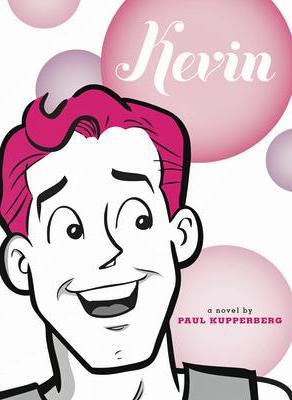
I posted a heartfelt “Congrats, Dan! Well deserved!” — having spent my fair share of time with Kevin in Life With Archie, on a couple of (upcoming) fill-in issues I scripted of Kevin Keller, the YA novel Kevin, and the forthcoming Kevin Keller Mad Libs (the last two published by Penguin/Grosett & Dunlap), I have a certain fondness for the lad and am a big fan of Dan’s work on the title…

…And then my brain said, “Did you read the rest of the post, schmuck?”

“Also Bob Smith, Tito Pena…”

Wow. Very cool! Two talented guys richly deserving not only of nominations, but of winning. I’ve known Bob for approximately forever, and he even inks my stories in Life With Archie, so I posted kudos to him as well. I’ve never met colorist Tito Pena but I sure know his work.

“…and Life With Archie did too!”

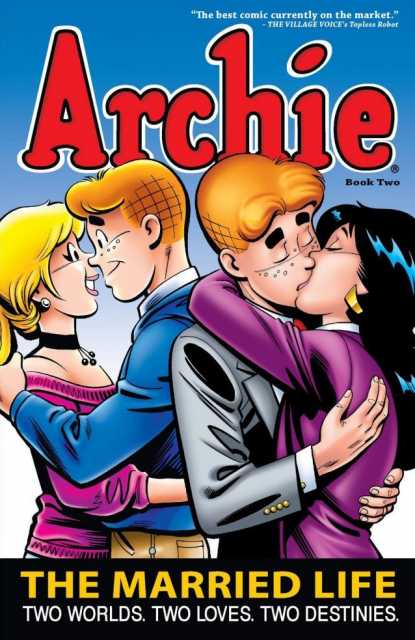
Waitaminnit. I write that, don’t I? I scrambled to the Harvey Awards website as fast as my little fingers could click the link, and there it was! In the category “Best Graphic Album Previously Published”… Archie: The Married Life, Book 2, Archie Comics!

Well, sumbitch!

Sumbitch!

I’m a thirty-eight veteran of the comic book field. I’ve written something like a thousand comic book stories, toiling if not in anonymity, at least without the recognition of awards. Then, last year, the monthly Life With Archie magazine was nominated for the Eisner Award in the “Best Publication for Young Adult” category (we didn’t win, but damned if it isn’t true what they say about it being an honor just to be nominated!). Now, in 2013, the book gloms a Harvey Award nomination. And, to make the news even sweeter, I receive it on the same day that I gave the okay for my Crazy 8 Press mystery novel, The Same Old Story, to go to press.

Proving that not all Mondays suck. Sure as hell not this one…!

Harvey_logo

Tags: , , , , , , ,

C8 final logoFrom the Crazy 8 Press press release:

“Award-winning and best-selling science fiction and fantasy writers collective Crazy 8 Press has expanded its roster of contributing authors with Paul Kupperberg, whose upcoming comic-book themed mystery novel The Same Old Story debuts through Crazy 8 Press in August.”

And here, in a long-winded and roundabout way, is why:

“Finishing the Hat,” from Stephen Sondheim’s Sunday in the Park with George is about the artist’s need to finish a piece of work to the exclusion of everything else. It’s about the magic and the elegance of the act of creation that makes it worth “turning back too late from the grass, or the stick, or the dog, or the light; How the kind of woman willing to wait’s not the kind that you want to find waiting to return you to the night, dizzy from the height.” And it tells the truth about what happens in the aftermath of “entering the world of the hat; Reaching through the world of the hat like a window; Back to this one, from that … Finishing the hat. Starting on a hat. Look, I made a hat — Where there never was a hat!”

The act of creation is a weird and mysterious thing (“Finishing the Hat” is about that, too). When I first started making hats … well, comics and books, anyway … they were still being distributed the old fashioned way, same as they had been for decades. Retailers ordered their comics (or books or magazines) from a distributor, who in turn ordered them from the publisher. The distributor then sent the retailer a number of copies of a title depending on what they thought the retailer should be able to sell. The retailer kept the comic (or book or magazine) on sale for a specified amount of time, then returned the unsold comic (or book or magazine) to the distributor and would pay only for the actual units sold. The unsold returned books were counted, credited, and pulped.

It’s true publishers and distributors took the lion’s share of the profits, leaving the creators with a paycheck or a comparatively meager royalty … but that was how one got one’s hats to market.

Thirty years later, that model of selling’s been knocked squarely on its ass. And so have many creators. Where many of us used to get our hats (or comic books, novels, whatever) to market via the Publishing Industry (the dark triangle of Publishers-Distributors-Retailers), the change in the way printed matter is distributed has resulted in a change in the way publishers do business. One Dan Brown or J.K. Rowling blockbuster is worth more than two hundred mid-list books … which publishers did little or nothing to promote when they actually did publish them. Why bother putting money into a book on the chance it will help it turn a profit when you can save all your advertising dollars for the books you know will sell?

Web publishing has made it possible for the Publishing Industry to produce ebooks that don’t require the expense of printing, binding, and shipping. Publishers can still sell an ebook for almost as much as the printed copy and make a bigger profit on it … without upping the royalty to creators, of course. Corporate Comics even try to score free or minimal payment online comics from newbie creators desperate to “go pro.”

Web publishing has also made it possible for anyone to publish a book — and now everyone does. Hundreds of thousands if not millions of titles seeing “print” on Smashwords, CreateSpace, or any of dozens of publishing services, filling the Amazon and Barnes & Noble online catalogues with so many titles — what I call “noise” — that it’s become harder than ever for the (for want of a better term) “professional” writer to make his presence, and his hats, stand out from the cacophony.

Publishing is, without doubt, in the midst of a sea change in the way it delivers books to readers. This democratization of the business has got to have the Publishing Industry crapping its corporate pants. Dan Brown’s Inferno, released in May, sold a quarter of a million copies in its first week; this is a Summer reading blockbuster that will likely go on to sell many millions of copies, netting Doubleday a healthy chunk of change even after Brown receives his royalties.

But what if … what if Brown said screw Doubleday; with his fan base, he could have bypassed the publishing house and put out Inferno on his own, in print and digital editions, and kept 100% of the profits instead of taking the smaller percentage offered by the publishers.

People like me who make our livings as creators are also undergoing a sea change in how we do business, both with the publishers and with our audiences. It used to be that just about all we had to concern ourselves with was making our hats. Once made, they would be turned over to the hat-sellers, the same ones we had been doing business with all along. They paid us for our hats and, as the common wisdom that was thrown in our faces whenever we asked for more for our hats, assumed all the risk in being stuck with the hats if they didn’t sell.

Most writers don’t have a fan base anywhere near the size of Dan Brown’s. Today, a writer has to spend as much time, if not more, looking for work as he does actually working. He has to network, chase editors and publishers just for a response to his emails and calls, write proposals on spec, work the social networks to keep his name out there so the publishers will stay interested … and, failing all that, act as his own editor and publisher and public relations person.

Remember that “noise” generated by the Web’s democratization of publishing? Well, now the individual writer with a limited or non-existent budget has to also become his own P.R. man and figure out how the hell to make his voice heard over the thunderous din of both his fellow professionals (in the same or similar boats as himself) and the hundreds of thousands of wannabes filling the online catalogues with titles?

One way to start is by joining his voice with the voices of others.

And the voices I’m joining belong to the writers hub known as Crazy 8 Press, consisting of founding members Peter David, Michael Jan Friedman, Robert Greenberger, Glenn Hauman, Aaron Rosenberg, and Howard Weinstein, and Russ Colchamiro. A couple of old friends, several new ones, and a group of good writers trying just trying to get their books out to their readers. In fact, that’s pretty much the Crazy 8 mission statement: “Crazy 8 Press is a consortium of writers who have decided to bypass the traditional publishing process to bring our work directly to you, the reader.”

In recent Tweets and postings about ReDeus: Beyond Borders (the second volume in the ReDeus shared universe anthology series I co-created and write for with Greenberger and Rosenberg, published by Crazy 8 and now available), I started adding a tagline: Support Writer Owned Small Presses; Buy Our Books! It began as a sort of joke, but it’s not so funny. Peter, Michael, Bob, Glenn, Aaron, Howard, Russ, and myself all labor long and hard to make hats of the finest quality we’re capable of producing. You’ve bought our hats before when you’ve seen them in the stores, but just because the stores no longer carry our brands doesn’t mean we’ve stopped making or selling them.

So…Buy Our Books!

Please.

Now, I’ve got to get back to making my newest hat.

Tags: , , , , , , , , , , ,

Paul Kupperberg on May 25th, 2013

BeyondBorders-full-coverI’m extraordinarily proud of the two volumes (so far) in the ReDeus anthology series, a shared universe created by Robert Greenberger, Aaron Rosenberg, and myself. The premise is simple: in 2013, the old gods return to Earth to reclaim their old domains and demand worship from humanity.

We created a series a Bible (as it were) outlining the basic set-up, carving up the world according to the old ways, and setting up a few basic rules. Then we invited a bunch of friends and fellow writers to contribute their imaginations to our world, and the results have been ReDeus: Divine Tales and ReDeus: Beyond Borders–twenty-four all new stories and counting, until the release, later this year, of ReDeus: Native Lands.

In addition to Bob, Aaron, and myself, Beyond Borders writers’ include: Scott Pearson, William Leisner, Phil Giunta, Steven H. Wilson, Steve Lyons, Lorraine J. Anderson, David McDonald, Kelly Meding, Janna Silverstein, and Lawrence M. Shoen and is available now in paperback or for the Kindle or Nook from the fine folks at Crazy 8 Press!

And while you’re at it, the first volume ReDeus: Divine Tales is still available, with stories by David Galanter, Allyn Gibson, Phil Giunta, Robert Greenberger, Paul Kupperberg, William Leisner, Scott Pearson, Aaron Rosenberg, Lawrence R. Schoen, Dayton Ward, and Steven H. Wilson.DivineTalesCover

Support small press publishers! Buy our books!

Thanks!


Tags: , , , , , , , , , , , , , , , , ,

Paul Kupperberg on April 20th, 2013

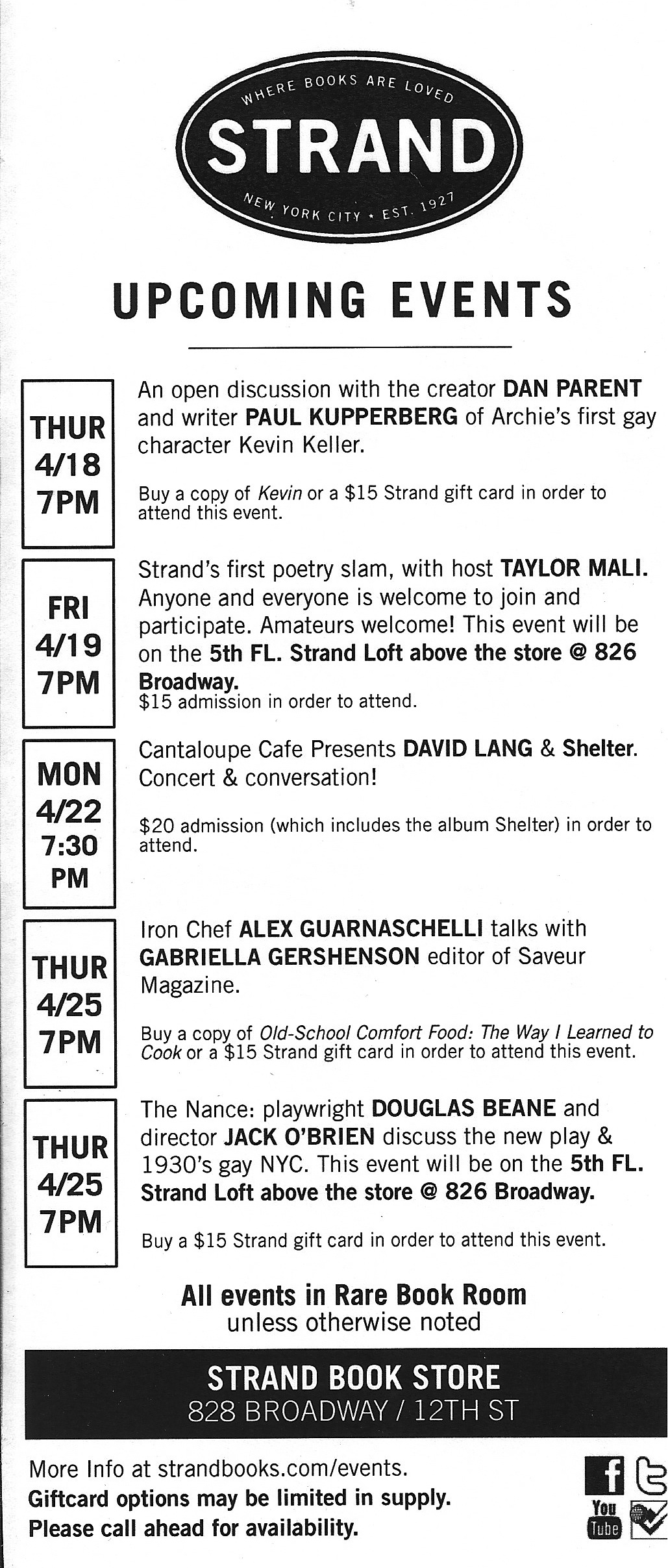
69093_10151536678862141_258291418_nKevin certainly isn’t the first book I’ve had published…but it’s the first one I that’s ever received this level of marketing support from its publisher (Grossett & Dunlap/Penguin), which has made for an exciting couple of weeks for me. I’ve done numerous interviews with the mainstream and fan press in support of the book but, for me, the highlight of the whole experience was the talk and signing I did with Kevin Keller creator Dan Parent, Archie Comics writer/artist extraordinaire, on the book’s publication day, April 18, at New York City’s Strand Book Store, one of the few remaining independent booksellers in town! No kidding, a signing at the Strand is “big boy” publishing!

Strand_flyer

The Strand is a something of a NY literati institute, four floors of books, old and new, where a reader can get lost, wandering for hours (pack a lunch!), and blowing the kid’s college tuition. Its elegant third floor Rare Book Room — in addition to housing an assortment of titles that makes the mouth water — has been the location of countless talks by authors: I imagined Dan and I were sitting in seats formerly inhabited by a parade of literary giants the likes of Vidal, Roth, and Mailer…and now, it was our turn. (Really??)

My beautiful picture

Me and Dan Parent in The Strand’s third floor Rare Book Room. Comfy chairs rock!


PK-Strand-4-18-13-witz3

Reading a short passage from KEVIN. Photo by Marc Witz

In addition to Archie Comics Publisher & CEO Jonathan Goldwater and Co-President/Editor-in-Chief Victor Gorelick (as well as the publisher and other editorial mucky-mucks from G&D), we had a good sized and enthusiastic audience (including several old friends from comics and beyond!) who seemed happy to listen to Dan and I babble on about Kevin’s past, present, and future (with the assistance of moderator Steven Scott, Archie’s ace P.R. maven), as well as sit through me reading a passage from Kevin before we opened the session up to their questions and ended with a signing session for all present. (I didn’t need my autograph so I got my copy signed & sketched in by Dan!)

Thanks to everyone who turned out…and thanks to the event staff at the Strand, who couldn’t have made us feel more welcome!

And thanks in advance to all of you who plan on buying Kevin! The rest of you…well, the less said the better…

* * * *

Links to some recent interviews and podcasts:

WSPD-AM (Toldeo, OH) Radio interview & Podcast with my old chum, Jim Beard.

GLAAD Blog

The Advocate.com

CBR.com

The Riverdale Podcast

Tags: , , , , , ,

Paul Kupperberg on March 16th, 2013

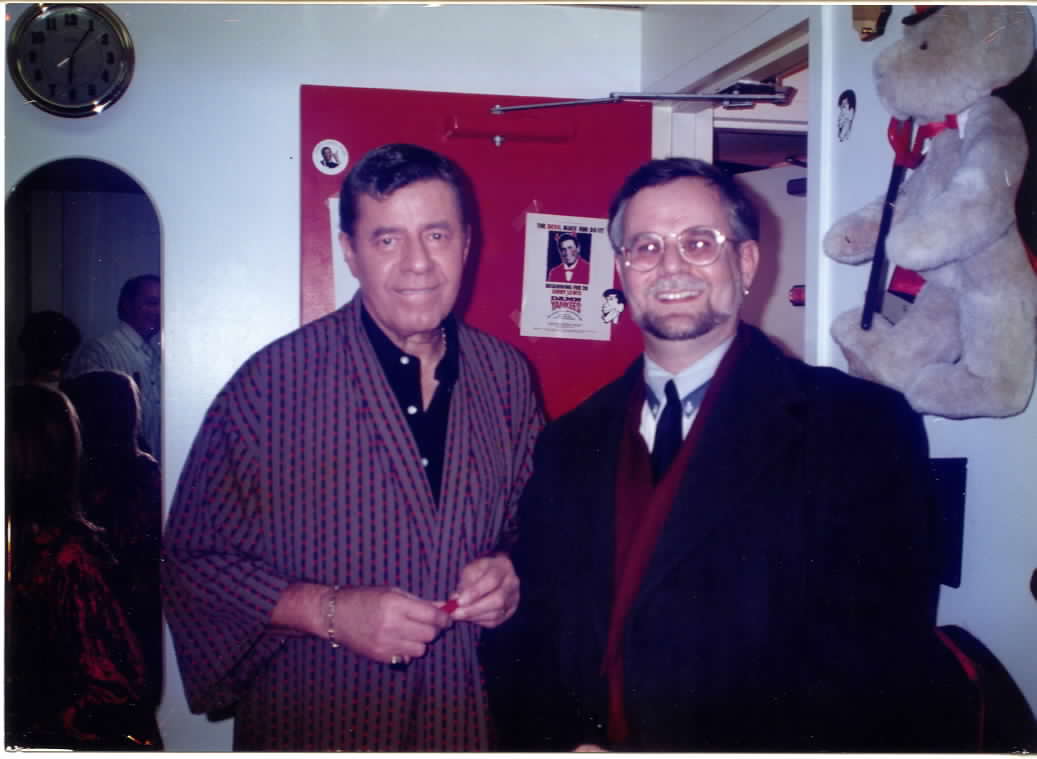
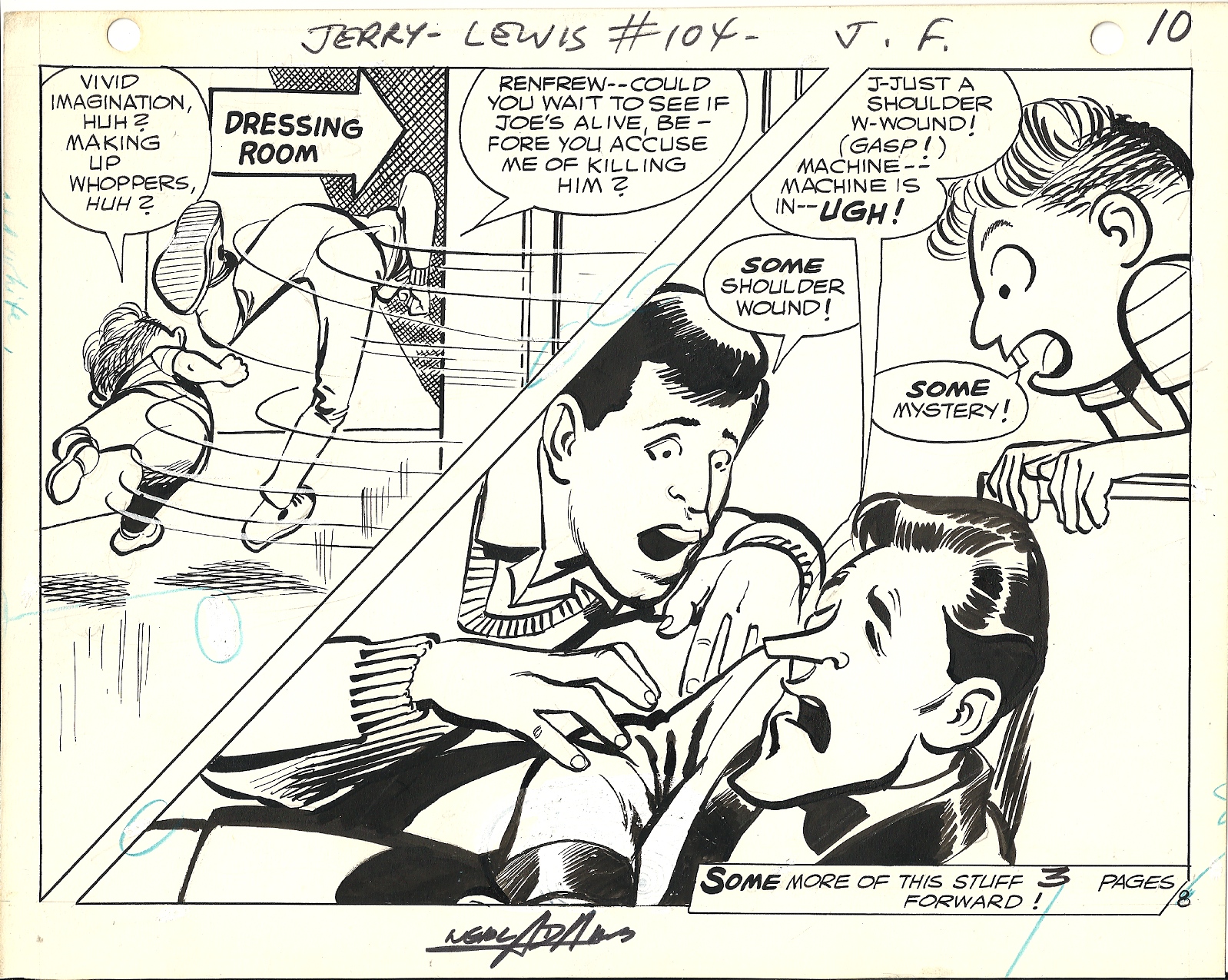
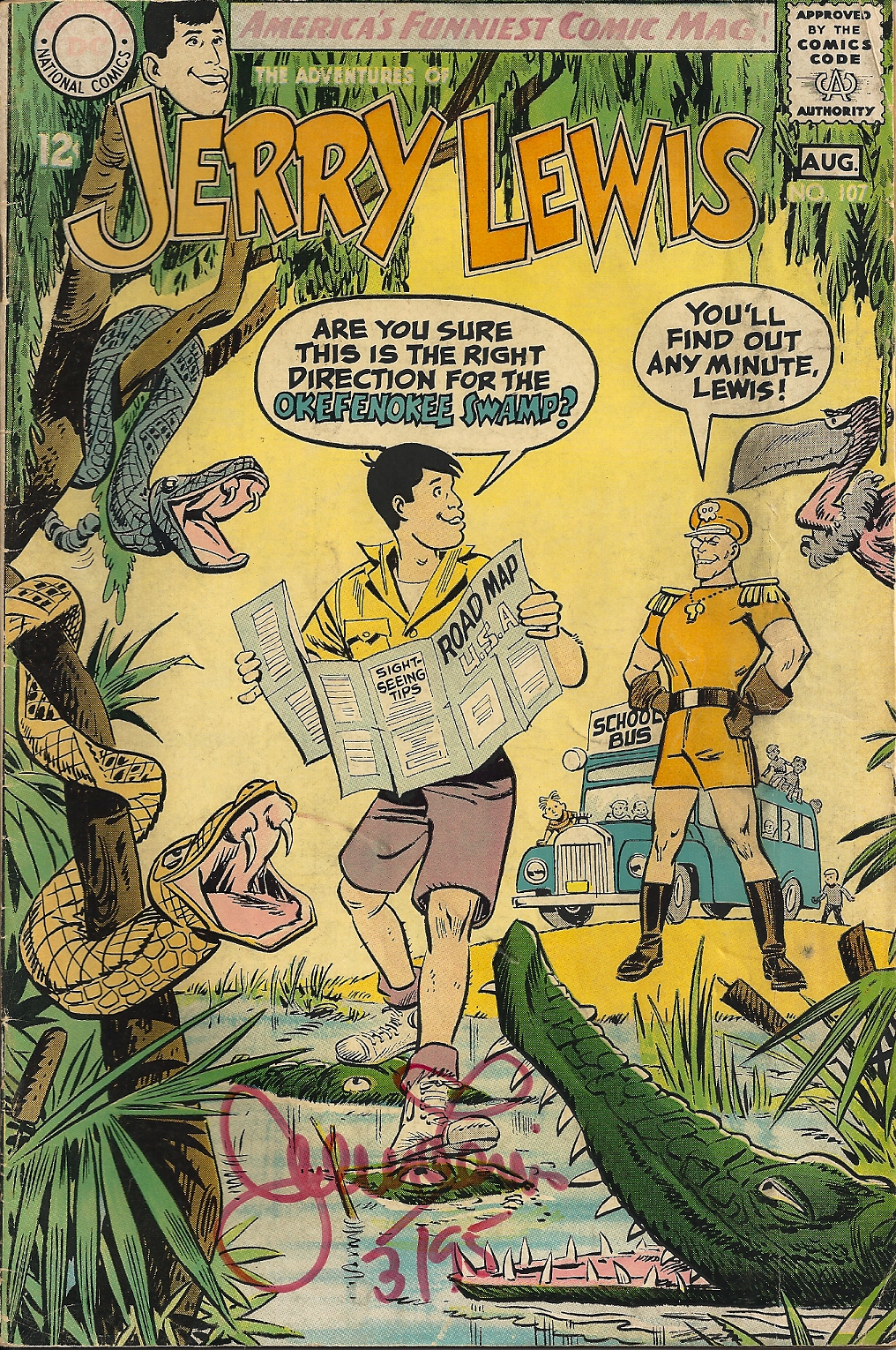
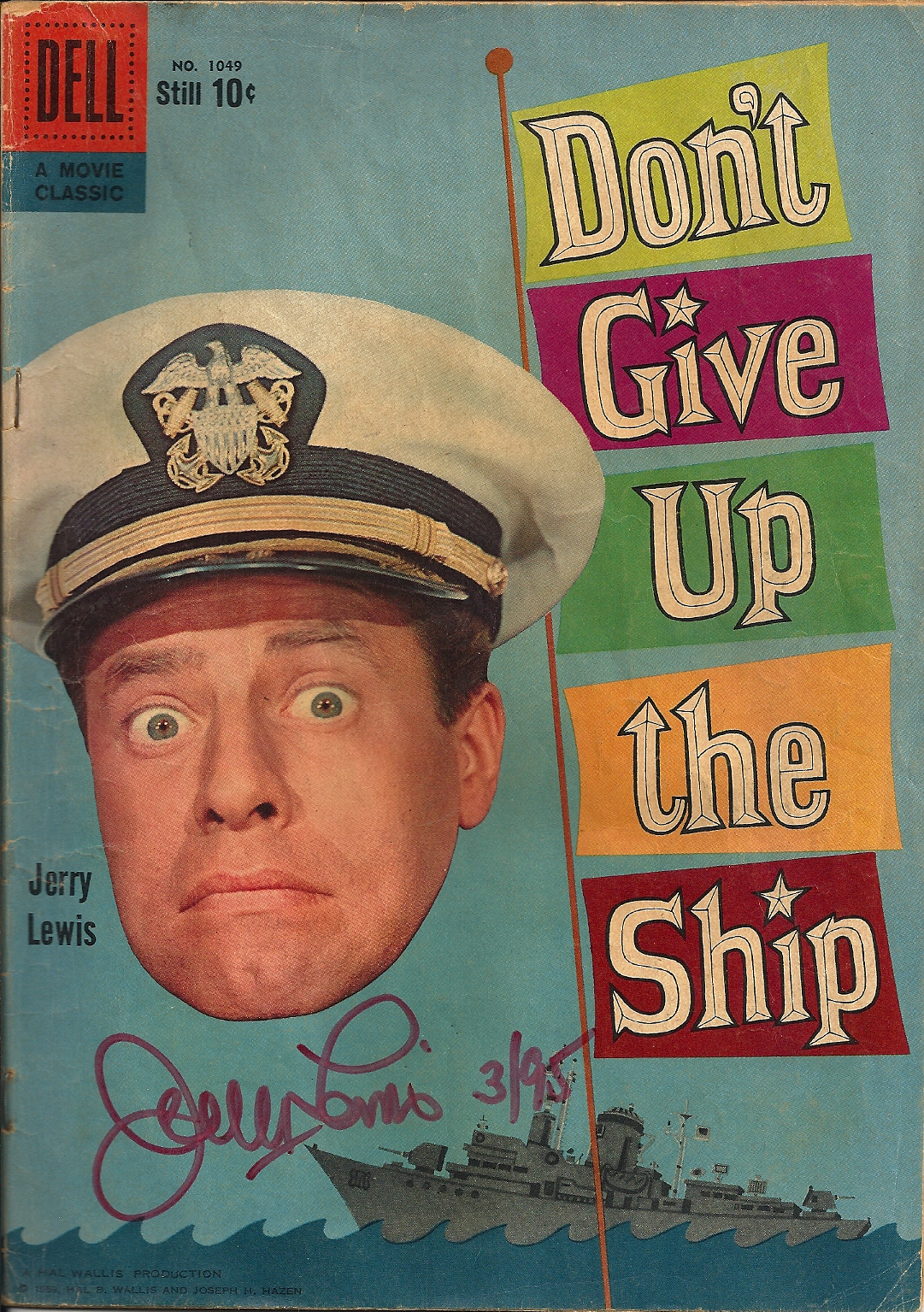
Jerry&Me2 copyToday is Jerry Lewis’ birthday! The 87 year old comedian has been a lifelong favorite and, if not exactly an influence, he’s someone whose unrestrained insanity and willingness to go deep for the joke or the gag has been a guiding light for me. I met him only once, on a Sunday afternoon in March 0f 1995, backstage at the Broadway theater in which he was starring in “Damn Yankees.”

Many moons ago, I wrote several scenes supposedly from a “lost” Jerry Lewis screenplay for a film called “Hitler’s Bellhop.” The “article” detailing the history of that screenplay came shortly after, and both are published together in In My Shorts: Hitler’s Bellhop and Other Stories.

Hitler’s Bellhop: The Lost Screenplay

Late one evening in 1967, Jerry Lewis sat in the private projection room of his Beverly Hills home, screening for perhaps the one hundredth time, Charlie Chaplin’s classic The Great Dictator.  With him was longtime friend, film historian and critic Mel Melman.  As was always the case when he watched The Little Tramp at work, Melman later wrote, “he was mesmerized, his gaze locked upon the screen as he watched, no, absorbed Charlie’s antics.  Though as different in their cinematic and comedic approaches as night and day, he’d always found inspiration in the work of his predecessor.  He saw in Charlie’s pantomime, pathos, and overwhelming bathos a spark from which his own creative fires might be ignited.  Not, please understand, as a theft of ideological parenthood, but as a conceptual springboard, if you will.  It would not be unfair to say that Charlie was and is his spiritual mentor.

“When Chaplin’s scathing satire of Adolf Hitler’s Nazi Germany ended,” Melman continued, “He turned to me, his eyes wide and sparkling in what, through our long years of personal and professional association I had come to recognize as the first blush of the Muse’s touch, and said, ‘Charlie has his Hitler film.  I want mine!’”

Melman reported being shocked by this pronouncement.  As a Jew, he was apprehensive about such a concept coming under the scrutiny of the Jerry’s somewhat broad comedic brush.  Indeed, almost as a reflex, Melman expressed that concern as soon as the suggestion came out of Lewis’ mouth.  The response, he recalls, was chilling, a classic example of Lewis’ legendary temper.  “Through clenched teeth, he stared at me as though I was something he had found upon the sole of his shoe and repeated his first thought, biting off each word.  ‘Charlie.  Has.  His.  Hitler.  Film.  I.  Want.  Mine!’

“With that, he turned his back on me and left the screening room.  That was the last time we ever spoke.”

Lewis’ “Hitler film” would turn out to be, at least in screenplay form, Hitler’s Bellhop.  After leaving Melman that evening, Lewis retired to his study and in what he later reported to be “a white hot cauldron of creativity,” churned out the screenplay over the course of three days.  In the middle of his famous seven picture deal with Paramount, he immediately brought the finished screenplay to the studio as his next picture.  Sammy Waldinger, a friend of many years and head of production for Paramount, took a look at the title page and blanched.

“I’ll never forget that moment,” Waldinger said in a 1978 interview with Film Comment Magazine.  “I was horrified, I mean physically in fear for my life at the very idea.  He honestly thought this was a movie he should make.  I asked him, ‘Is this a joke?’ and he gave me that look, that frozen reptile stare of his.  ‘I’m serious, Sammy,’ he said, and he was.  He sat in that chair for two hours, arguing with me.  ‘It’s funny,’ he said.  ‘It’s not funny,’ I said.  ‘Hitler isn’t grist for the comedic mill.’  What about The Great Dictator, he wanted to know.  Or Brooks?  Mel was preparing The Producers then.  Or To Be or Not to Be?

“But what he never seemed to grasp was that Chaplin aside, those movies weren’t about Hitler per se, but comedies dealing with those around Hitler, or in the case of The Producers, a satire on Broadway more than Hitler himself.  He thought that this… screenplay of his fit that mold.  ‘It’s not about Hitler.  It’s about the Bellhop.’  Well, while we talked, or I should say argued, I was flipping through this thing.  And here was Adolph Hitler, that monster, that beast, he should be rotting in Hell even as we speak, being treated like some kind of sitcom next-door-neighbor buffoon.  A perfectly harmless and hapless goof who kept getting pushed into committing history’s worst atrocities through his clumsy Bellhop.  This is funny?

“Well, finally, I put my foot down.  ‘No way,’ I said.  ‘This crap doesn’t get made by my studio, not as long as I’m in charge!’  Well, you know him.  He said,

‘That can change, Sammy!’ and walked out with his screenplay.  Needless to say, I’m still in charge of the studio, and we never made Hitler’s Bellhop.  But that was the last time we ever spoke.”

JL-Adams_art

Though a consistent money maker for the studio, Jerry Lewis never did find a sympathetic ear there.  His contract did, however, contain a clause that allowed him to make one independent picture a year, and he decided that picture would be Hitler’s Bellhop.

Independent producer Frank Schlessinger, a friend with whom Lewis had made several pictures over the years, remembers the initial pitch meeting.

“Kind of surreal, you know what I mean?  He was really up about this picture and I think his enthusiasm must have been contagious or something, because by the end of the lunch, I was ready to hop on the bandwagon.  Come to think of it, I don’t know if it was his enthusiasm or that fourth martini.  At any rate, we shook on it.  I was gonna produce Hitler’s Bellhop.”

With the handshake deal in place, Lewis went on a publicity blitz.  Bella Leven, a writer for the Hollywood Reporter recalls an interview where Lewis went on at great lengths justifying his choice of subject matter.  “Sure,” he said., “I could have played the role of Hitler myself, but who would believe it?  You see, the public has in its mind a picture of me as the ‘little guy,’ the poor man trapped in a greater system that is beyond his ability to comprehend or control.  That’s why I’ve had such luck in my pictures portraying the little cog in the big machine, if you will.  The waiter, the bellhop, the sales clerk, the handyman, what have you.  I am not believable as the father figure, or the man in command.

“That’s why I settled on the character of the Bellhop… nameless, you’ll notice, throughout the picture, because he is the every man, the little guy trapped under the boot of authority.  You know, there’s a comedic conceit in Jewish humor, although it applies to all forms of humor, of the schlemiel and the schlimazel.  The schlemiel is the klutz schnook who trips over his own shoelaces and knocks a bowl of soup out of the waiter’s hand.  The schlimazel is the poor bastard on whose head the soup spills.  I am the schlemiel.  That is my persona.  That is what my public expects.”

When Leven asked if the subject matter of Hitler’s Bellhop didn’t trivialize Hitler, Nazism, and the Holocaust, Lewis dismissed the charge.  “Never!  I would never do such thing.  Rather, what I’ve done is expose these horrors to the light of ridicule and broad satire.  How scary is the monster once you notice his zipper is open and his wee-wee is hanging out?  I’ve opened Hitler’s zipper.”  The reporter next questioned the historical value of the screenplay and asked how much research went into its creation.  Lighting a cigarette with a three foot high flame from his gold lighter, Lewis smugly conceded that he had not invested any time in research before writing Hitler’s Bellhop.  The reporter expressed his incredulity that he would attack such a subject without first researching the historic and psychological aspects of Hitler when Lewis cut him off.

“I’m a Jew,” Lewis snapped, his eyes as cold as ice.  “There’s nothing about that momza Hitler that I don’t know here,” he snarled, thumping his fist over his heart.  “In my kishkas!”  At which point Lewis terminated the interview and never spoke to Leven again.

Eventually, commonsense (or sobriety) got the better of Frank Schlessinger and he backed out of the handshake deal with Lewis.  “He was livid,” Schlessinger recalled with a chuckle.  “He accused me of everything from censorship to anti-Semitism, but what could I do?  I was never going to be able to get backing for this thing, but let’s say I did.  Then what?  I’m gonna have my name on a comedy about a cuddly Hitler who accidentally perpetrates some of humanity’s evilest acts?  What, do I look nuts to you?  He ranted, he raved, he badmouthed me up one side of Hollywood and down the other, he sicced I don’t know how many lawyers on me, but it was all just a lot of noise.  Pretty soon, he got tired of it and went away.

“I heard he spent the next few years trying to find other backers, but by then the whole industry had heard about this insanity and nobody would touch it with a ten foot pole.  Eventually, I guess he just shoved the screenplay in a drawer and forgot about it.”  Schlessinger sighed and shook his head sadly.  “That was the last time we ever spoke.”

JerryLewis107Jerry-DontGiveUpShip

Apparently, Hitler’s Bellhop was forgotten, the screenplay itself lost, until last year when Lewis sold his Beverly Hills home in order to relocate to Florida with his new wife.  Old file cabinets left out on the street for trash collection were immediately descended upon by souvenir hunters, one of whom, Audrey R. Freun of the Santa Monica Boulevard movie memorabilia shop StarFinders, discovered the yellowed and crumpled partial manuscript wedged under one of the drawers.  “I was very excited,” Ms. Freun said.  “Hitler’s Bellhop is something of a Hollywood legend, but no one outside of a few studio honchos had ever read it.  Even the remaining bits and pieces that I found are a revelation.  Of course, being a huge, huge fan of his, I was doubly thrilled to be able to read some of this lost work.  What was most incredible was finding the cast page, featuring his very own ‘dream team’ for the picture.

“We’d met several times,” Ms. Freun continued, “and I’ve sold him some pieces over the years, mostly Chaplinania.  I thought we had a cordial relationship, so I called his office to let him know what I found.  His secretary put me through to him, and I started to describe what I had and there was just silence on the line.  I asked him if there was anything wrong.  He said, ‘What are you trying to do?  Humiliate me?’  I assured him that wasn’t my intent, but he launched into this diatribe about the people who hate him, who refuse to understand his creative genius and what all.  He accused me of all these things and then slammed the phone down.  That was the last time we ever spoke.”

Attempts to reach Jerry Lewis concerning the screenplay have met with a wall of silence.  He refuses to respond to any questions about it, and friends and associates will not speak without Lewis’ permission, which, needless to say, is not forthcoming. Lewis has not spoken to this writer since 1983, when I published a less than glowing review of his low budget comeback comedy, Salad Bar.

Here, then, the last surviving fragments of Hitler’s Bellhop.

# # #

HITLER’S BELLHOP: The Director’s Dream Cast of Characters:

The Bellhop ………………………………. Jerry Lewis
Adolf Hitler …………………………….. Gale Gordon
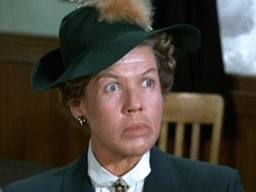
Eva Braun ……………………………. Kathleen Freeman
Anna …………………………… Anna Maria Alberghetti
Gohring ………………………………….. Jesse White
Himmler ………………………………… Milton Fromme
Mussolini …………………………………. Joe DiRita
Neville Chamberlain ……………………… Peter Lawford
Winston Churchill ……………………….. Maurice Evans
FDR …………………………………….. Tony Randall
The Italian Ambassador …………………….. Vito Scotti
French Premier Daladier…………………Franklin Pangborn
Emperor Hirohito…………………………… Jerry Lewis
Gohring’s Aide…………………………….Howard Morris
Josef Stalin ……………………………. Jerry Colonna

Gale Gordon as "Adolph Hitler"

Gale Gordon as “Adolph Hitler”

Kathleen Freeman as "Eva Braun"

Kathleen Freeman as “Eva Braun”

Fromme

Milton Fromme as “Himmler”

franklin-pangborn-bank-dick-portrait

Franklin Pangborn as “French Premier Daladier”

Jerry Colonna

Jerry Colonna as “Josef Stalin”

Tags: , , , , , , ,

Paul Kupperberg on March 15th, 2013

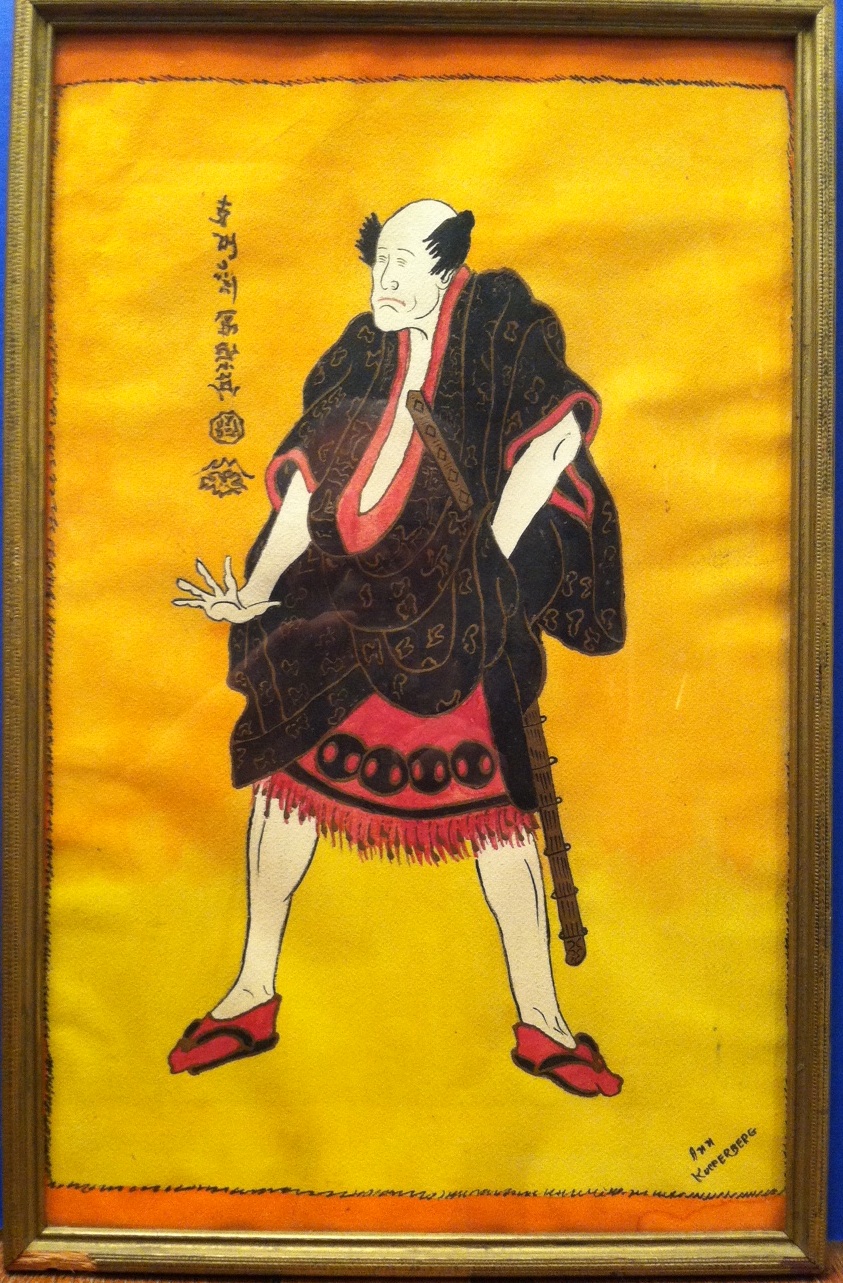
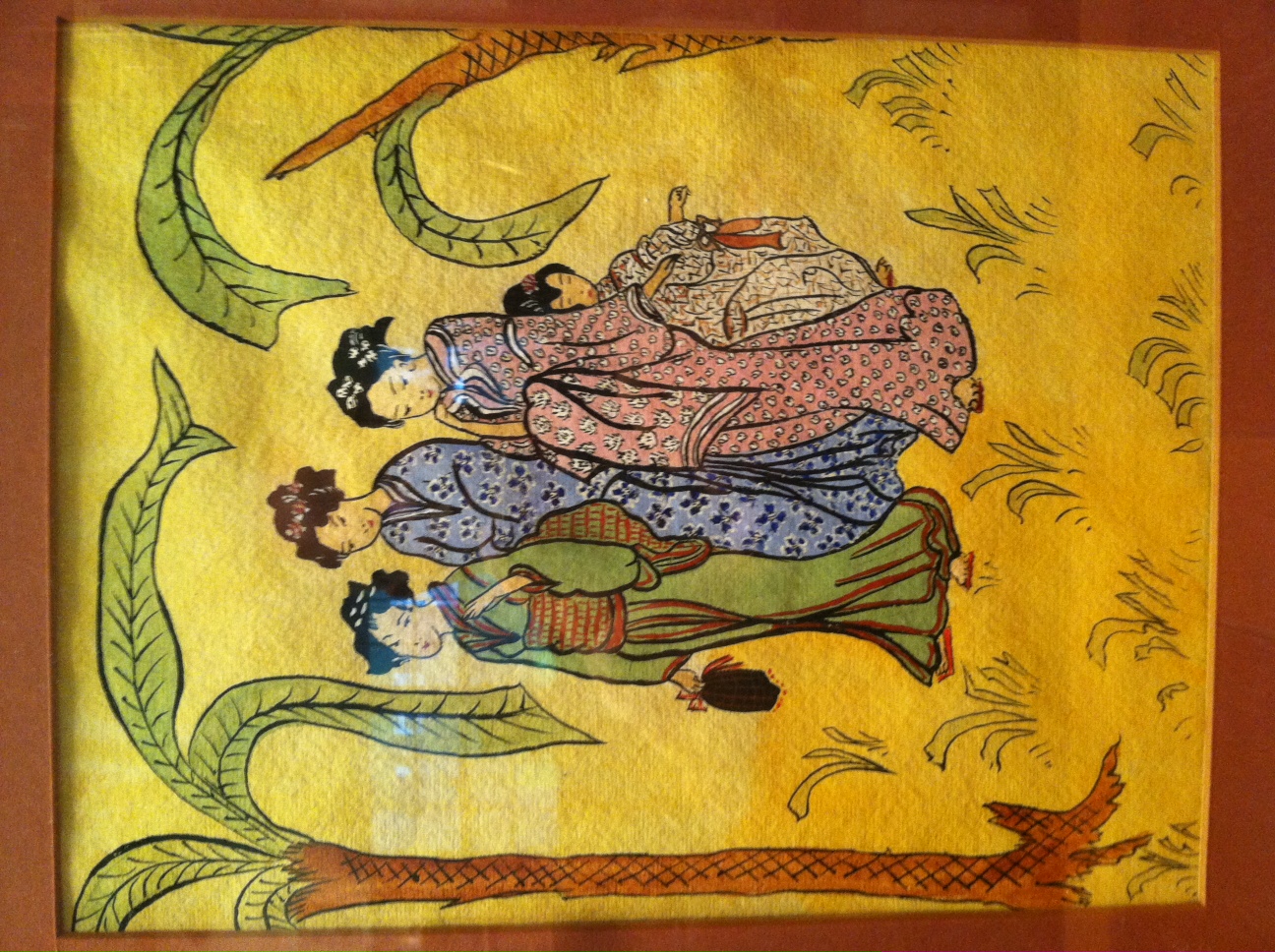
Another haiku to accompany another of my grandmother’s, artist Ann Kupperberg’s Japanese-style water colors, following last weeks’ short story, “Unburdened.” Until now, her work, which she continued to produce in one medium or another almost her entire life, has never been seen by any sizable audience outside of her family.

NannyAnn_samurai

Fate is the master

Life by the sword, time over

Mere honor remains

Tags: , , ,

Paul Kupperberg on March 3rd, 2013

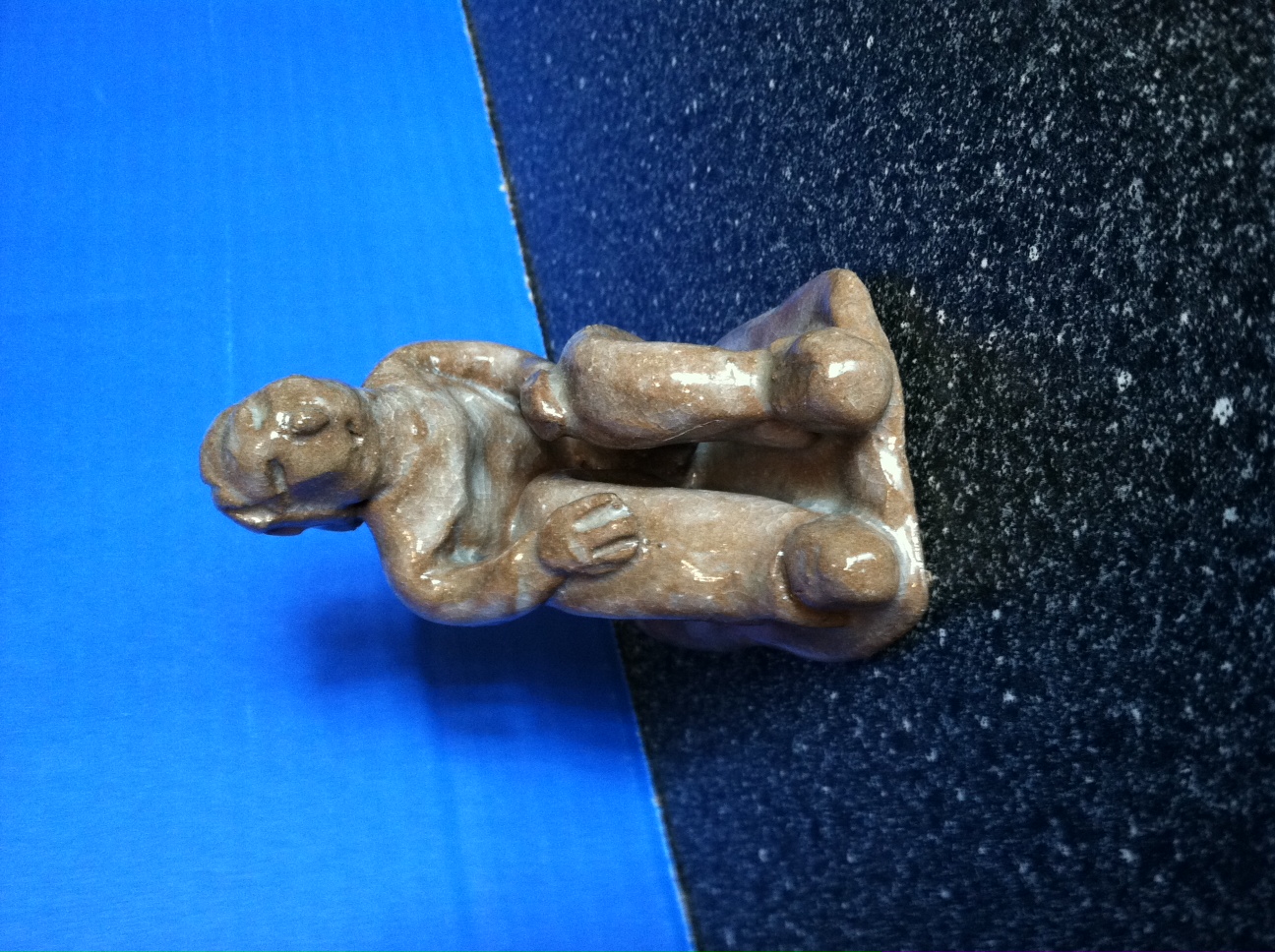
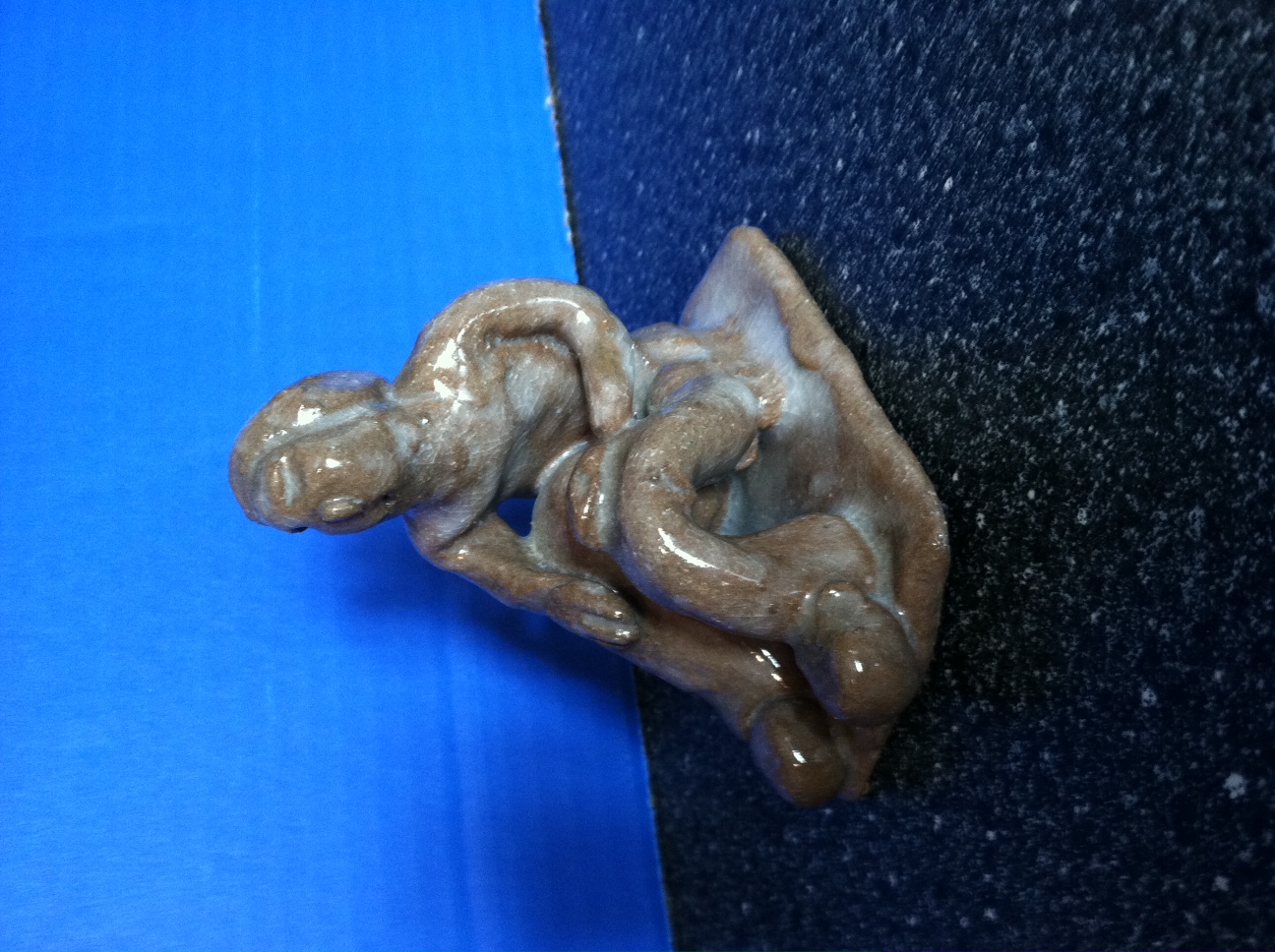
As I mentioned in the first Collaborations With My Grandmother, my grandma Anne Kupperberg was an artist who left behind many wonderful pieces of her work with members of her family. Though primarily a painter, after losing her eyesight to macular degeneration she took up sculpting in clay and soapstone. The story that follows is inspired by one of those pieces:

photo

Unburdened

After the break-up of his marriage, Jack felt as though a great weight had been lifted from his shoulders. It wasn’t that his ex was a bad person or that their marriage had been particularly horrible. They had simply grown apart over the course of two and a half decades and three children and stopped having anything in common. It surprised neither of them when she woke up one morning and told him that she didn’t think she could go on playing at life as though nothing was wrong anymore. He couldn’t think of a convincing counter argument, so three months later, the house was on the market and their lawyers were trying to complicate the straightforward agreement they had already worked out between themselves:

What’s yours is yours and what’s mine is mine, the rest we divide down the middle.

Their youngest was in her second year of college, and all three understood immediately when their parents sat down and broke the news to them. Jack suspected the kids may have even been a little relieved, having sensed the growing distance between their mother and father before they themselves recognized the problem. Relations had been cordial and, while fights were few, deep, simmering silences could go on for weeks at a stretch. “Ask your mother…” and “Please tell your father…” became the prefixes of anger the kids heard more and more on their visits home. Something had to give. Eventually, it was her.

And then he had what was his and it was all going into boxes for movers to bring somewhere else, an apartment or a condo, one likely to be too small to accommodate his vast horde of … stuff. His ex called it “junk,” his friends called it a “collection.” He couldn’t say whether or not it was junk, but it was all too eclectic and random an assortment of objects and ephemera to be any proper kind of collection.

He liked to think of himself as an accumulator. By far, the largest accumulation was of books, thousands and thousands of old and musty paperback editions bought in bulk at flea markets and library and garage sales over the years. He read some, but mostly he liked them for the covers, those 1950s miniature masterpieces of the lurid, sensational, sexy, fantastical, and horrible. Then came the CDs, five thousand of them, easy, on shelves, in hallways, boxed and shoved in the garage and closets; and the magazines, endless neatly tied bundles of Time, Newsweek, People, Boys Life, and two dozen other titles of publications long deceased, and newspapers, multiple copies of different papers headlining the significant events of his lifetime; the figurines of advertising characters, like Nipper the RCA dog, the Pillsbury Dough Boy, Big Boy, Reddy Kilowatt, the Michelin Tire Man; there were, he found, almost thirty antique shaving mugs in various locations throughout the house, as well as hundreds of copies of sheet music from the 1920s onward, a carton of hand puppets, somewhere in the vicinity of two hundred Pez dispensers, a shoebox of advertising swizzle sticks in interesting shapes, two years worth of Sad Sack comic books from the mid-1960s, at least eight sets of screwdrivers, nine hammers, twenty-three cans of unsorted nails and screws, eleven wrenches, and crowbars in seventeen different sizes. He found bulging baggies of political and gag buttons and pins. He found office supplies sufficient to stock a mid-sized brokerage firm, including enough notepads to copy out Moby Dick and the complete works of Dickens, Proust, Tolstoy, and Dostoyevsky several times over. He pulled boxes from the attic containing toys and games from his childhood and those of the kids. He owned G.I.Joes and all the uniforms and accessories, including a jeep, a diving bell, and a Gemini space capsule. He had 1950s promotional bar trays featuring all the popular beers of the era, Schlitz and Piels and Black Label, as well as commemorative shot glasses and bottle openers. He had … so much to carry.

But now, he had enough. Why had he held on to all of this … stuff? Most of it was boxed, tied, or wrapped, put away in some dim, dark corner under yet more stuff and hadn’t been looked at or touched for years; vast quantities of his possessions he didn’t even remember he possessed. What was the point in having a thing if the thing was had only to be shoved away into some dark corner and forgotten?

Jack rented a dumpster. He had relinquished the weight of his failed marriage by divorce. Now the challenge was to give up the weight of the empty life he tried filling with all this stuff. But standing there among the accumulated piles and stacks of his emotional debris, he didn’t know how he could do it. Was he simply throwing out some garbage or tossing his entire life on the trash heap?

“Fuck it!” he said, and heaved a bundle of newspapers from Nixon’s resignation in 1973 into the dumpster. After the first one, it got easier. Each box or bundle or bag that found its way into the dumpster was one less thing that Jack had to worry about in life going forward.

He contacted several dealers he knew in books, toys, memorabilia, and music He showed them what he had and accepted their best offers and a helping hand to load it into their trucks and vans and take it away. What he couldn’t sell joined the rest of the garbage in the dumpster. He went through his closets and drawers and started filling black plastic trash bags with the clothing he owned but hadn’t worn in years and gave it all to Goodwill. He considered the furniture he was taking and the kitchen utensils he would need. Television had lost all interest for him once he found the responsibility of keeping track of and remembering to watch all the programs he followed too much to worry about. On radio, they played music for which he had no patience or talked endlessly about matters in which he had no interest and, as the days passed, even less understanding.

By the time he moved into his apartment, a one bedroom with a terrace in a high-rise  in a nice part of town, it took two moving men less than an hour and a half to pick up and drop off all his possessions, including the twenty minute drive between his old home and the new.

An easy chair. A lamp. A pullout sofa bed. A small dining table and two chairs. A small bookcase. One box of kitchen utensils. One of books. One of bathroom supplies and toiletries. Two suitcases of clothing.

His life, reduced to the bare essentials. And he didn’t have any particular attachments to even those. In fact, it soon became evident that he had not in fact let go of enough things. Clothes had to be laundered, tables wiped, dishes washed, books read. He got rid of the books first, then the bookcase, since he no longer had anything to put in it. Jack had stopped seeing people, so the second chair at the table wasn’t necessary … indeed, what did he really need any dining set for if he could eat in his easy chair? Or, as it struck him in a revelation as he sat in the easy chair with his bowl of soup staring at the sofa bed, why clutter his life with the chair when he could sit on the sofa? And who needed a sofa bed when he could sit and sleep on the floors perfectly comfortable dark, plush carpet? And how many articles of clothing could he wear at any one time? Wear what you own, he told himself, and tossed everything but the clothes on his back down the incinerator.

With his diet whittled down to soups and stews he could heat in their cans, Jack didn’t need dishes, pots and pans, or utensils beyond a spoon and can opener. He drank only water and that he could do straight form the faucet.

With nothing left to look at in the apartment, he cancelled his electrical service and threw away his lamp. The contents of his medicine chest were, one by one, deemed non-essential and deleted until it held only a toothbrush, a straight razor, and a bar of soap. His one towel hung on the rack.

Then he was done. Everything that required care and maintenance in his life was gone. There were no more burdens for him to carry. It was just him now. Alone with his thoughts.

Until the morning he woke up on the floor and wondered how he might unburden himself of those as well.

– – – – – – – – – – – – – – – – –

photo-1

Two better views of my grandmother’s sculpture.

photo-2

Click image to enlarge


Paul Kupperberg on November 27th, 2012

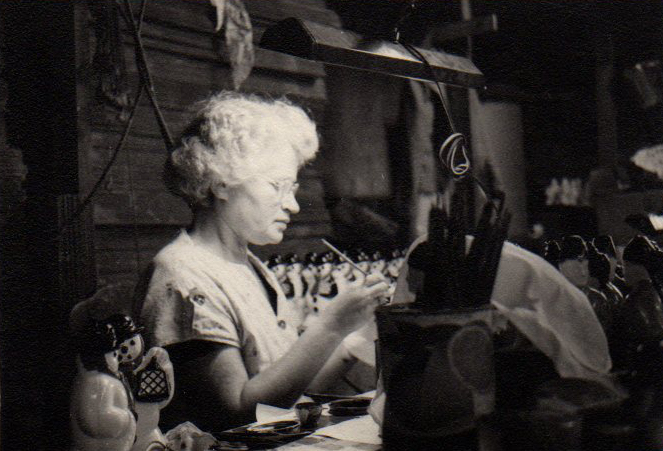
Portrait of the artist: my grandmother at work at Ann Kupperberg & Co. in the 1950s

My paternal grandmother Anna (circa 1901 – 1979) was an artist. Even though her father didn’t allow her to attend art school, she followed her passion her entire life.

I own several paintings and pastels she did (as well as a hand-painted umbrella handle and baby rattle, both products of the small company she and my father owned in the 1950s that offered that service), as well as about half a dozen small sculptures she made later in life, after she lost her eyesight to macular degeneration and could no longer paint.

I’ve been toying for a while with the idea of “collaborating” with her by writing short stories based on some of her pieces. I thought I would kick the project off by straying outside my comfort zone with a haiku, an obvious choice, considering the art that inspired the words.

Whispers in the trees

Summertime beauty blooms soft

Footprints in the grass