Paul Kupperberg on November 20th, 2012

I’m working on the third story featuring the snarky Leo Persky, a.k.a. Weekly World News reporter “Terrance Strange.” WWN, for those who don’t recall, was the black and white supermarket tabloid published by the chowderheads at American Media, Inc., the folks who bring you the gossipy National Enquirer. While the stories in the Enquirer are cheesy but true (they actually do rigorous legal vetting of this tripe since lawsuits are sure to follow), WWN’s–home of Bat Boy, alien babies, and creator of Elvis-sightings–were funny but fake from page one. I speak with surety of this as both a one-time writer and former executive editor of the late, lamented rag, which closed its doors in the summer of 2007 (it was later revived as a website, under new management).

The Leo Persky stories, however, are based on the premise that everything the Weekly World News (“The world’s only reliable newspaper”) prints is true. The first story, “Man Bites Dog” appeared in Moonstone Books’ anthology Vampires: Dracula and the Undead Legions, and was reprinted in my ebook short story collection, In My Shorts: Hitler’s Bellhop and Other Stories, and the second, “Vodka Martini, Straight Up, Hold the Jinn” in R. Allen Leider’s Hellfire Lounge 3: Jinn Rummy. The third installment will run in Hellfire Lounge 4: Reflections of Evil, scheduled for publication in early 2013.

So, for your consideration, the first 750 words of…

Shunning the Frumious Bandersnatch

The first thing you’ve got to know is, Lewis Carroll didn’t make up all that stuff about what was on the other side of the looking glass.

Don’t get me wrong. Most mirrors are just that: reflective surfaces we use to gawk at own mugs, comb our hair, or check for residual spinach in our teeth. Break the average mirror and the worst you’ll wind up with is a broken mirror, unless you happen to walk across the broken glass in your bare feet. The whole seven years of bad luck bubbemeisier has more to do with old timey superstition than reality–the reflection therein was once believed to represent the soul, therefore bad luck of the seven year variety (the number seven being to old timey superstition what thirteen is to us nowadays) for damaging said soul in the breaking of the mirror. The Romans believed that life renewed itself on a seven year cycle, so if you busted a mirror and did the aforementioned damage on a soulular level, things didn’t get back to normal until the next seven-year cycle had passed. But the olden days had a lot of weird ideas about the soul and the wacky little things that affected it that we still carry around in these modern, enlightened times. I mean, we know that sneezing is caused by inflammation or irritation of the nasal membranes and doesn’t result in bits of our soul escaping through our noses, but we continue to say “God bless you” to sneezers anyway.

But, that being said, there are, as the saying goes, exceptions to every rule.

So while not all mirrors are gateways to other realities, all gateways to other realities are mirrors.

By now, you’re wondering who I am and why I’m babbling on about mirrors, bad luck, and dimensional gateways.

Who I am is Terrance Strange, roving reporter for the Weekly World News, the world’s only reliable newspaper. You know the one. The tabloid you flip through and chuckle over while you’re waiting on the supermarket checkout line, the one that runs all those stories about Bigfoot, alien babies, and human/bat hybrid boys that you almost never buy because we make it all up? Well, as outlandish as it all sounds, every word we print is true…that is, except for my byline.

My real name is Leo Persky. But “Terrance Strange” sounds like he’d be a big, strapping adventurer who travels the world seeking out the dangerous and the, yes, strange, while Leo Persky sounds like a middle aged five foot, seven inch tall balding and bespectacled Jew who cowers at the slightest sign of danger. Seeing as how I am the latter but would rather readers believe I’m the former, I go with the macho name, not to mention a photograph at the top of my column of my paternal grandfather, Jacob Persky, who also used the nom de bizarre of “Strange” but actually was a big, strapping adventurer who traveled the world seeking out the dangerous. Unfortunately, I take after mom’s side of the family.

Be that as it may…

As Shakespeare once pointed out, there truly are more things in heaven and earth than are dreamt of in Horatio’s philosophy. “Horatio” being a metaphor for you, that is. For all that you really, really, really want and need to believe that the stuff you see in horror movies, dream of in late-night-pepperoni-pizza induced nightmares, or is speculated about in low budget documentaries on the History Channel are imagined or make believe, most of them aren’t.

Bigfoot? Alien visitations? Magic? Ghosts and demons?

Real. Real. Real. And real.

We usually leave it to the so-called “lunatic fringe” to believe that things like Roswell, vampires and werewolves, and outlandish government conspiracy theories are true. And if you’d seen some of the things these folks have seen, you’d like be a little wack-a-doodle yourself. But just because they’re crazy doesn’t mean they’re wrong. And just because the stories we publish don’t fit into most peoples’ definition of normal doesn’t mean they’re untrue. It just means it’s way easier to go through life believing that to be the case than have to deal with the fact that there really are creepy, drippy things living under the bed and lurking in the closet.

And on the other side of the mirror.

Tags: , , , , , , , ,

Paul Kupperberg on October 23rd, 2012

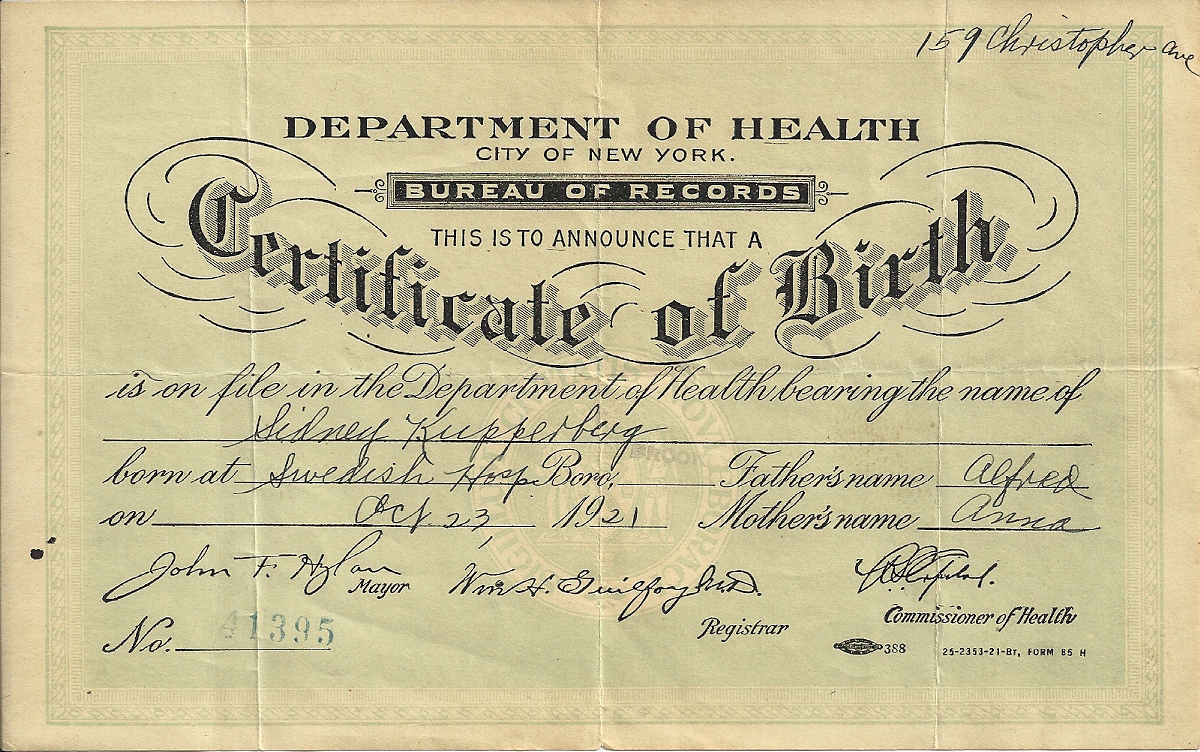
Sidney would have been 91 years old today.

Thoughts of my old man never fail to make me smile. He was a loving father, a good husband, a hard worker, one of the smartest men I knew, and the life of the party. He was born October 23, 1921 at Brooklyn’s Swedish Hospital on Sterling Place and Rogers Avenue to Alfred and Anna Kupperberg. He grew up in the Brownsville section of Brooklyn, surrounded by a close and loving family (which came to include his sister Phyllis); my grandfather Alfred was a licensed  electrician who made a good living as a projectionist in local movie theaters and for Paramount Studio’s Brooklyn studios; when he died suddenly and unexpectedly in 1930 at the age of 26, he owned his own car (a 1927 two door Nash sedan, purchased for $385 in 1929), an apartment full of furniture (bought, on time, for $225 from N. Tennenbaum House Furniture in 1919), and had over $2,200 in savings in the Brooklyn Trust Bank. He also left behind a life insurance policy from the Guardian Life Insurance Company of America that paid my grandmother $4,975.60.

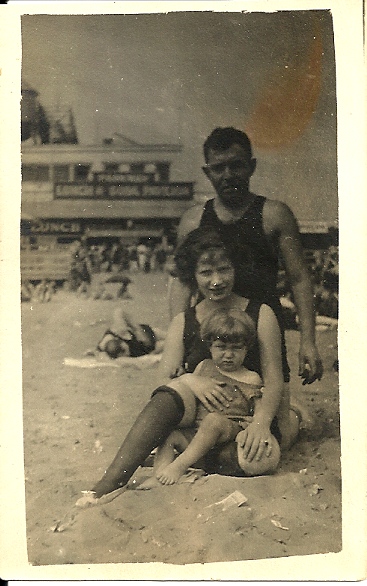
Alfred, Anna, and Sidney at the beach

Alfred dropped dead in that 1927 Nash in front of the Grenada Theater on Church and Nostrand Avenues, a movie theater I would work at as an usher in the early 1970s. The owner, Max Schering, who had himself been an usher at the theater, remembered my grandfather and grandmother, who had been a box office cashier and had trained Irene, the white haired old lady who still sold tickets in our box office, in her job.

My father was nine years old and bedridden with rheumatic fever when his father died. Rather than tell the sickly boy what had happened, the family told him instead that his loving and beloved father had gone away. I don’t think Sidney ever got over the sense of abandonment this lie left him with.

Sidney (front left) and some pals on St. Johns Place in Brooklyn, sometime in the 1930s

Dad was an average to mediocre student, and he dropped out of high school (Brooklyn’s Samuel J. Tilden High, which I later attended with similar average to mediocre grades, graduating in 1973) to help support his family during the depths of the Great Depression. My grandmother, an artist frustrated in following her muse by a stern father who wouldn’t allow her to attend art school, was something of a spendthrift and seemed to have lost whatever money was left to her by opening a small business, the NetAnn Gift Shoppe at 881 Eastern Parkway with her sister, Nettie. Sidney held a wide variety of jobs, in stock rooms and shipping docks, belonged to several different unions, and, come World War II, was declared 4-F by the draft board, unfit for service due to a heart murmur. He developed a keen interest in photography and became an accomplished amateur photographer, eventually processing and printing his own pictures.

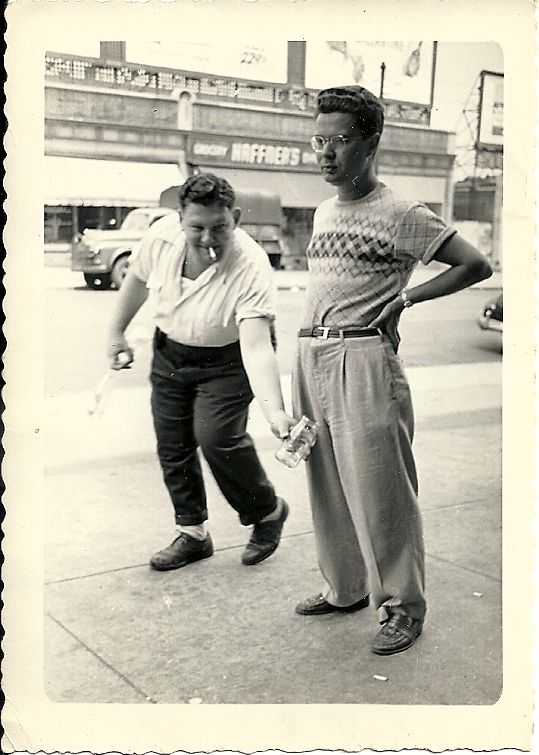
On St. Johns Place, this one is labeled on the back, “Clown & Sid, 1949”

Sidney was, by all accounts, a bit of a ladies man, and was still unmarried at the age of 29, a somewhat rare occurrence for the day and age, but that all changed when he met Lottie in 1951 at a meeting of a Brooklyn photography club. Not that she had any particular interest in photography herself; the 19-year old bookkeeper had gone there with a friend who wanted to meet guys, not take snapshots. Regardless, it seemed to have been love at first sight, Sidney smitten by the young lady’s looks, Lottie taken by the suave, handsome smooth talker with a Leica.

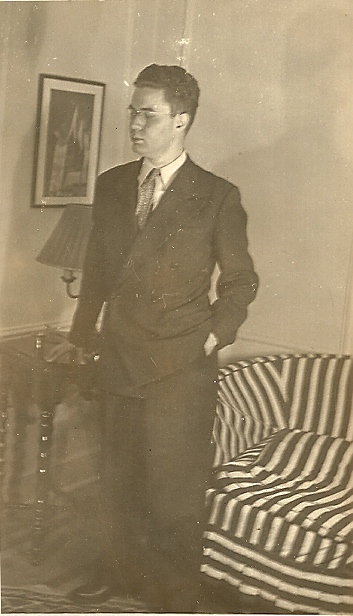
Dashing! Sometime in the 1940s

Lottie and Sidney were married on June 24, 1951 and moved into an apartment in 261 Buffalo Avenue; in the next building over lived Sidney’s mother Anna and his grandmother, Bubbe, Lottie’s mom Rose with her younger brother David, and Sidney’s sister with her husband Mitzi (Milton). Alan Edward came along on May 18, 1953; I joined the party on June 14, 1955, and Lewis Neil completed the quintet on February 9, 1958.

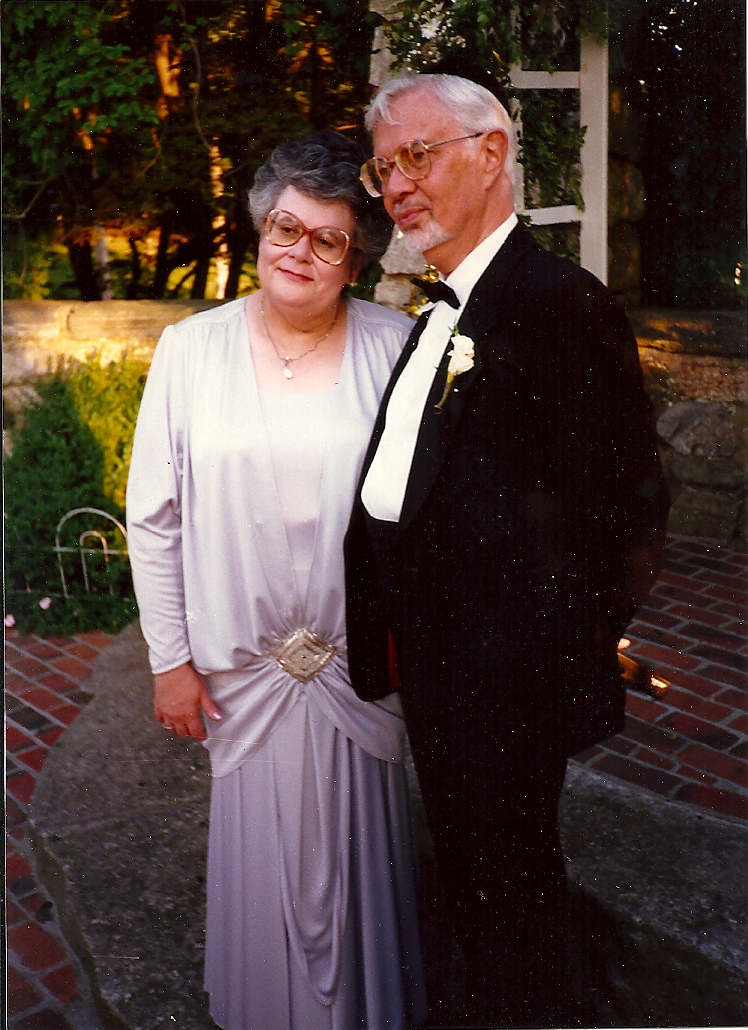
Lottie and Sidney, at my wedding, July 9, 1991

By the time I became aware of the world, Sidney worked for a company called Kleer-Vu Plastics, but prior to my birth, he and his mom ran Ann Kupperberg & Company (“Artists – Hand Decorators”) at 240 Grand Street in Manhattan. Sidney sold and Ann, along with a small crew of “girls” did the hand decorating, painting plastic chotchkes ranging from baby rattles to umbrella handles. The company name was still painted on the side of the building well into the 1960s.

In 1961, we were uprooted from Brooklyn and plopped down in Grafton, West Virginia, at the foothills of the Blue Ridge Mountains, population 5,000, maybe ten of which were Jewish (I was asked more than once by other kids to show them my horns). Dad had accepted a position with another plastic company, Baby World, and was sent there as part of the factory’s management team. It was about as alien a place as big city natives could imagine; the telephone system still had party lines and operators (“Sarah, get me Mr. Wyatt at the Feed & Grain store, willya?”), kids ran around barefoot in the summer, cows grazed in our backyard, and the schoolhouse was on top of a hill and had a bell in a tower that was rung to start and dismiss class, which consisted of four classrooms, each housing two grades taught by a single teacher.

After a year in West Virginia, we returned to Brooklyn. As I said, Sidney was a hard worker, but by this time he was forty-one year old without even a high school diploma, much less a college education in an increasing Gray Flannel Suit era. He always had a job, but as the years passed, he had more of them for shorter durations. He sold insurance, furniture, electronics, chemicals, and printing. He did whatever was necessary to support his family, even years in telemarketing, but I don’t ever recall hearing him complain. The rent was always paid, there was always ample food on the table, and if we didn’t live extravagantly, we weren’t aware of wanting for much.

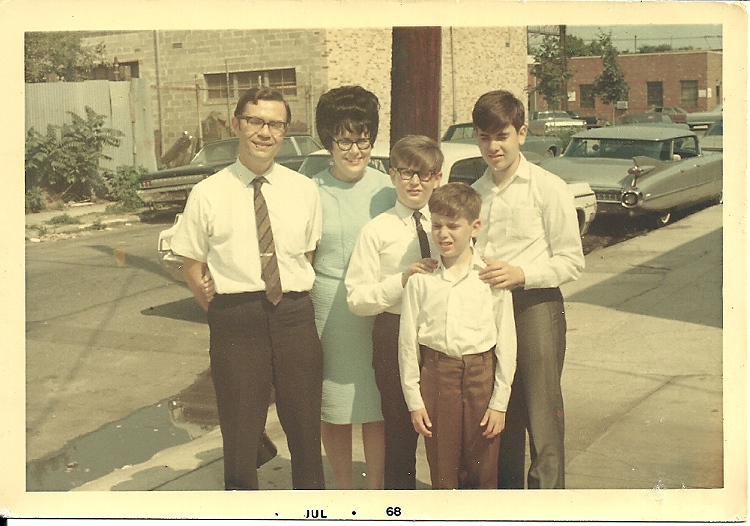
Sidney, Lottie, me, Alan, and Lewis, outside our apartment on East 89th Street in the East Flatbush section of Brooklyn, 1968

In 1979, I moved to Chicago. In an age of expensive long distance phone calls, before email, people still communicated by snail mail…not that I was much of a letter writer. Sidney would write frequently (“Dear Sir, We have in our custody an elderly gentleman all shrunken and with white hair. He is quite vague about most things, but on one point he is very lucid. It seems that due to the fact that a real or imagined son residing in Chicago failed to call an wish him Happy New Year, he shrank several inches in size, his hair turned white over night and his genitals lost their former heroic proportions… (signed) Very truly yours, The Sisters of Charity”), letters that were funny and just guilt-inducing enough to get me to write back.

After a long string of unsatisfying jobs, including many in sales that required him to spend long hours on his feet, Sidney eventually landed a position with Bank of New York, in the customer service department. He liked the work, was liked by his employers and co-workers, and, eventually retired from the bank.

He filled his retirement years with reading, cooking, listening to music (he liked classical, but also listened to a fair amount of pop stuff; one of his favorite songs was Simon and Garfunkle’s “The Boxer”), and assorted classes at the local Y, including some in creative writing.* My mother, ten years his junior, still went to work every day in Manhattan.

Dad had long suffered from arthritis, and the last year or so of his life did not find him in the best of health. He had a bout with prostate cancer a few years earlier, and his final months saw him in and out of the hospital, the last time with an unspecified infection that had knocked him for a loop and which the doctors were unable to successfully treat.

I was at work, in my office at DC Comics late in the morning of April 23, 1993 when I got the call from my mother: Sidney’s heart had given out.

The Many Moods of Sidney, from the late-1980s

All fathers and sons have different and sometimes difficult relationships. Sidney and I went through our bad spots, the worst of which was instigated by my first wife, who was jealous of any and all relationships that weren’t with her. But after we were divorced, my father and I sat down and talked it out and, as far as I can recall, never had another problem.

A day hasn’t gone by in the last nineteen and a half years when I don’t think about Sidney. Of course, it’s hard for me to look in a mirror and not see his face staring back at me. It’s tough to think of the grandchildren he didn’t live to meet or the accomplishments of his sons he never got to celebrate.

Sidney would have been 91 years old today. What I wouldn’t give to have him here to celebrate that.


* “The Attic of My Mind,” his musings on life and memory, is an essay Sidney wrote for one of those classes:

My attic used to be full of memories. Each one like a twinkling tree light. But lately, the lights dim and, one by one, go out. I can’t tell you what thoughts are gone. I’ve forgotten. But my attic gets emptier all the time.

Some fragments lie about, parts of things that must have been important at one time. Pulsing like a dying Tinkerbell.

There are faces of long gone relatives and friends of Grandma. People who came over from Russia-Poland at the turn of the century. Grandma had an open door on the weekends.

People came in, sat down, and ate. Who was that man with pockmarked face? And that heavy woman? I think Bubbe told me she was a bricklayer in the old country. Thinking she had cramps, she gave birth to a baby on the toilet. Never knew she was pregnant. Had a pushcart on Belmont Avenue.

Dozens of tales, never to be told now. What were their names, how were they connected to me? I could ask Bubbe, but she’s not here any more.

One thing I recall, they all loved me. What a fuss they made over me. I was the first boy child.

Time, you thief, put that in your book. Say I’m wasted, say I’m old, say that life has passed me by. But say I was loved.

At that time, Bubbe lived in Brownsville, in what was called a coldwater, railroad flat. Big coal burning stove in the kitchen. She owned the building. Six apartments, two stores. And the gaslights still worked. The place had been wired, but if I was especially persuasive, my uncle would turn off the electricity and light the gaslight. What a dear recollection.

But my uncle, hardly more than a young man, is gone now. And all my aunts and uncles, “gone, gone.”

Those people sitting around the table, drinking tea. Talking about those terrible times. Pogroms. Plagues. Dead brothers and sisters, parents. Lost children. Gone. Ghosts in the attic.

The only other person I have from those days is my sister. And We watch each other very carefully, fearful of what one of us must see eventually.

Of course, a lot of nice things are in my attic. But you know, hurt and rejection imprints itself on the gray matter more permanently than joy.

But some wonderful things remain. The first time I noticed Lolita. Her name is Lottie, but she was my Lolita. After more than forty years, three sons, and a lot of struggle, she’s my Lolita.

I should have written things down over the years. I’d have a book. But I seem to remember more than I thought. It’s good to go back like that. Makes some people come alive again. But when I’m gone, they will truly cease ever to have existed.

Paul Kupperberg on October 14th, 2012

It’s that time of year again…the insanity that is the New York Comicon.

NYCC 2012 made the massive Jacob K. Javits Convention Center on New York’s West Side feel more like the steerage compartment of a turn of the century immigrant steamer than a place designed to host large trade shows. I don’t know what the attendance numbers will shake out to be for this year (I hear that 2011 topped 105,000 attendees), but for someone who started attending conventions in the days when we were impressed with 2,000 people coming through the door, this is crazy impressive…and somewhat oppressive.

I showed up on Thursday morning, which is still, technically, set-up time. Sporting an exhibitor’s badge, I was allowed inside and, with only a couple of thousand people on the floor, it was easy to wander around, get the lay of the land, visit with friends from far and wide, and conduct a little business (i.e., pitch my wares and services to editors and publishers) without all the distractions that come after the doors are open to the public. I’ve got a couple of creator owned pitches that I’m hoping to sell, so it helped to have some (relatively) quiet time to talk to those who buy such things.

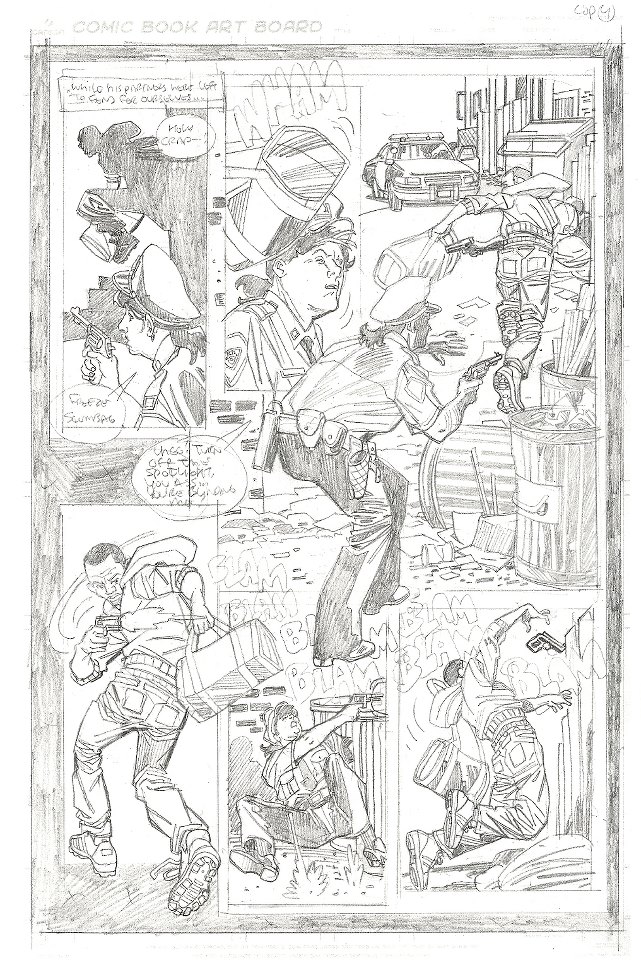
A page by Pat and Tim Kennedy from one of the proposals I was pitching at this year’s NYCC.

Along the way, I crossed paths with a lot of old friends and acquaintances; after more than forty years as fan and professional, it’s astonishing the number of people I’ve come to know. The prize for longest distance for oldest friend has to go to Nick Landau, managing director of the Titan Entertainment Group, who I first met in the early 1970s, during the days of the old Phil Seuling New York conventions.

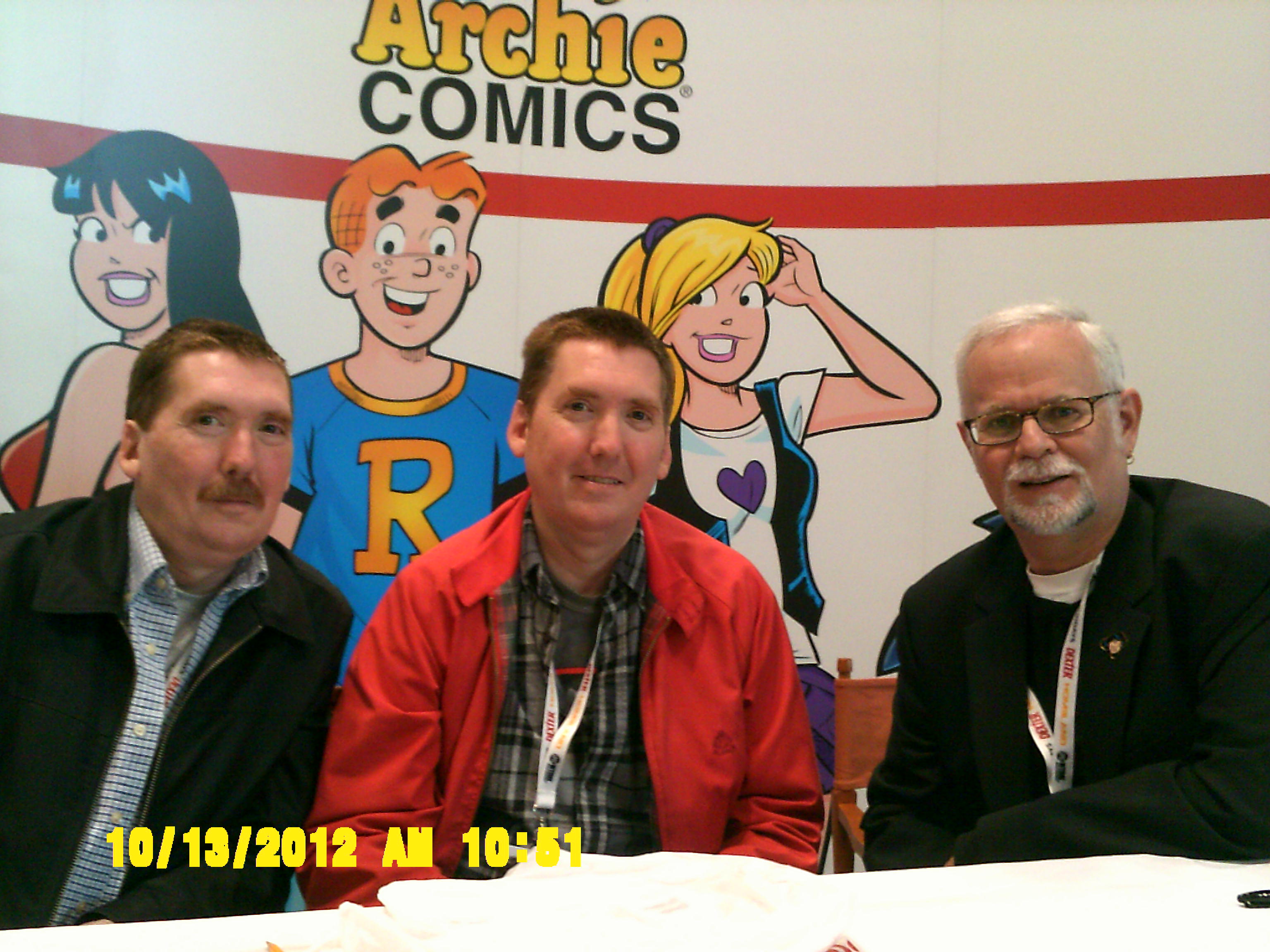
With Tim and Pat Kennedy, signing at the Archie Comics booth on Saturday morning.

With lettering legend Janice Chiang.

I left the show mid-afternoon on Thursday, skipped Friday, and was back in early on Saturday morning, when I was scheduled to start the day with a 10:00 a.m. signing at the Archie Comics booth, sharing the table with two of the artists I work with on Life With Archie, brothers Pat and Tim Kennedy. We met some fans, signed some books, and got to catch up with one another regarding one of the aforementioned creator owned pitches on which we’re collaborating. While we were at it, MAD Magazine chums, art director Sam Viviano and editor-in-chief John Ficarra, wandered through and stopped for a while to chat, as did one-time DC Comics inker Eduardo Alpuente, who now runs Infinitoons Creative Agency, repping artists in Spain. Archie letterers Jack Morelli and Janice Chiang were also on hand, as were Archie editors Victor Gorelick and Mike Pellerito and Michael Uslan, originator of the “Archie Marries…” concept on which Life With Archie is based.

After my stint at the Archie booth, I wandered the hall for a while, first to the Penguin Books display, hoping to finally meet, face to face, my editor on the upcoming Archie Comics: Kevin young adult novel (coming in April 2013)–no luck there–and then over to Voyageur Books, where my buddy Robert Greenberger was signing his new book, the comprehensive Star Trek: The Unofficial History. My next stop was at the Dark Horse Comics booth, where I got to spend some time with Jan Duursema, current Star Wars artist and my long-ago collaborator on Arion, Lord of Atlantis, and her husband, artist Tom Mandrake.

Star Trek: The Unofficial History author Bob Greenberger at Voyageur Books.

Of course, when I say I “wandered,” what I really meant was I shuffled through the hall, jammed together with fans and cos-players by the tens of thousands. There really wasn’t a clear patch of floor to be found anywhere in the joint, although things were a little less congested down in Artists Alley. This aircraft hanger-sized space contained hundreds of artists, hawking their wares and sketching for the multitudes.

Artists Alley on Thursday morning, before the deluge.

I usually spend a few hours there, hunting down old friends and collaborators, and this year that included seeing Joe and Hillary Staton, my Takion collaborator Aaron Lopresti, Rich Buckler, Ron Randall, Bob Wiacek, Rodney Ramos, and others, as well as artist Michael Golden. Michael was hard at work sketching and signing prints while we spoke, including for one fan for whom English was a second language. As he waited patiently for Michael to get to signing his print while the two of us bantered, he saw my name on my badge exclaimed in delight, “Why, you are vintage, too!” Figuring that being “vintage” was better than being a relic or an antique, Michael and I decided we could live with the term.

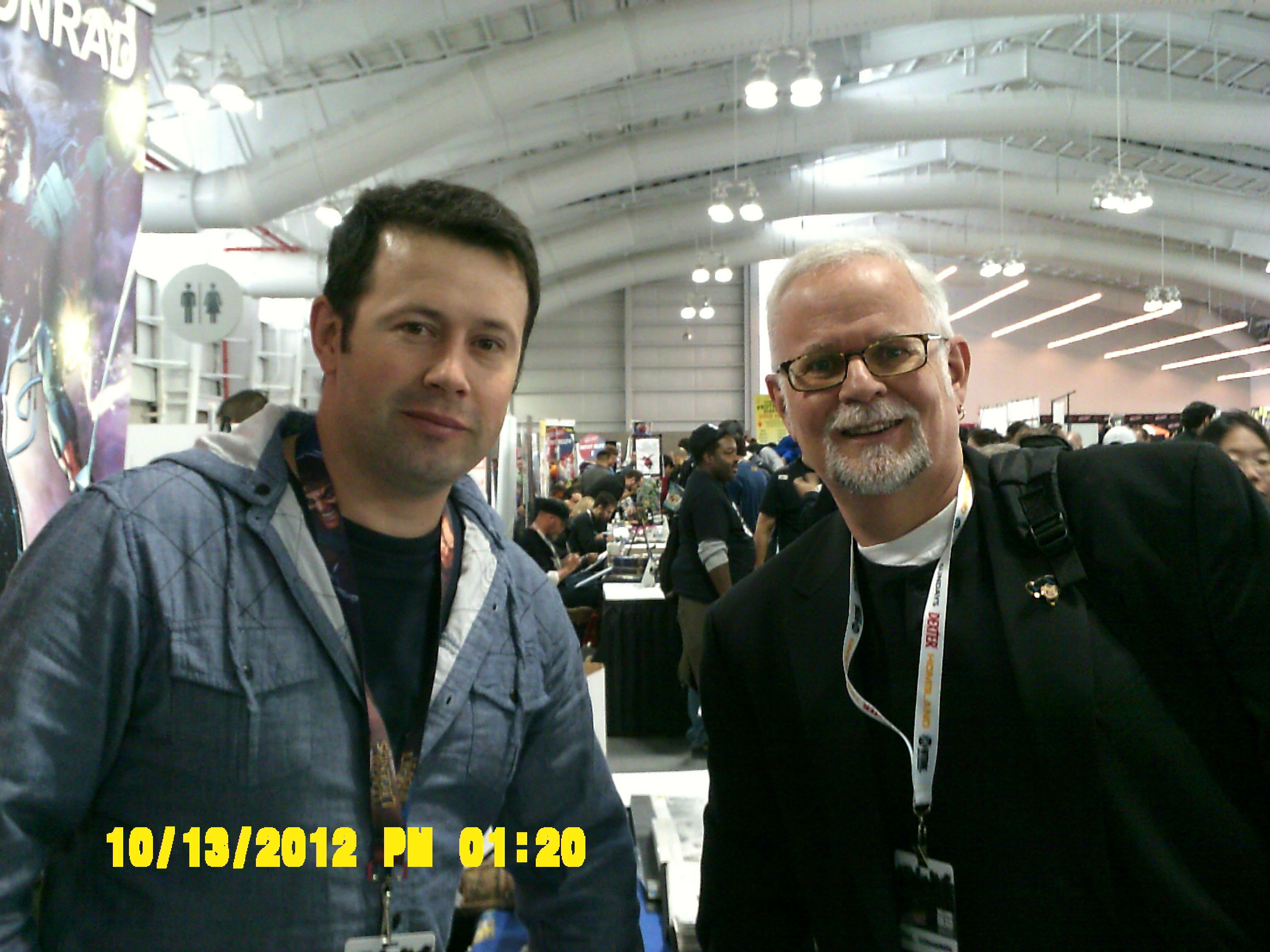
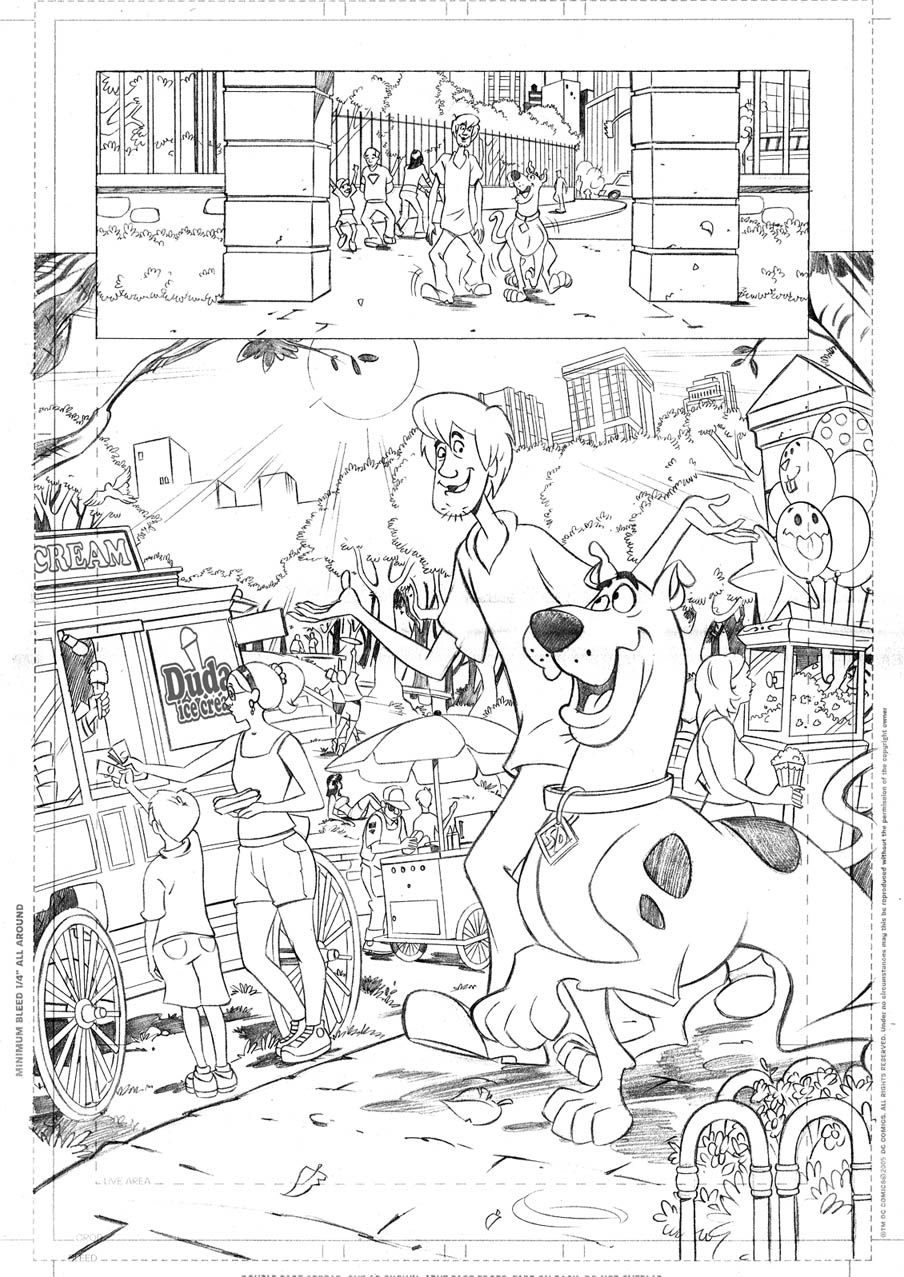
Before heading back to the main floor for my next scheduled event, I found my way to David Campitti’s Glass House Graphics tables where I met the fabulous Fabio Laguna, a South American artist with whom I’ve worked on numerous jobs, including many Scooby Doo stories for the Cartoon Network line of DC Comics and several color and activity books for Dalmatian Press. Fabio is an amazing artist and we both expressed the hope that we’d get to work together on projects in the future.

Artist Fabio Laguna and me in Artists Alley.

The splash page for “Sunday in the Park With Scooby” (Scooby Doo #143), the first Kupperberg-Laguna collaboration and the story that made me a fan of the artist’s work.

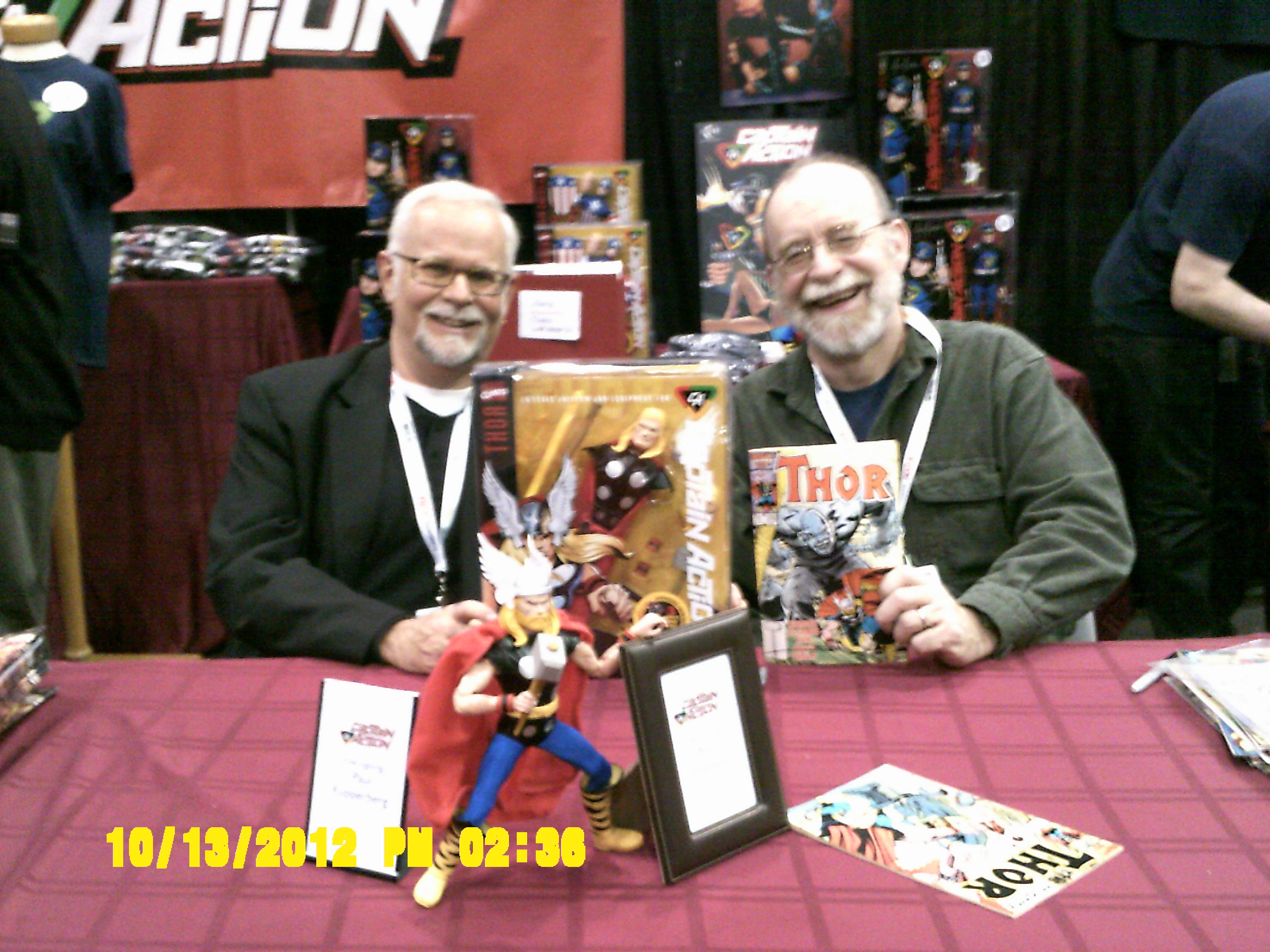
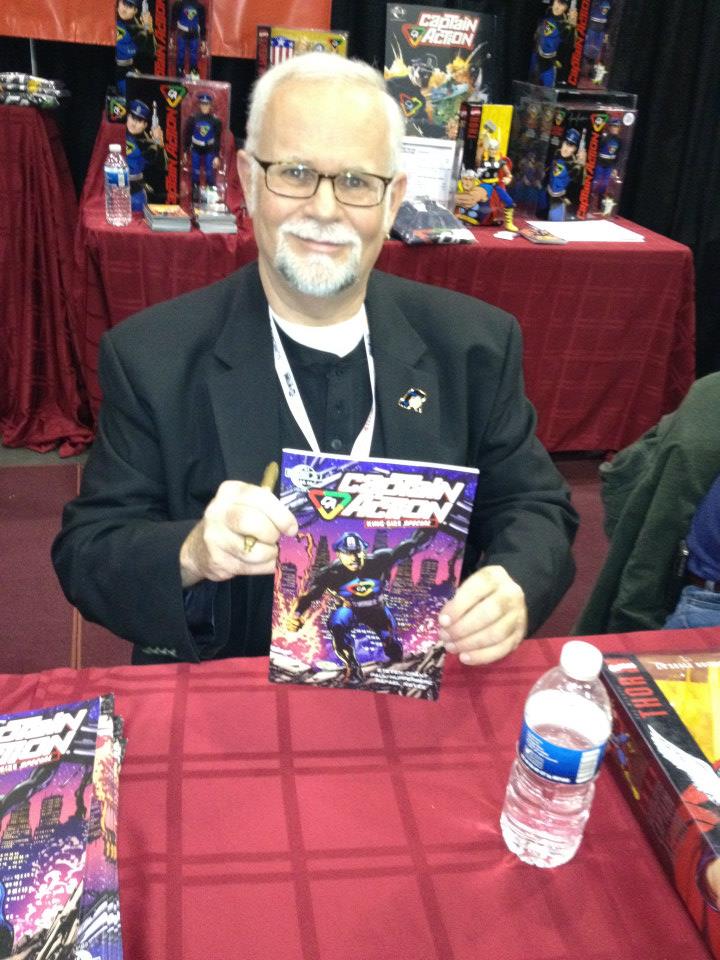
At 2:30, I reported to the Captain Action booth for a signing, alongside Walter Simonson. For me, Cap was a childhood favorite toy and comic book series (five issues published by DC in 1968, featuring work by Wally Wood, Gil Kane, and Jim Shooter) and a mass of nostalgic grown-up fun when I wrote a handful of stories for the Moonstone Comics title published in conjunction with Ed Catto and Joe Ahearn’s revival of the action figure. Like the 1960s original, the new Captain Action has available a variety of costumes with which to transform Cap into the superhero of your choice, including Captain America, Spider-Man, Iron Man, and Thor. Walter was appearing to promote his illustration for the packaging of the latter, a character with which he has more than a passing acquaintance.

Me and Walter Simonson at the Captain Action booth, both of us feeling mighty Thor. (Thsorry!)

At the Captain Action booth.

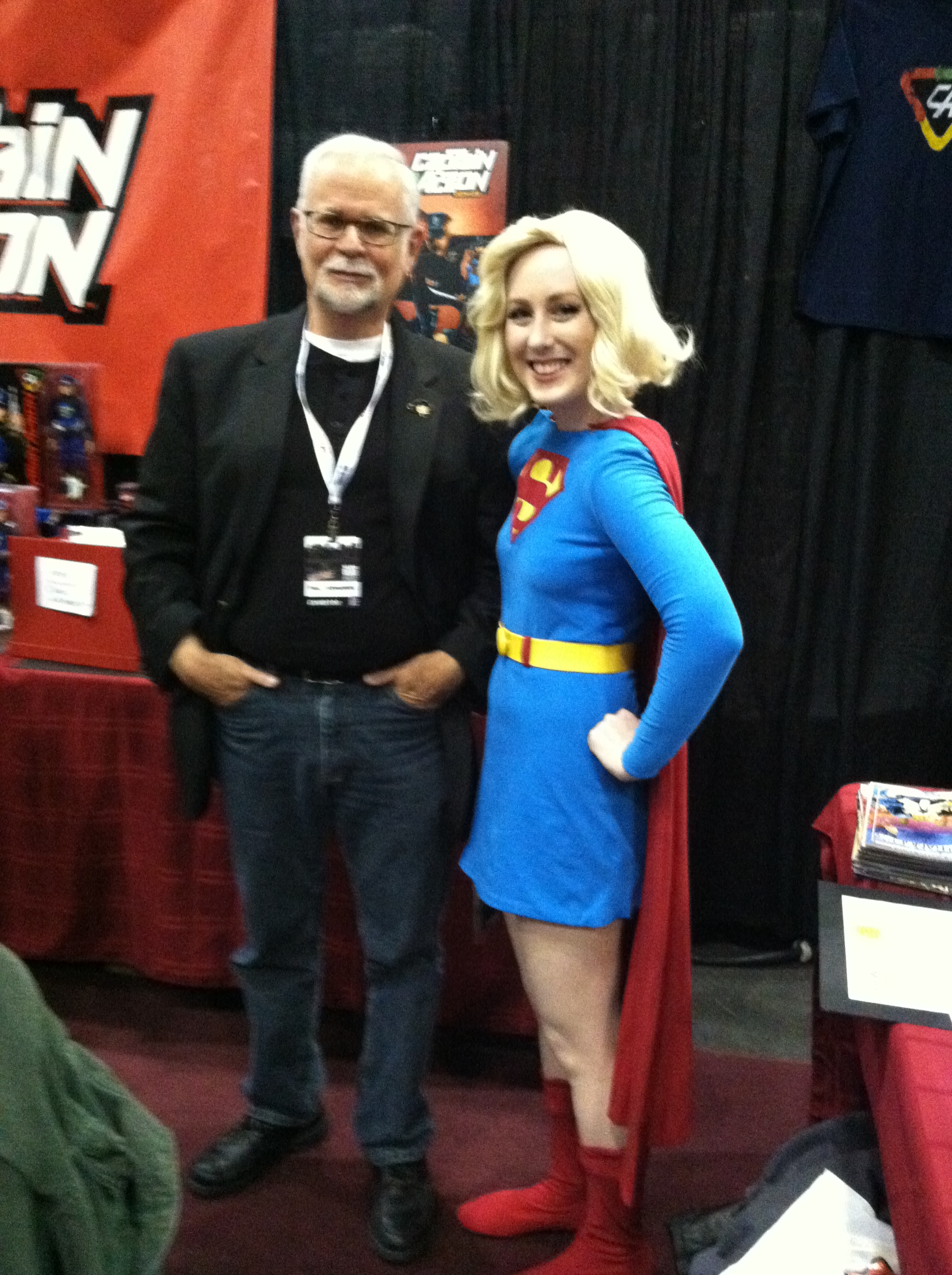
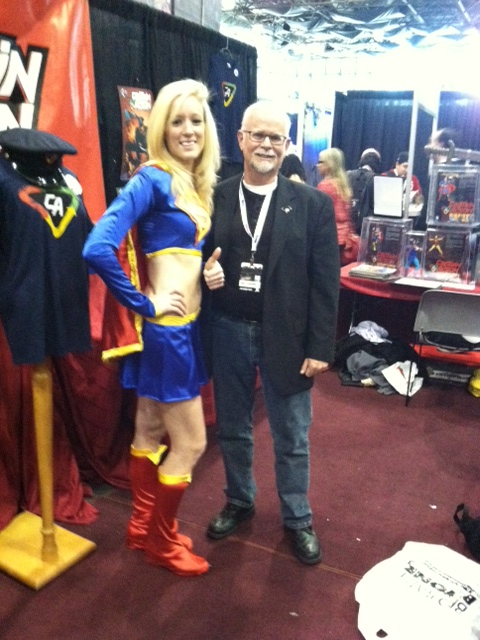
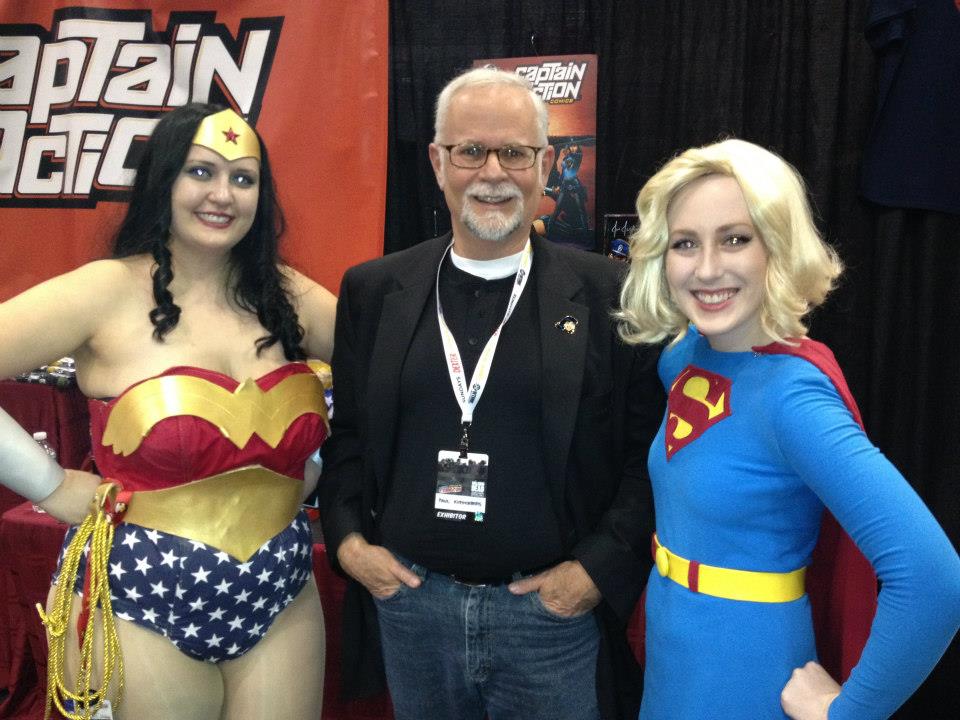
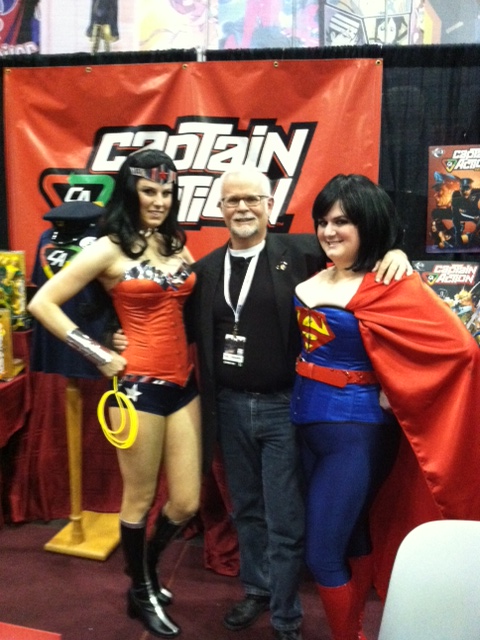
As there were a goodly number of cosplayers wandering through, Ed Catto, knowing my close association with the characters, kept shanghaiing the Supergirls and Wonder Women (Wonder Womans?) to stop and take pictures with me. Not that I was complaining…

With the Silver Age Supergirl. Very Jim Mooney!

Another Supergirl.


Wonder Woman, a Jew, and Supergirl.

With another Wonder Woman and a third Supergirl.

With a Captain Action Captain America costume (with both versions of the shield!) in hand, I squeezed myself through the wall-to-wall fans to the literal opposite end of the convention center where I was to appear on a panel, “Gay Marriage In Comics” with artist Phil Jimenez, editor/writer Joan Hilty, and writer/artist (and Kevin Keller creator) Dan Parent. The panel was moderated by FanboysoftheUniverse.com‘s Chance Whitmire and sponsored by Prism Comics. The panel room was packed and the discussion was lively and informative and demonstrated a clear need not only for an increased and more realistic presence of LGBTQ characters in comics, but for better portrayals of human relationships in general in the all too often cartoony world of superhero interactions. You can find coverage of the panel on the Prism Comics site and at Bleeding Cool News.

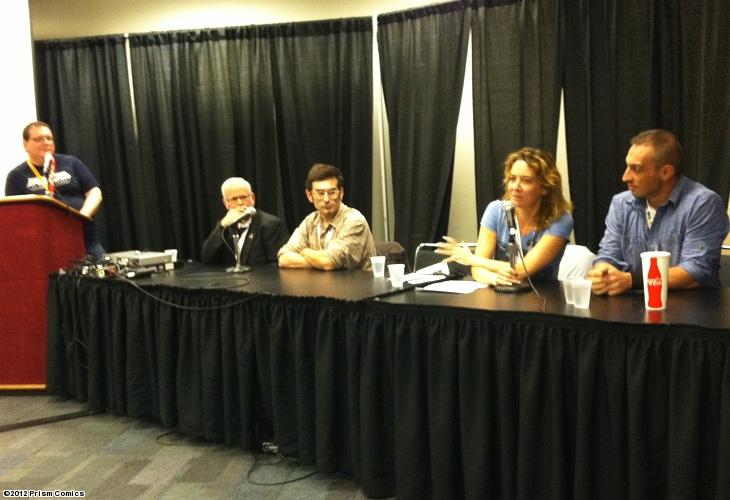
My cell phone photo of the room a couple of minutes before the panel began; I asked the audience to say “Cheese!” They all did. Ten minutes later, we had standing room only attendance filling the side wall and back of the room.

Moderator Chance Whitmire, me, Archie artist/writer/Kevin Keller creator Dan Parent, writer/editor Joan Hilty, and writer/artist Phil Jimenez. Photo © Prism Comics

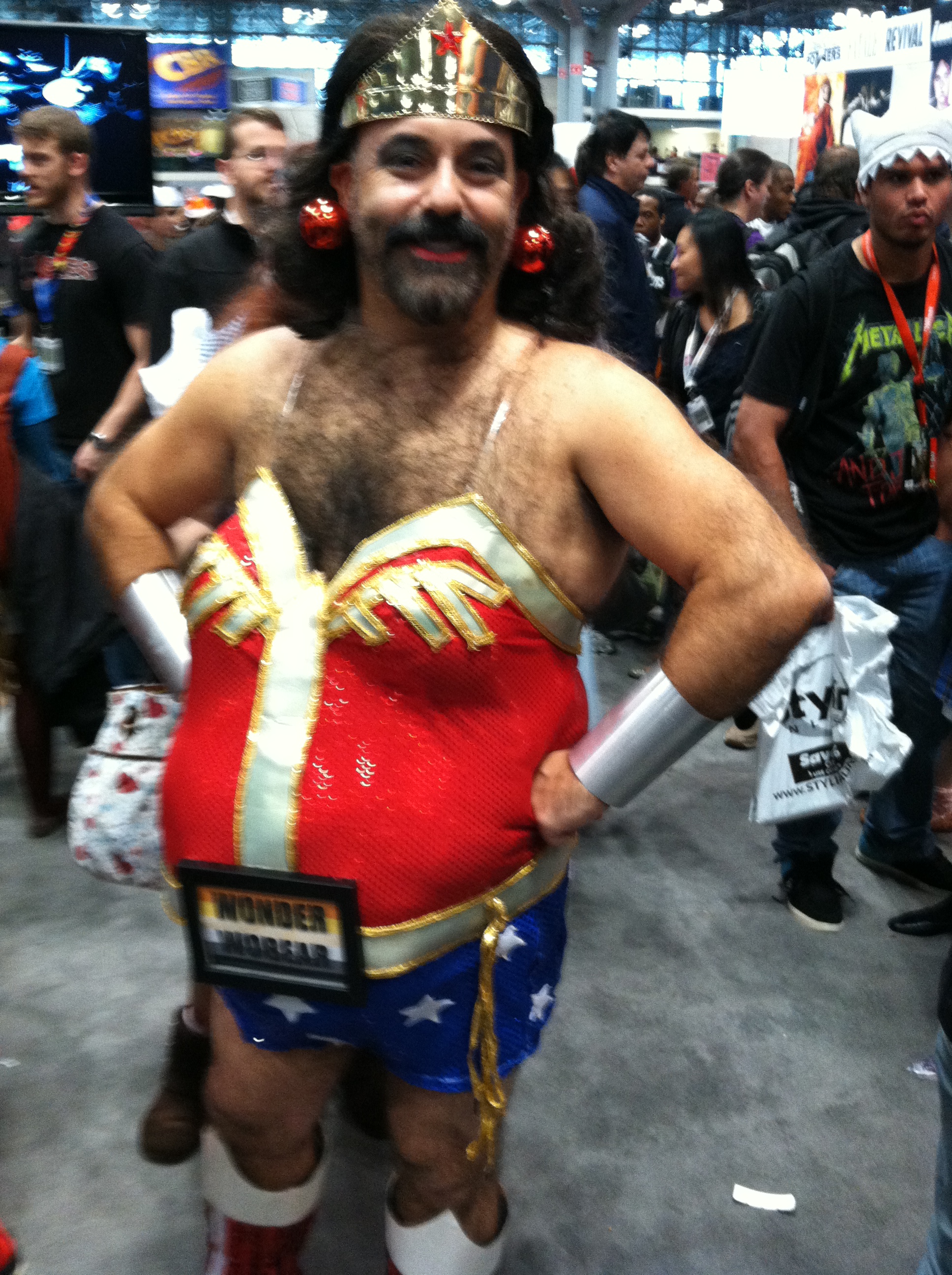
My obligations satisfied, my work done, and my feet throbbing in pain, I hit the bricks and headed on home, but not before encountering a sight that will haunt me for a long time to come. And because I hate to suffer alone, I share it with you here:

Still another of the series of columns on writing I did about four years ago for the website ComicsCareer.com. If you care, you can read the previous columns here, here, here, and here:

As you may have surmised by now, this column’s less about the nuts and bolts of writing than the broader ideas behind writing. Not that I don’t think that stuff’s important. It is. It’s vital; plotting, narrative, characterization, the three-act structure, pacing, et al are the mechanical parts that all go into building the engine that drives the story. I guess I’m more about the design than the engineering.

I’ve always seen writing as a craft, a skill you possess and hone through practice and repetition. Like your first efforts at whittling or painting a portrait, your early writing is not going to be good. Not at all. It will be the best you can do at the time with those native, undeveloped skills. Ironically for the writer, the beginning is not the word but the desire to tell a story. And on the second day comes the story to tell.

Every writers manual will tell you it’s okay to write a bad first draft; get the story on paper first and then go back and polish everything up pretty and nice. When you first start, a bad draft’s the only kind you’re going to write, but that’s okay too. Keep writing, keep looking for what doesn’t work and learn how to fix it. Don’t ever think there’s something you can’t learn, ever, from anybody, at any time. I have walked away from conversations with four-year olds which resulted in wonderful ideas and insights. Don’t stop, don’t ever stop, keep writing even when no one’s paying you because even though this may be or turn out to be your full time job, you should never be writing for money.

I’ve said it before: You never write for the money but you turn in the manuscript for a check. The money, necessary though it may be, is not the objective of your writing; writing your ass off is. The check’s a perk. So is publication. That’s the frosting on the cake of the opportunity to practice your craft: To actually have it read by someone besides your friends and parents. (Wanna know a secret, and I know it’s not just me because when I get together with my fellow old-fart writer friends we all cop to it: I still get a thrill when I first see a new publication, a comic book, a novel, a short story, whatever, and there it is: my byline. Almost thirty-five years after my first sale and following some seven hundred more. Yeah, it’s that good.)

But, just because I don’t discuss the nuts and bolts here doesn’t mean you should ignore it. That’s where reading comes in.

Me, I read a lot. History, science, history, non-fiction on strange subjects (salt, cod fish, oysters, the screw, books about the evolution of the book), biography, along with a healthy dose of fiction, ranging from literary to pure mindless pleasure reading. A lot of the biographies I read are about writers: Arthur Conan Doyle, Jack London, Mike Royko, Raymond Chandler, Truman Capote, Charles Bukowski, Pete Hamill, Robert E. Howard, Jimmy Breslin, Philip Roth, Jim Thompson…those are just a few I plucked at random from the shelf. And I don’t necessarily have to be a big fan of the author or, in some cases, even have read anything by them. There are lots more.

I think self-help books are, for the most part, for suckers. Sorry, but how much personal insight can you really gleam from such broad generalizations as are required in best-selling books by Dr. Phil and others of his ilk? But I become one of the suckers when it’s books by writers showing other writers how they do what they do.

Which brings us back to broad generalizations. How likely is it that your process is the same as my process? Or even resembles it a little? More likely, you and I approach how we write with polar opposite processes. You’d probably look at my methods and shudder and I’m likely to do the same. But I’m still curious how you do it. Who knows, maybe there’s something I can steal from you that will help me. It’s happened plenty of times, and, at the risk of repeating myself: Don’t ever think there’s something you can’t learn, ever, from anybody, at any time. F’instance, I can’t read Stephen King. I just don’t care for his stuff. It’s not a critical judgment, just that as a reader, I don’t connect with him as an author…

…But, he’s Stephen King. He’s sold more books than I can ever dream of selling, so, whether he’s to my taste or not, the brother’s gotta know something that I can hook into in my own writing, so I read his book, On Writing. And, you know, I walked away from it with insights.

I would be remiss if I didn’t at least point you towards some must-read books on the nuts and bolts of writing. You can’t build an engine if you don’t know what the parts do and I’ve found these books to be instructive, even reading them after I’d been doing what they’re teaching for a good number of years.

The DC Comics Guide to Writing Comics, by Dennis O’Neil (Watson-Guptill, 2001): I read this book in manuscript stage and kept that copy of the manuscript until I had the actual book to read. Denny is one of the Top Ten writers in the history of the field and if you don’t know his credits, you don’t know your history and that’s a no-no; (and we’ll get to that, boys and girls, in some books below!). His work on titles such as Green Lantern/Green Arrow, Batman, Iron Man, Azrael, and The Question set standards that make most of the rest of us go “D’oh!” a lot. Denny’s a thinking writer, one who looks at his craft, dissects his efforts, learns from his mistakes and shapes sharp, crisp prose that seems too simple to crackle, but son of a gun if it don’t. I’ve recently reread the first two volumes of The Question by Denny and Denys Cowan and find it’s fresher than almost anything being done today, fifteen years later.

Think Zen, think Alex Toth, who spent years learning what to put into a drawing before he started trying to take things out of them and strip his style to the cartoon’s bare minimalist essence. Denny’s writing says what it means, but the beauty is, he never tells you what that is. Instead, he trusts his readers to follow along and figure it out. He’s also a generous teacher who has taught at the School of Visual Arts and lectured at universities…and at DC Comics, where he tried to impart some of his knowledge to the staff. These DC 101 classes were ostensibly for the assistant editors and younger crew, but when Denny spoke, even us older farts listened. Denny quite simply knows what he’s talking about and is worth listening to. Quite intently.

Will Eisner’s Shop Talk is a series of interviews conducted by (need I say it?) legendary Will Eisner, creator of the Spirit and of sophisticated modern narrative in graphic storytelling (y’know…growed up comic books). Previously published in magazines, Will’s style is less interviewer/interviewee as it is two pals, sitting around and talking shop (!) and the old days. We learn as much about Will as we do his “subjects,” a precious resource considering what he brought to the medium. Neal Adams, C.C. Beck, Milton Caniff, Jack Davis, Lou Fine, Gil Kane, Jack Kirby, Joe Kubert, Harvey Kurtzman, Phil Seuling, Joe Simon, giants all, and giants pushed to think, dissect and analyze their work and their process by the guy who set the standards for their field. It doesn’t matter that none of us can draw like Eisner or Kane or Kubert; these guys are giving the gift of gold to anybody in any creative field. It’s hard not to be inspired when sparked by men of this creative caliber.

I can only hope some or all of these books are still in print because when it comes to the sheer mechanics of the craft, there are few better than Lawrence Block, author of dozens of mystery and suspense novels, including many starring such enduring characters as recovered alcohol P.I. Matthew Scudder, burglar Bernie Rhodenbar, sleepless do-gooder Evan Tanner and Hitman John Keller. Block writes in what I call the “Mind-F*** School,” playing with the readers perceptions and expectations to shock, surprise and twist the story in ways no one ever expects. His plotting is tight and controlled (although that’s nothing a casual reader would ever pick up on; good construction like that should be so natural, you don’t even notice it’s there), his characters sharp and well-defined but always entirely human. And he writes some of the best dialogue out there. Natural, funny, smooth. There’s much of his prowess of which to be jealous.

Fortunately, the prolific Mr. Block is a sharer. He wrote a long-running column in Writer’s Digest magazine from which he pulled together his books on writing, of which I own and have read once or five times, Telling Lies For Fun & Profit (Quill Books, 1981), Writing The Novel: From Plot to Print, and Spider and Spin Me A Web: Lawrence Block on Writing Fiction (Writer’s Digest Books, 1979 and 1988); there’s another, it seems, entitled Write For Your Life, which I seemed to have missed but will be seeking out.) I don’t care if you’re writing a comic book story, a novel or a short story, Block’s advice is on the nose. If you’ve read enough of his novels (and I have; all of them), you know before you crack the covers of any of these books that you’re in for a treat. (2012 note: all of Block’s books on writing are now available as ebooks on Amazon.com.)

I also recommend Natalie Goldberg’s Writing Down the Bones, Anne Lamott’s Bird by Bird: Some Instructions on Writing and Life, and Ray Bradbury’s Zen In The Art of Writing. Solid, sensible books that respect the process and the individual paths to creativity.

For those of you looking to go the comic book route, there are a ton of books you can read, but a handful of must reads, to give you a true sense of the breath, depth and history of your chosen field. I don’t want to hear that you don’t know who Midnight is or what comic book company published him in the 1940s. You should know this stuff. These books should whet your appetite to learn more. If they don’t, what’re you doing trying to get into this business anyway?

The Great Comic Book Heroes by Jules Feiffer. Published in 1965 and heap full of Golden Age origin stories and other tales of heroes rarely glimpsed in those days, the book’s true treasure is Feiffer’s reminisces of his discovering comics in their infancy and his eventual successful quest to join the industry he loved. The book is charming and filled with the types of observances and stories that make you wish you had been there, slaving over a 64-page comic book that needed to be created, written and drawn over a weekend. Ah, the good old days! (Fantagraphics published, within the last few years, Feiffer’s essay sans the comic book reprints which are, anyway, easily available in reprints and even online these days.)

Steranko’s History of Comics Volumes 1 & 2 by Jim Steranko. Extensive, exhaustive, brilliant. We’ve been waiting since 1970s for more!

All In Color For A Dime and The Comic Book Book edited by Don Thompson and Dick Lupoff. These came out in 1970 and 1974, reprinting articles on comic book history by then-fans (many, like Ted White and Lupoff, who went on to writing careers) from the early-1960s fanzine, Xero. Great, well-researched and fannishly-enthusiastic (but in a good way) from guys who did it all out of love. And, for one of the best, most thoroughly researched histories of the business, you can’t go wrong with Gerard Jones’ excellent Men of Tomorrow: Geeks, Gangsters and the Birth of the Comic Book.

There are many more books out there, how-to books, creator biographies and retrospectives, websites dedicated to any and all characters and creators, histories of the industry and art form you’ve chosen to dedicate your creative energies to, biographies of favorite (non-comic) authors, whatever. When you’re not writing, you should be reading, these books and books by the writers who inspire you in whatever field you enjoy; just because you don’t write science fiction doesn’t mean there’s nothing you can learn from Arthur C. Clarke or Greg Bear. It is all fodder.

Okay, you’ve got your homework assignment.

There will be a test. Open book, of course.


Another of the series of columns on writing I did about four years ago for the website ComicsCareer.com. If you care, you can read the previous columns here, here, and here:

I was reading an interview with a writer whose work I like who does a lot of series characters. At one point he said that he was writing new books about characters he hadn’t written in seven or eight years, or, in one case, one he hasn’t written since the decades-ago beginning of his career. He said he was happy to discover that when he sat down to write them after the long absence, he could still “find” them. That is, write the character the way they were written previously, in the same (general) style and voice, allowing, of course, for his growth as a writer and the characters chronological growth since their last appearances.

Style, is one thing. We can talk about that another time.

Today, we’re going to talk voice.

Not as in “the sounds that come out of your mouth,” the physical pitch and sound of your speaking voice, but the manner in which that physical voice expresses itself.

When you answer the telephone and hear a voice you recognize, part of the recognition process is the sound you’re hearing; another is what you’re hearing. Even if you have a bad connection, you can will likely still recognize the person on the other end by the way in which they communicate their message: some people speak slowly and deliberately; others at a fever pitch, stumbling over their words in a rush to get them out; there are those who pepper their speech with clichés and some who use a lot of pauses and verbal ticks to give them time to think, “Uh,” “Like,” “Y’know.” I cringe whenever I have to speak to a certain guy because I know when I ask him how he’s doing, as society requires I do, curse its conventions!, he will reply “Same shit, different day.” He speaks in clichés and pomposity. I would recognize it anywhere and I have used his speech pattern for characters I’ve written. His speech pattern is a shorthand way of saying he’s a pompous ass. The character, not the guy. Well…

So all characters should have a speech pattern. They shouldn’t all sound alike and it takes very little to create a speech pattern that, like my pompous ass of a friend, acts as a kind of shorthand to identify the type of character s/he is. A lazy, good ol’ boy drops his “g”s and don’t use hardly no big words at all, unlike his brother, the physicist, who speaks utilizing a larger vocabulary and an awareness of grammar that is indicative of his higher education and social status. Everyone knows the “dese, dems, dose” speech pattern of Brooklynites and common street thug or the “Hiya, honey,” swagger of the whore. You can also use speech patterns to play against type, a thug who speaks like a Harvard philosophy professor or a hooker who sounds like a suburban soccer mom.

Writers also have voices, or at least they should if they’re worth anything. Young writers have older writer’s voices that they borrow and, if they have any talent, build upon to find their OWN voice. Older writers work a long time to hold on to whatever voice they ultimately find and keep it fresh and nurture it along to maturity along with their lives and their writing.

A writer’s voice is one you will know when you hear. Just like you can point to a person who orders a “cuppa cawfee” at the diner as being a New Yorker from their accent, you should be able to recognize a writer by his voice. Many have tried to write like Hemmingway, but only Hemmingway ever could. His voice is unmistakable. And, once again, do not mistake voice for style. Short, clipped sentences, terse descriptions and multi-layered dialogue was his style.

His voice was that of the raging, wounded bull rendered impotent by the crush of the world and events. (I’ll bet you thought he was all about the macho; macho was just the cover-up for the impotence…a common theme, along with castration, in his work. And the man ended his life deep-throating a shotgun; that’s not tough. That’s morally and emotionally wounded.)

Thomas Wolfe; longing and regret.

F. Scott Fitzgerald; style, always style, over substance and in spite of sorrow.

Jack London; brute force intellect overcoming but never overwhelming nature.

Philip Roth; the intellectualization of emotion and the exploration of death.

I can go on.

It’s the same way you can recognize a Billy Joel song from the first few notes, or a piece by Mozart. They write music in their voices, the way a writer writes prose or poetry (you won’t confuse Charles Bukowski with Emily Dickinson anytime soon). It takes a bit more effort to recognize the author of a written passage from how it’s written than it does “New York State of Mind” from the first six notes, but read enough of a writer’s work and you will eventually start to “hear” it as you read, a subtle thing that tells you this is Stephen King, this is Pete Hamill, this is David McCulloch (yes, non-fiction writers have voices, too).

Your own voice is out there, buried somewhere under a huge pile of words, millions and millions of them. All the false starts, the bad ideas, the rejected manuscripts, the half-finished pieces abandoned after you’ve gotten lost fumbling for a direction, the first published work and the published work that follows for the next ten or fifteen or twenty years, minimum. The newbie writer is an infant, learning to speak, on paper. Every word, every sentence, every paragraph is us crawling and attempting to stand, landing in bruised egos and with a bruised ass from falling on it so often and so hard. Every short story is a rite of passage, from childhood to adolescence, to young adulthood. But you’ve learned some coordination and can start to stand on your own two feet more and more. You even start to think the occasional line or paragraph doesn’t entirely suck.

And then, one day, you read what you’ve just written and realize that you recognize this as being yours. That you have, at least on that piece or on that day’s writing, transcended the act of writing and stumbled onto the art and, as important, the craft of it. Writing from within and expressing that in a voice and tone that anyone reading it can identify as yours and yours alone.

Give yourself another five years and you’ll be able to do it all the time, just the way every time you open your mouth, you speak in the same voice.

Hear what I’m talking about?

Paul Kupperberg on August 23rd, 2012

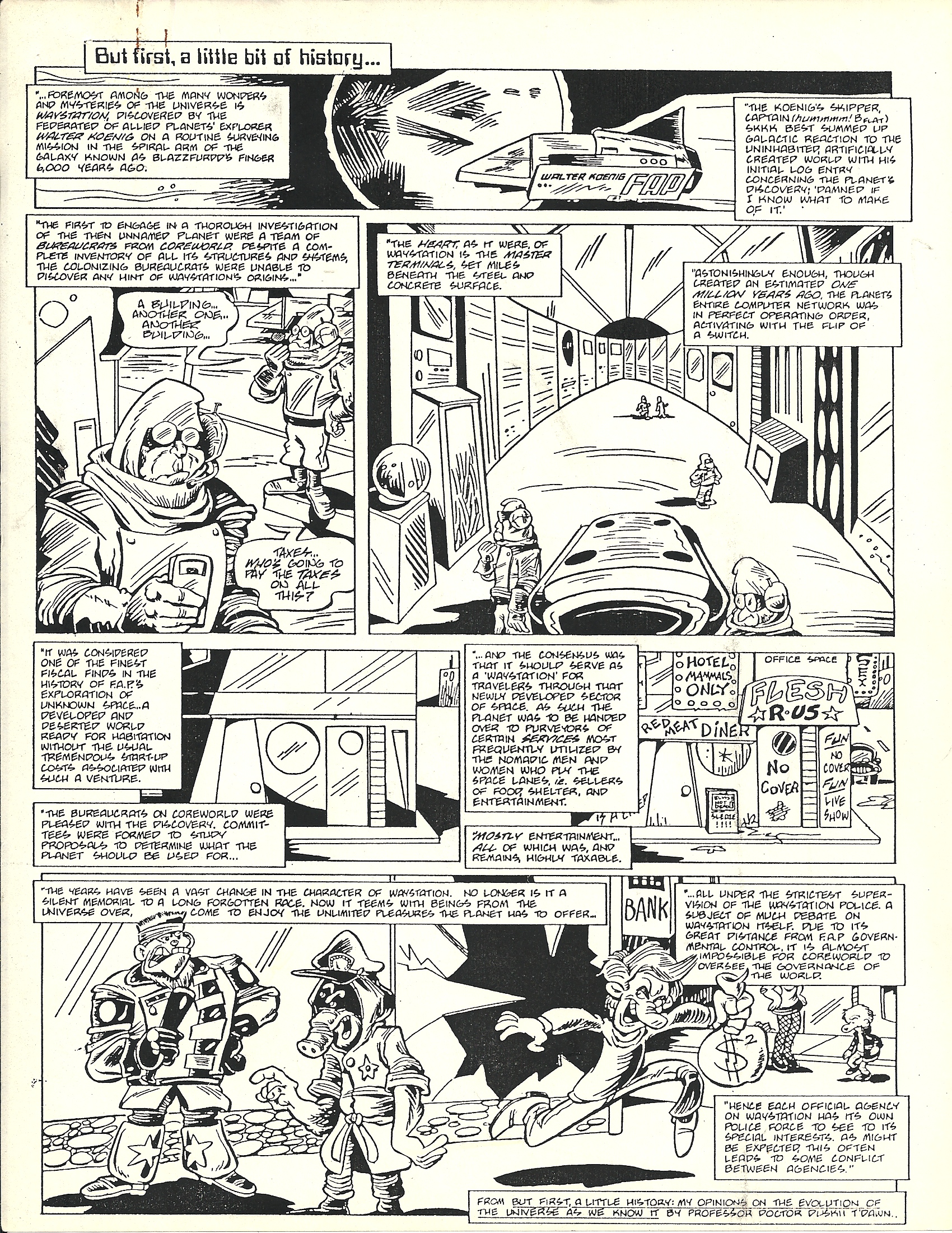
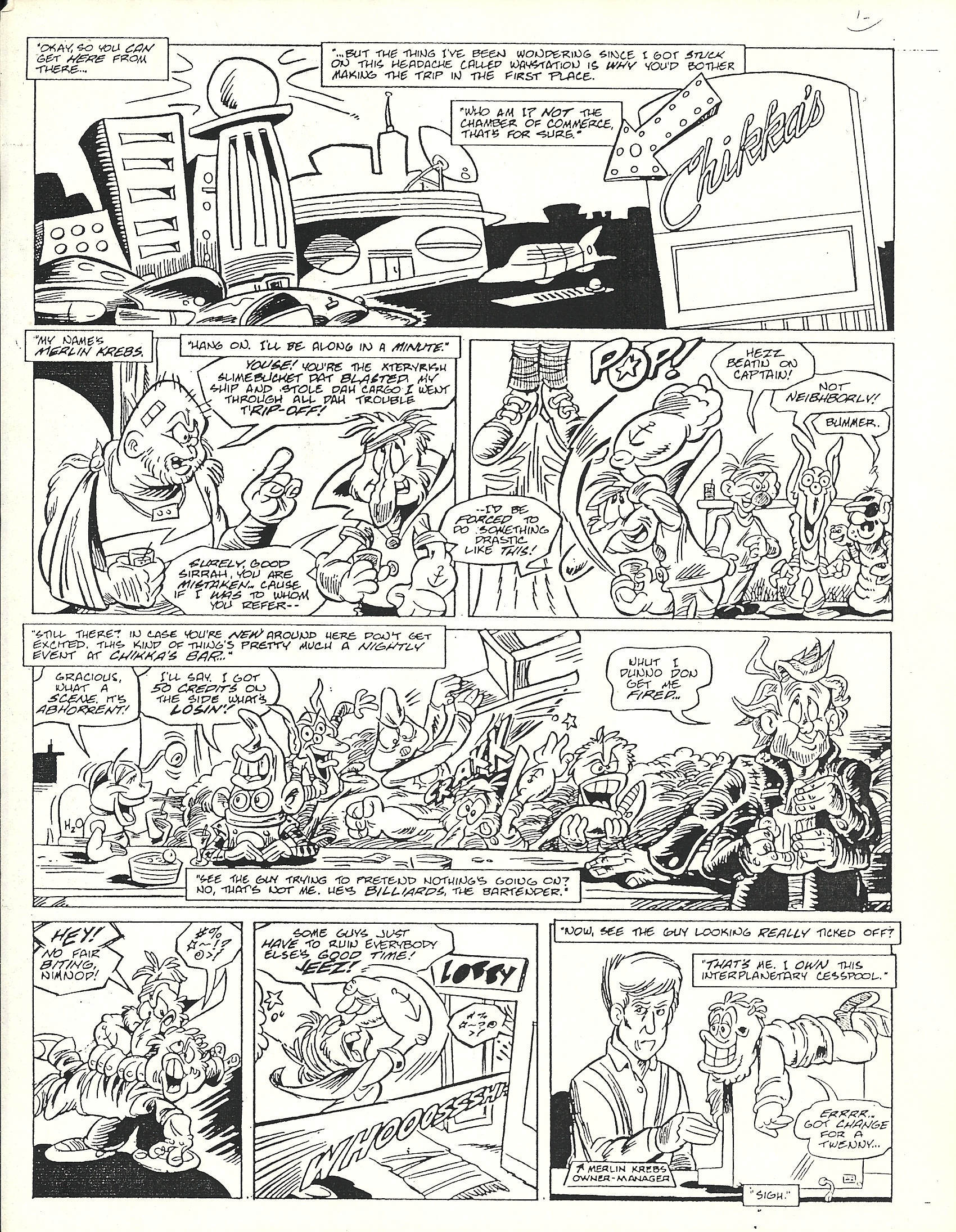
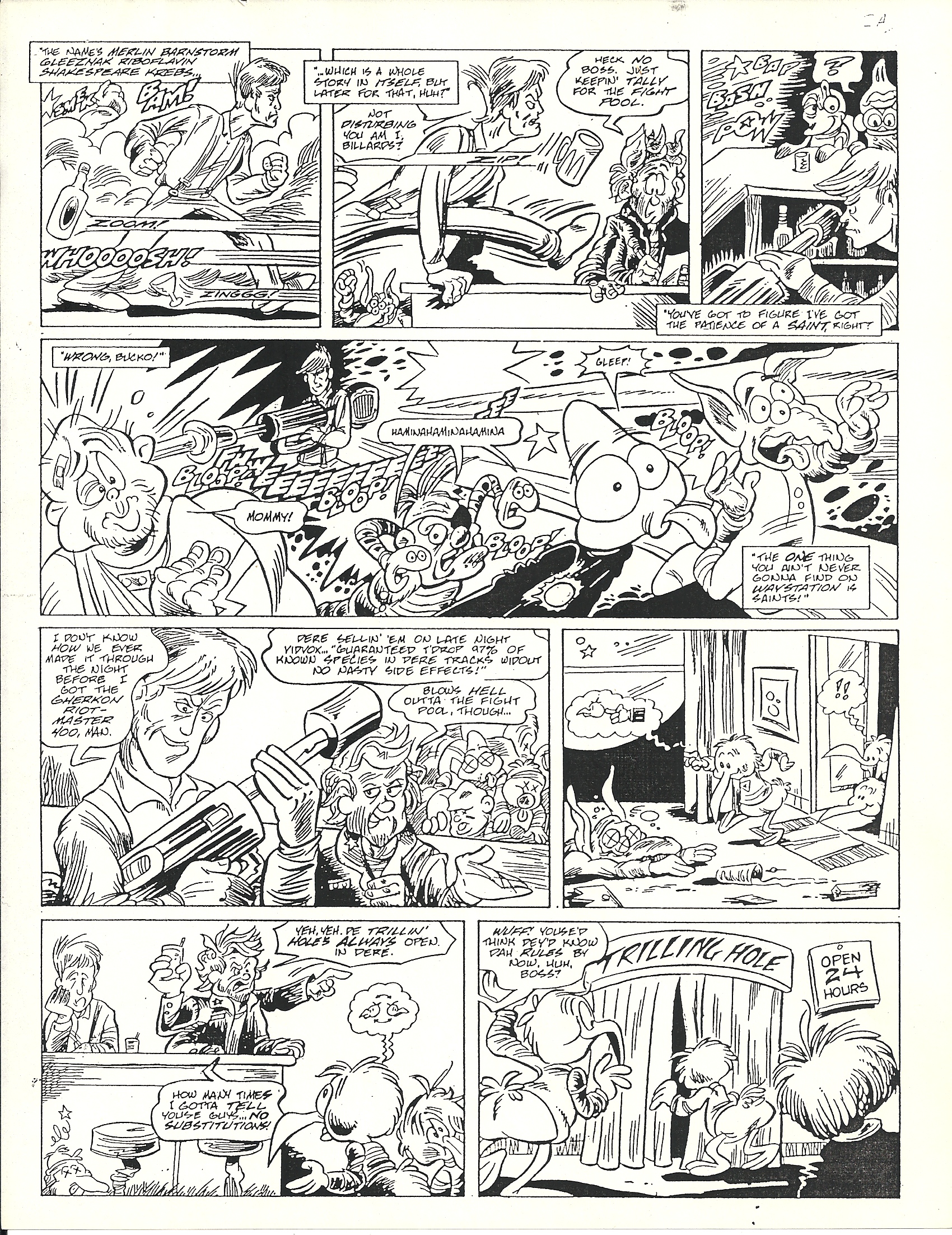
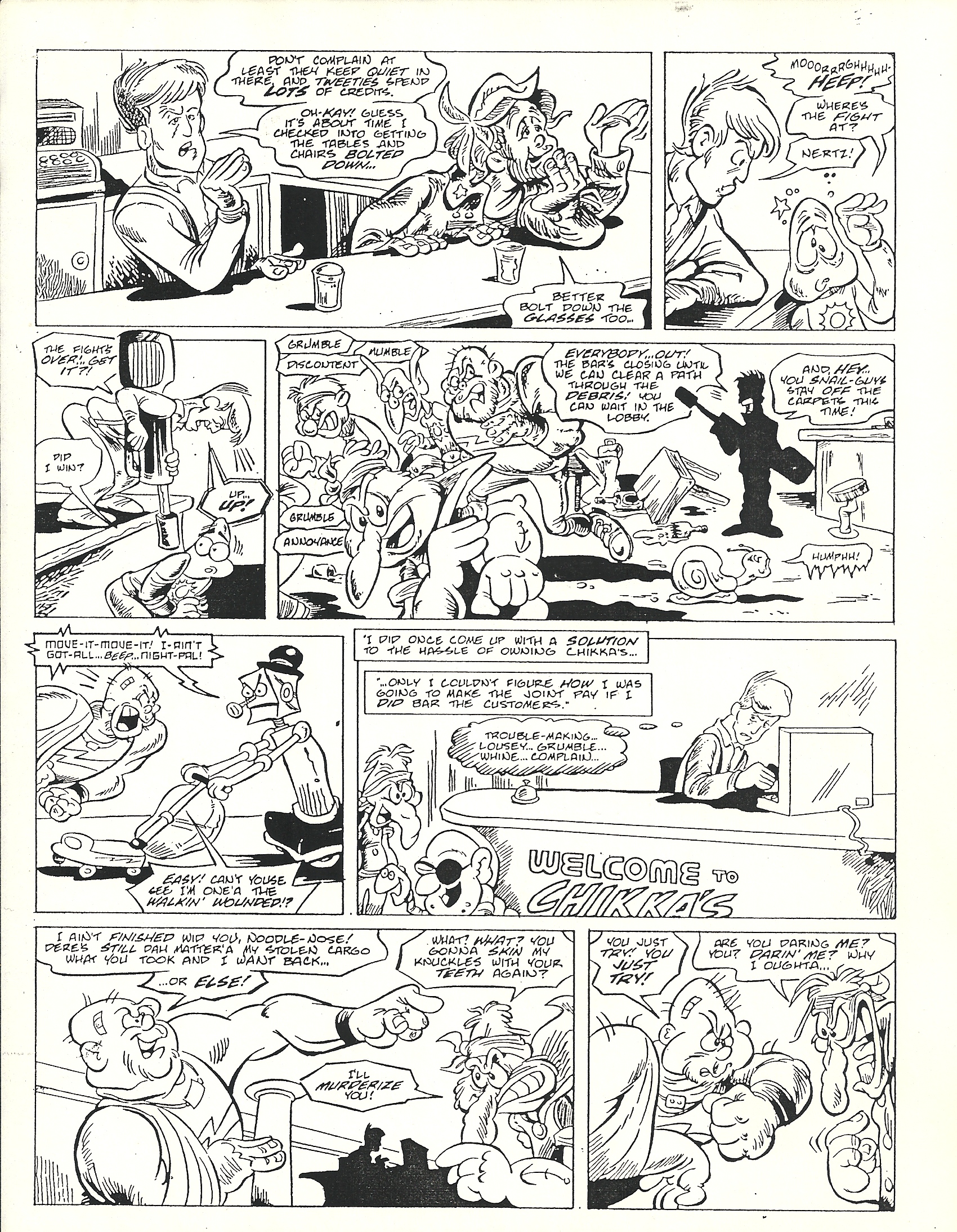
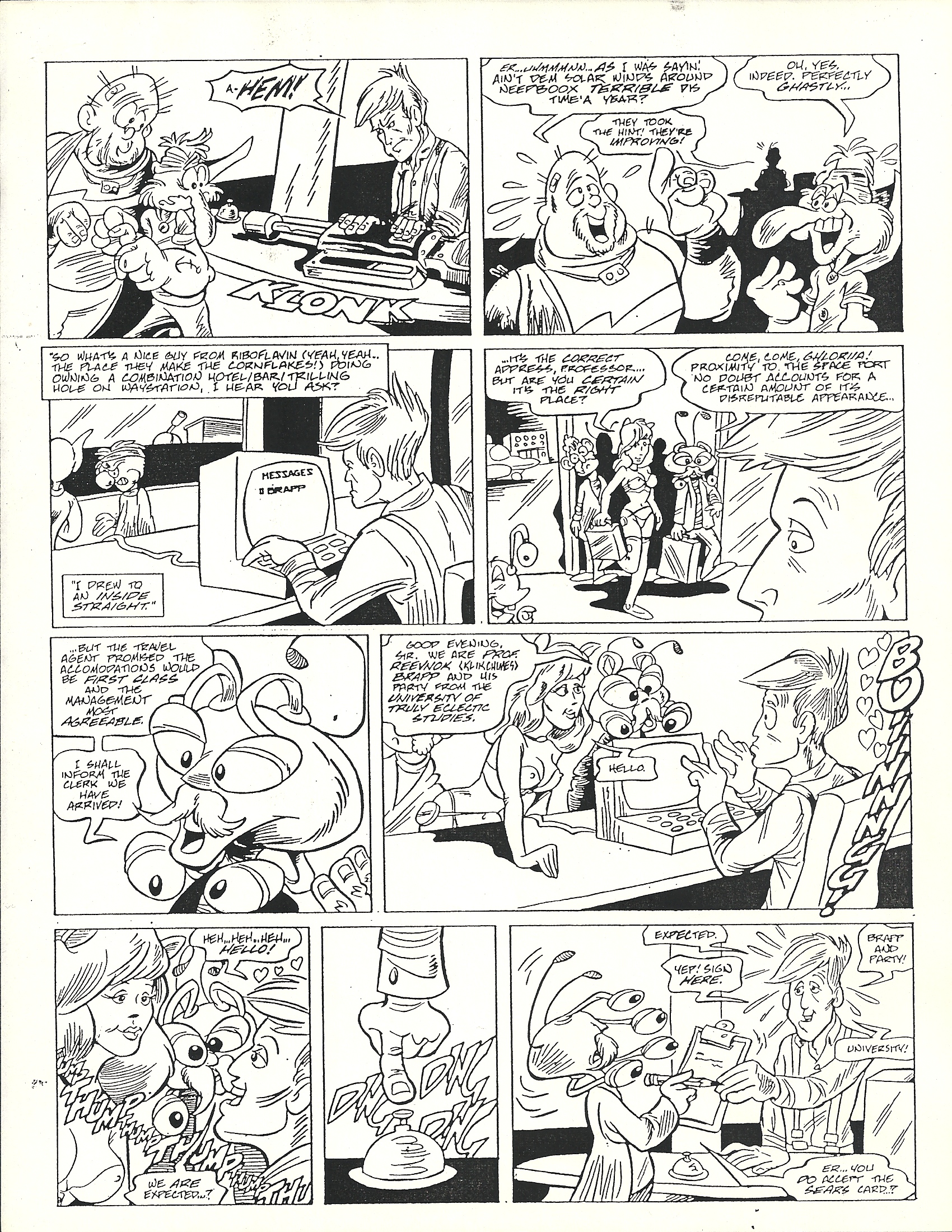
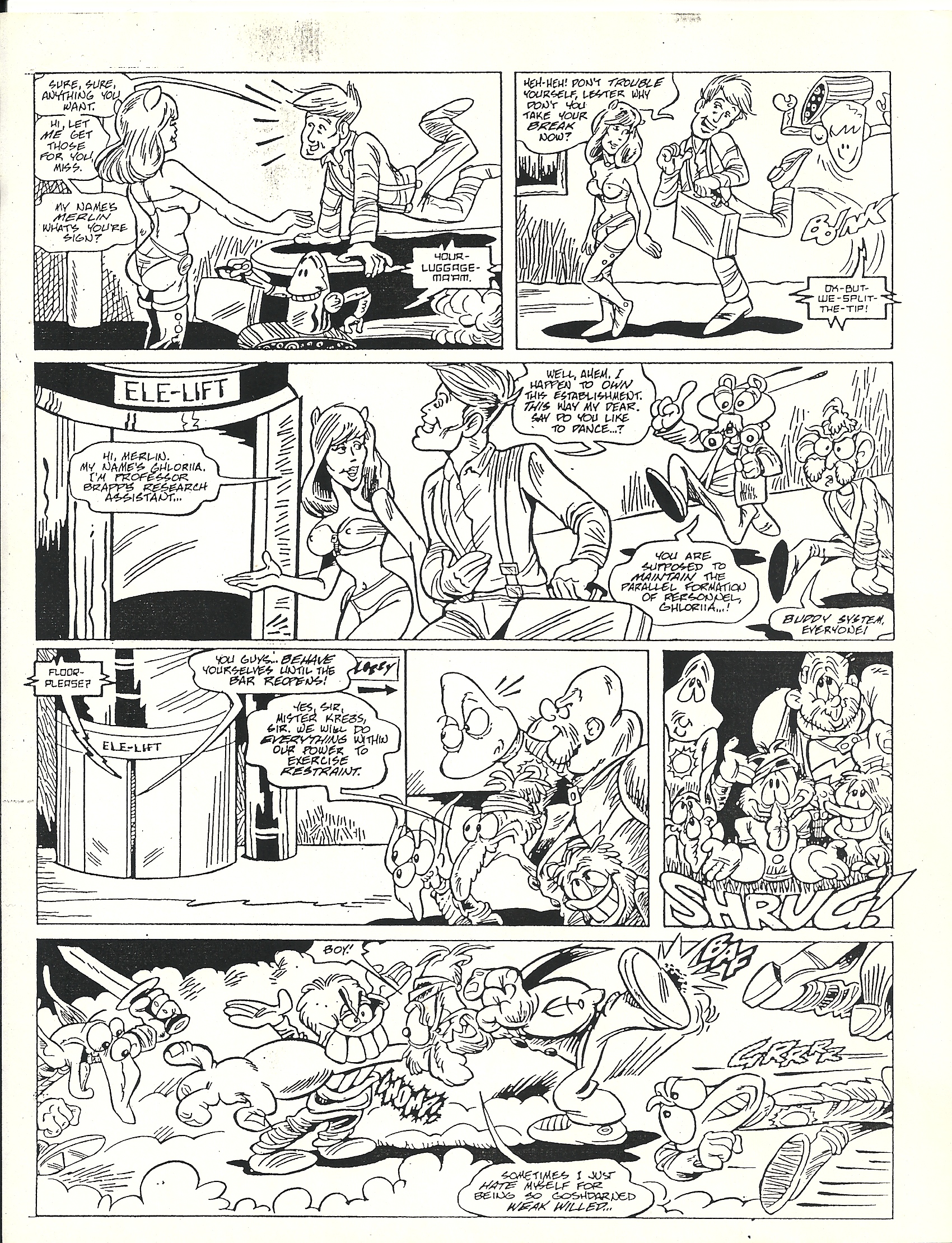
Back in 1990, the most talented Chuck Fiala (creator of Bullet Crow, Phantom Bunny, etc.) and I worked up a proposal for a funny science fiction graphic novel called Waystation. I wrote, Chuck drew, and, if memory serves me, Bob Pinaha lettered, six pages of sample story that went something like this…

Story (c) Paul Kupperberg
Art (c) Chuck Fiala

Tags: , , ,

Paul Kupperberg on August 13th, 2012

(c) DC Comics

Forget, for a minute, his talent. Forget the career that spanned more than 70 years, the countless thousands of pages of gorgeous art and hundreds of breathtaking, eye-catching covers. Forget even the art school he and his wife founded in 1976 which has been responsible for training more comic book artists than I have time to list.

All that aside, Joe Kubert was simply one of the truly good guys.

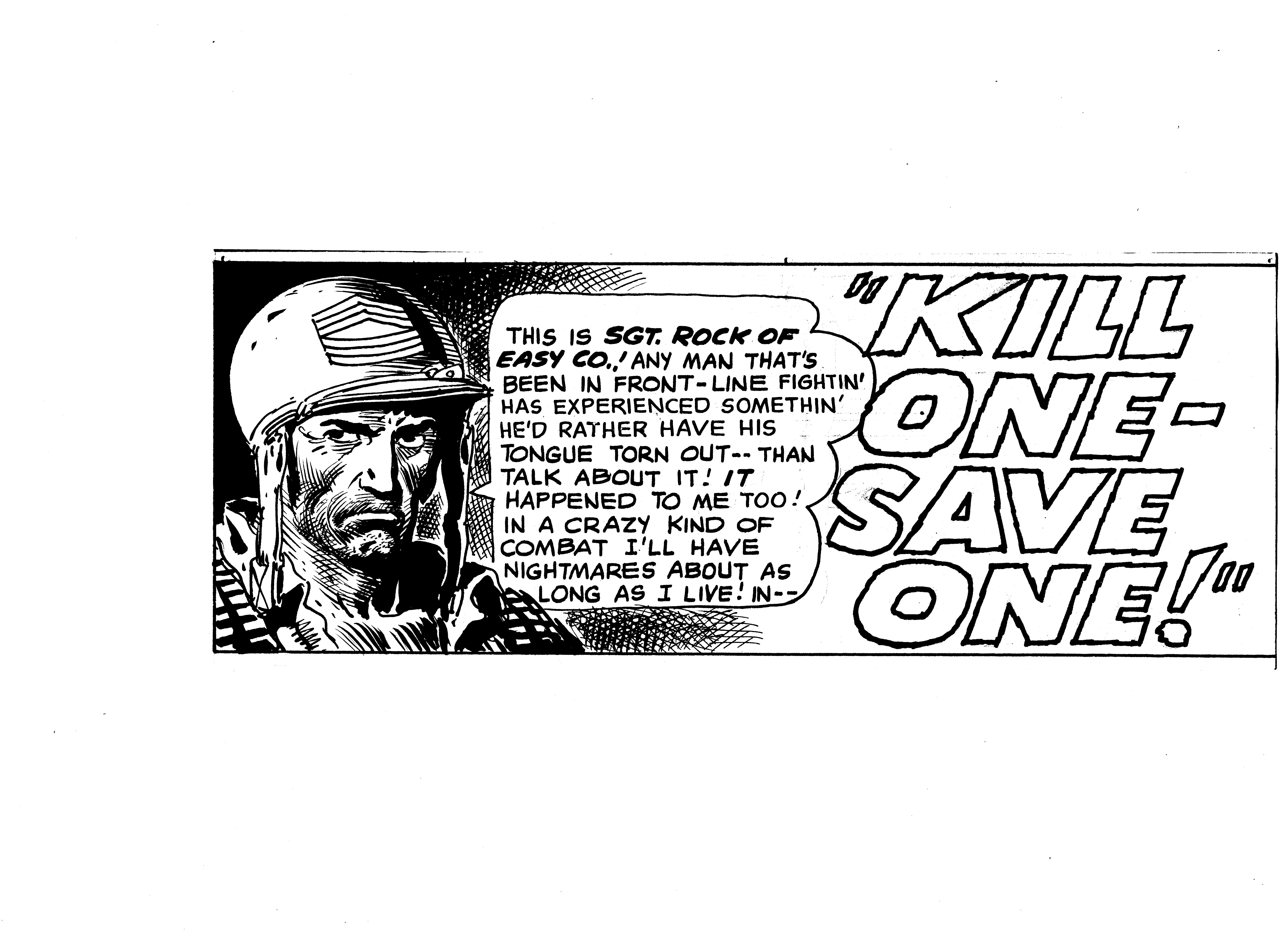
I was a fan of his art before I knew his name; he worked on so many of the books that shaped my comic book reading experience and influenced me (inking Carmine Infantino on the stories introducing the Flash in Showcase #4, Hawkman from The Brave and the Bold #34 – 36, Sgt. Rock and Enemy Ace), and I became even a bigger fan of the man as soon as I met him.

Joe Kubert could write and he could draw. And he could also edit, a job he undertook with the same skill and keen eye for detail he brought to his art, which I learned firsthand in 1983. A few years before, I had created a back-up strip for Warlord called Arion, Lord of Atlantis. In 1982, Arion was awarded its own monthly title and shortly thereafter was assigned to a new and inexperienced editor who, unable to articulate his wishes for the direction he wanted the book to go in, almost immediately removed me from the book and handed it off to another writer.

Eight months later, I got a telephone call that went something like this:

“Hi, Paul. This is Joe Kubert. I’m editing Arion now. Why the hell is someone else writing the book you created?”

“Ernie couldn’t figure out what he wanted, so he gave it to someone else to write.”

Deep, heavy sigh. “He shouldn’t have done that. It’s your character. We’ll figure it out. You’re back on the book. I need a plot. You’re late.”

Joe remained editor of Arion from #12 (October 1983) through #26 (December 1984), and we did figure it out. It took him (and me) a couple of issues to get back up to speed, but once he did, his one and only bit of editorial direction to me was, “There’s too much magic in the book!” Too much magic, in a sword & sorcery comic about a sorcerer?? What the hell was he talking about?

But Joe was right. I had been using the element of magic as too much of a crutch in the stories, bringing in the hocus pocus to help get myself out of whatever plotting corners I happened to have painted myself into. So we stripped Arion of his magical abilities and made him stand on his own two legs without the magic to pull his fat out of the fire, and the book (and my chops as a writer) were better for it.

Weird War Tales #65 (July 1978). I wish my story had been 1/10th as good as Joe’s cover image for it
(c) DC Comics

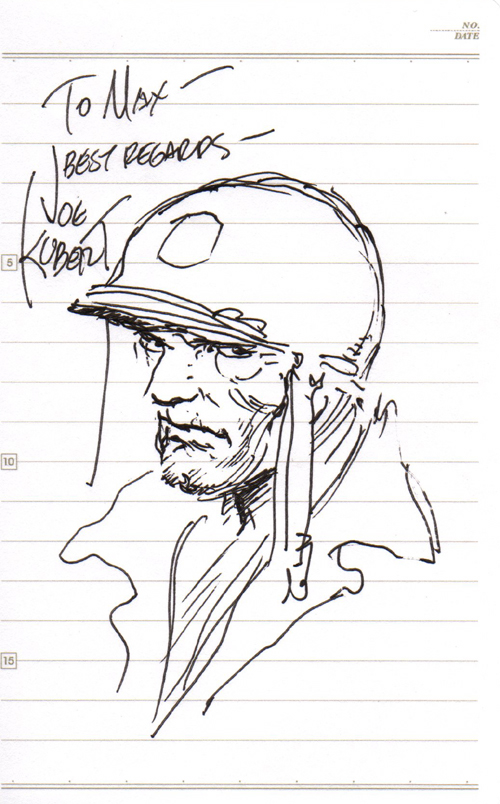
My (now) sixteen year old son Max is also a Joe Kubert fan and has been since he was about ten years old and first picked up one of the Sgt. Rock Archives. In fact, his goal at one of his first New York Comicons was to meet Joe Kubert and, if possible, get a sketch from his favorite artist. He figured he had an inside track on this seeing as his dad actually knew the artist, but I warned Max that conventions can be very hectic and someone like Joe probably had a tight schedule so, while we would do our best, he shouldn’t count on it.

(c) DC Comics

Came the show at New York’s Javitts Center, we did, in fact, finally run into Joe on the convention floor. I pointed him out to Max as we walked towards Joe up the aisle, and we hurried over to say hello. Joe saw us coming, his face breaking out into his trademark wide, infectious smile, and greeted me with, “Paul! How the hell are you?” and his famous bone crushing handshake. (Just an aside: No matter how long I have been in this business–approaching 40 years now–and what I’ve done and who I’ve met, I still get a deep fanboy thrill that someone like Joe Kubert actually knows my name!)

We exchanged pleasantries and I introduced Max to Joe. With something approaching the awe I still felt in Joe’s presence, Max extended his little sketchbook and asked if he could please have a sketch of Sgt. Rock…? For a split second, I could see Joe mulling this over in his head: he was standing in the middle of one of the biggest comic conventions in the country, and if he started sketching or signing, the odds of his being overwhelmed by hordes of fans brandishing pencils and sketchbooks of their own was pretty high. But he looked down at the face of the little boy in front of him and you could just see that this father of five and grandfather to I don’t know how many was just never going to be able to say no. His grin grew even bigger as he reached for the pad and said, “You bet!”

The last time I saw Joe was last October at the 2011 NYCC. I was fortunate enough to be there when chance brought about a reunion of the band of young DC Comics employees known as the Junior Woodchucks: Michael Uslan, Allan Asherman, Jack C. Harris, Bob Rozakis, and John Workman. After some schmoozing and picture taking, someone pointed out that Joe Kubert was doing a signing at his table and, seeing as how several of these guys had worked for him as his assistant editor back in the day, we should go over en masse to surprise him.

The line to meet Joe was long and we approached his table from the rear. Joe was busy meeting and greeting and had no clue we were behind him until one of our group, I think it was Jack, said in a disguised voice, “Excuse me, Mr. Kubert, but do you think we’ll ever be able to make it in the comic book business?”

Joe turned and seeing us all there, the “kids” he first met 40 years ago, broke out into a smile, laughed with delight, and said, “If you work hard and give it your best, sure.” Then he pointed at me and said, “But not you.”

I wish I had known Joe Kubert better, but I feel privileged to have known him at all. There have been, to my mind, exactly three towering giants of the comic art field, men whose careers spanned the existence of the art form. These are the artists whose skills didn’t deteriorate with age or time, whose work kept improving as the years and decades passed, and who could still take your breath away with their ability to nail an illustration. There was Alex Toth. There was Will Eisner.

An example of the stunning work Joe was STILL doing at the age of 84!
(c) DC Comics

And there was Joe Kubert. As I said on Facebook when I first heard the sad news, “Joe Kubert always seemed to me to be a force of nature who would, I hoped, go on forever.”

Take five, Joe…

Tags:

Paul Kupperberg on August 9th, 2012

Another of the series of columns on writing I did about four years ago for the website ComicsCareer.com. If you care, you can read the first two here and here:

photo (c) Richard Avedon

I recently saw a clip from an old interview with Alfred Hitchcock. Mike Douglas asked him where his interest in mystery and suspense came from and Hitchcock responded it happened when he was still just a baby.

“I was just laying there in my mother’s arms, minding my own business,” said the master (and I paraphrase), “when she looked down at me and said ‘Boo!’ Scared the hell out of me.”

Hitchcock was known for his sense of humor (often cruel; he once fed a character actor laxative and then left the poor guy handcuffed to the camera over lunch; another incident had him leaving his daughter, an actress in several of his films and who suffered from a fear of heights, at the top of a Ferris wheel at the end of the day’s shooting*) and the story is, of course, what my people call a bubbemeiser, or an old wife’s tale. But it was (a) a great line, which (b) got me to thinking: Where does it come from, really?

A few days ago, m son and I were driving somewhere and talking about silly names (at the time this was written, he was going to a private school in New Canaan, Connecticut, where silly names abounded…said “Kupperberg”), which made him say, “I’m gonna name my kid…!” and he came up with an awesome name for an animated villain.

“Great name for a parent to give a kid he wants to become dictator of the world,” I said, and then something went bing! in my head.

By the end of the afternoon, I had a 2-page proposal written for an animated TV series about a kid who’s dad named him after a bad science-fiction show victim and now…well, for me to know and for someone to eventually buy!**

Many years earlier, the idea for a comic book series that I wound up writing for almost 4 years popped into my head while I was sitting on the crapper reading something that had nothing to do with the idea I just had. I will not tell you which series that was so as to deprive you all of the obvious critical ammunition that story provides, but the point is, as I made in the first installment, “thought is the enemy of art.”

I have had ideas, major ones for entire books, minor ones that solved a current creative conundrums, triggered by a word, a thought, a picture, a scent. Ideas are all around, in the air, along with oxygen, nitrogen and all the other ‘gens’. They’re squatting beside that face you spot on a bench or riding the subway. They’re hiding between the lines of a newspaper article. They’re bobbing against the shores of a writer’s subconscious like trash washed onto the beach by the tide. Not every idea is a gem. Please, don’t ever think that. That’s death for a writer. The old truth got to be so old because it’s so true, hackneyed though it may have come to sound: “Kill your darlings.” You’ve got to be willing to sacrifice the best sentence ever written by a human being in any language if it doesn’t fit or is a detriment to what you’re writing. The moment you find yourself thinking “Gotta save this sentence/paragraph/image/metaphor” is the moment you should be hitting the delete button.

Another hackneyed truth, Ted Sturgeon’s Law: “90% of everything is crap.”

Books. Movies. TV shows. Paintings. Sculptures. Cooking. Architecture.

Crap. Crap. Crap. Crap. Crap. Crap. Crap. 90% of it. Including your precious ideas. And mine. Especially mine.

Some are good, sure. I mean, c’mon, we’re talking about hitting an average of 1 out of 100…a chimp can make odds like that work for him. Trust me. I have. But you know it. Sure, write it down on your scrap paper or in your hardbound vellum-paged memory book, just don’t fall in love with it. It’s only gonna break your heart when it turns out to, y’know…suck. But that’s cool. Part of being a pro (“When the going gets weird, the weird turn pro!”, Hunter S. Thompson) is being able to separate the crap from the gold. A lot of that comes with practice, which means actually telling someone these bad ideas and being ridiculed for how lame you are.

Stop, think, percolate. Let ideas bubble around in your head before you commit to them. Don’t rush them. Do I have to tell you what happens if you don’t let a loaf of bread bake long enough?

Look, the idea for a long-running long comic series didn’t just “pop” into my head while I was otherwise disposed. The need for the idea, for a certain sort of hero in a certain genre had been percolating around in my mind for a couple of weeks. My subconscious, my id, the  teeny-weeny little man with a word processor who test drives all ideas before feeding them into my conscious  brain…whoever, whatever the hell makes it happen, had finally figured it out. I know if I need something (a plot, a pitch), my best bet is to do my research, stir it around with a little thought, maybe even jot some notes, and then forget about it. Let the process do its thing and wait for the light bulb moment.

How does that work?

I dunno. I get asked all the time, “Where do you get your ideas?”

I have a variety of answers

(a) “A subscription service out of Altoona that sends me 2 dozen ideas every month that I pick from and pay for what I use.”

(b) “I steal them.”

(c) “Automatic writing. I just lay my fingers on the keyboard and out it comes.”

And, the truth:

(d) “It’s my job.”

Does anyone ever ask a plumber how he knows how to fix a clogged trap? Or, “Gee, doc, where in the world did you ever learn to remove a spleen like that?” No, because they know that there’s apprenticeships and schooling and residencies for doctor, etc. Well, the reason I became a writer in the first place was because I had all these stories in my head I wanted to tell, somehow. And, over a long apprenticeship, learning my trade through the practice of it, I gradually started learning how to do it. Before I can take out a spleen, I have to learn where it is, what it looks like, what it does, and how it’s connected to everything else. Before I can write a successful story, I needed to learn all the same stuff, except no one dies when I made a stupid mistake and there’s far less blood, except when I’m trying to change the ink cartridge in my printer.

It isn’t magic or voodoo. It just feels that way, but it works the same for writers and artists as it does for scientists and engineers. You know Einstein had one of those “E equals mc hammer…nein, nein…mc, mc…squared! Eureka!” moments while taking a dump, same as I did. It’s the way the machine works, processing information like a computer, but instead of crunching numbers, we crunch concepts and ideas, symbols and metaphors. Those take longer, and, since the machine has so much else to process just in terms of daily upkeep—driving, walking, breathing, what’s for lunch? Cheetos or Snickers bar?—the complicated stuff processes in the background. When it’s ready, bing!, the little light goes on and the punch card with the zips out.

Get the idea?

* A good  story, but one that Hitchcock’s daughter and the alleged victim, Patricia, says never happened.
** I had another such epiphanous moment this very morning in my car that started with thinking about my cat, Cassie, gone about a dozen years, buried in the backyard of the house in Stamford we sold about three, four years ago. The leap from my late pet to this idea is akin to one of Adam Strange’s 25 trillion mile leaps from Earth to Rann, but it just shows that the Zeta-Beam of the brain is a strange and mysterious organ indeed!
Paul Kupperberg on August 3rd, 2012

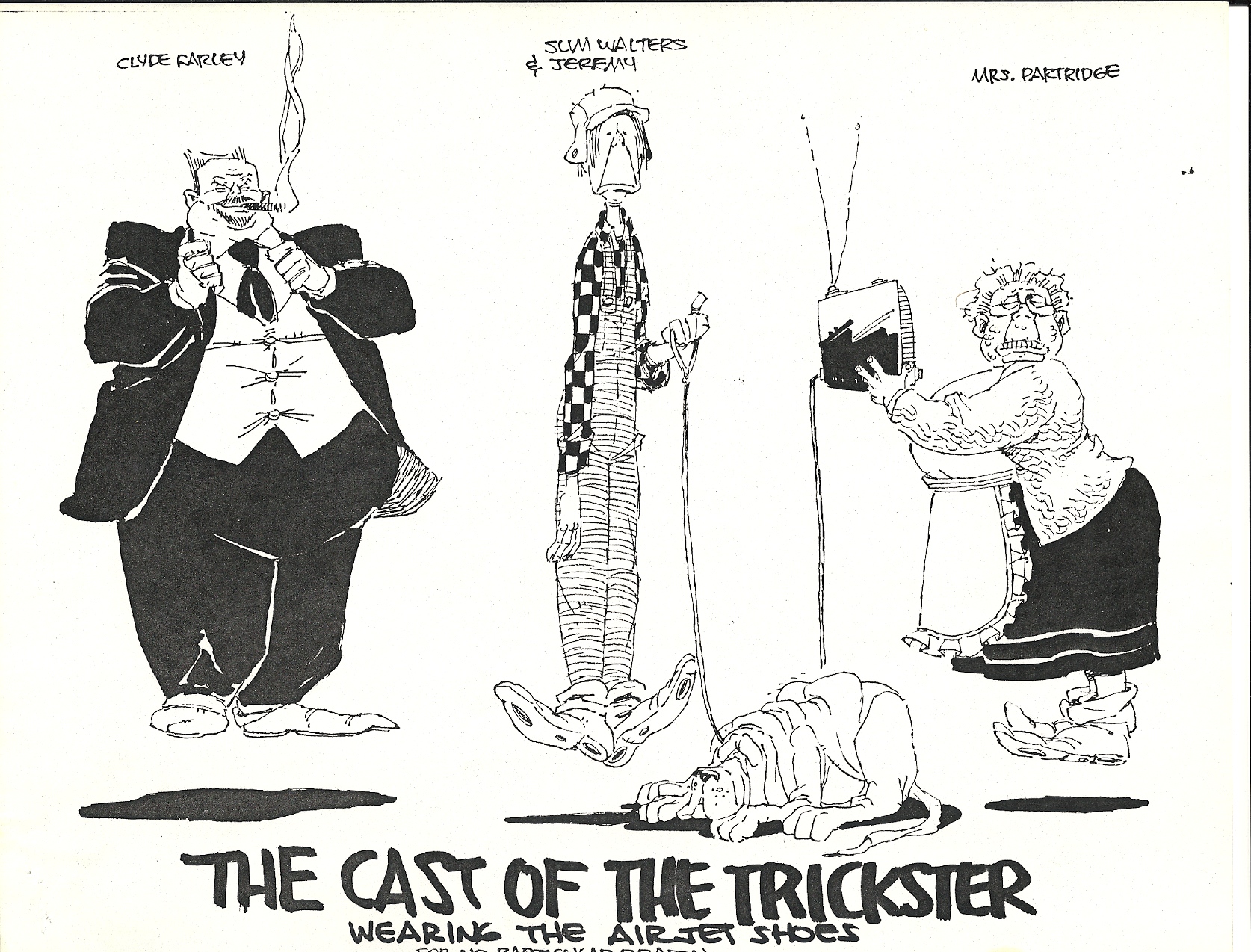
As threatened, the rest of 1989 proposal I wrote for Flash rogue, The Trickster, with art by the talented Stephen DeStefano. Once again, The Trickster, Gunner and Sarge, Pooch, and whatever characters and elements are appropriate are (c) DC Entertainment. The rest of it (c) Paul Kupperberg. Art (c) by Stephen DeStefano.

TRICKSTER #1

“State of the Union”

(The events in THE TRICKSTER #1 – 6, which will include his retelling of his origin, are being told as “written by” James Jesse in his autobiography, The Trickster of the Trade.)

The Trickster is back on the prowl.

He knows he ought to have learned his lesson by now, but here he is anyway, his target an accounting house for the biggest numbers racket in Jersey City, a heavily fortified warehouse.  Except when The Trickster starts way in, he finds about three times the manpower he expected.  Not for the first time he wonders why he ever got talked into this insanity.

Well, it goes something like this…

James Jesse had been in Crumbly, New Jersey for just over a year and had managed to carve out a nice little niche for himself there; a home, a little business, the respect of his neighbors, and a seat on the Town Council left empty by the death of its occupant.

As a member of the Town Council, he knew that Crumbly was in bad shape, although he hadn’t realized just how bad things were until he was tapped by a faction of the Council to run for mayor.  Not win.  Just run.

The real contest, it’s believed, is between resort owner Buck Daly and funeral director Clyde Farley.  Clyde is deadset against putting up a shopping mall in town on the basis of economics.  Buck is sort of for the mall, but his attitude is to take it slow and cautious.  James, his political backers feel, is popular enough to draw votes away from Clyde and act as a spoiler in Buck’s favor, who can be convinced to support the mall.  James will be a “spoiler” candidate, drawing votes away from Clyde, giving Buck the edge he needs.

But that was nothing in the hassle and intrusion department as his current situation, playing hide-and-seek as The Trickster with the small army of thugs in Jersey City.  He’s taking them as best he can, but he’s not happy with the situation.  This confrontational stuff’s not for him.  He needs some help, so he grabs a moment to make a quick phone call.

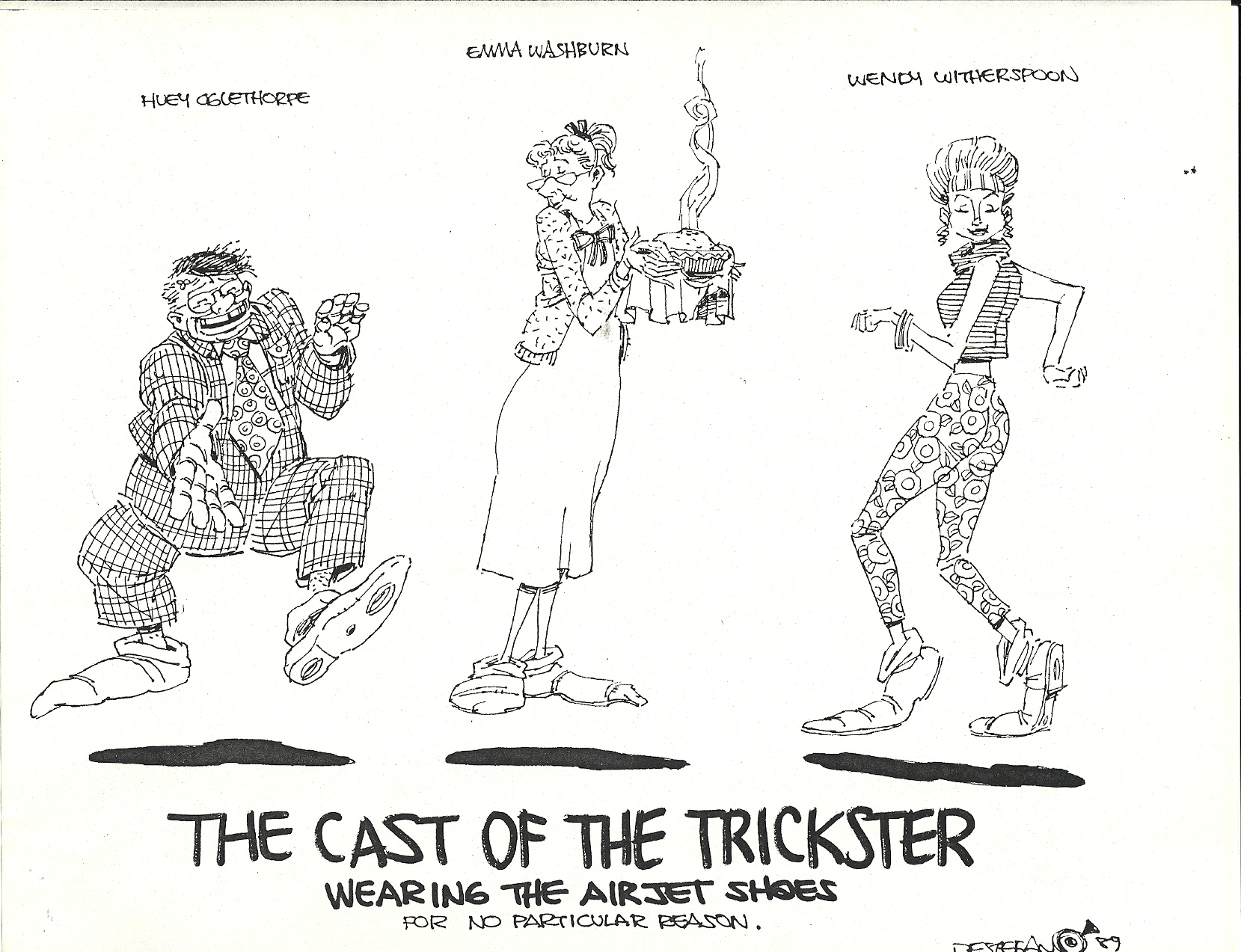
Ma O’Casey, knowing James’s feelings for Wendy Witherspoon, hints that his political heroics might go a long way in getting her attention.  Since everything else has failed, James figures it’s worth a shot.  Besides, he’s not supposed to win the election, just divert votes away from Clyde.  This could be fun.  Even though that annoying Emma Washburn was the first campaign volunteer.

Clyde isn’t pleased by James’s candidacy.  The Bunding group isn’t any happier.  They’ve bought Clyde, lock, stock, and barrel, secretly backing his campaign in order to insure that the Crumbly mall doesn’t get built, in favor of their own endeavor just outside of town.

In the present, The Trickster finds himself in dire straits, back to the wall against overwhelming odds… when the cavalry arrives.  The police, to whom he had made his call.  They sweep into the place, buying Trickster time to send the drug money aloft on balloons for later retrieval… before the cops greet him like a fellow crime-buster.  The Trickster… super-hero?

But it gets weirder still when he returns home, later that night after retrieving the airborne loot.  Because that’s when we find out that James is not only a budding super-hero but also mayor of Crumbly.  And the lap he’s dropping the stolen loot into belongs to none other than his one-time political rival, Clyde Farley.


TRICKSTER #2

“The Candidate”

(Part 1)

            The following day, James is back in Crumbly, a hero to the townspeople (giving us the opportunity to meet some of the others in town, including Gunner & Sarge and Sheriff Gompers) for his efforts in shutting down the Jersey City numbers racket.   Everybody’s so proud of their mayor and local hero.  But the more kudos he receives, the less heroic he feels.

Someone else isn’t all that thrilled by his actions either; the head of the Jersey City rackets The Trickster busted up.  And, since The Trickster has made such a splash in the press of late and everybody knows who he is and where to find him, he’s making arrangements to get just that.

James wasn’t acting out of the sappy altruism of real heroes — not that he ever would, mind you! — but he’s skating on thin ice here, feeling that he’s deceiving these people who have been so kind and accepting of him.  Could he be developing a conscience?… naaaw!  At least that’s the opinion of Clyde Farley, who James had delivered the money to: after all, James is doing this for the good of Crumbly, to help get the Mall built.  Yeah, well, that’s the only reason James would even consider throwing in with Clyde.

He liked it better when he and Clyde were adversaries during the campaign.  Even though it was hard work, especially having to deal with Clyde Farley’s nasty campaigning, the dredging up of James’s criminal past and the questioning of his trustworthiness.  Clyde brings in witnesses to “prove” his theories, Baily and Barney Billings, James’s former cellmates.  They back up Clyde’s contention that should James win, he plans to sack Crumbly’s treasury.

The Billings are telling Clyde what he wants to hear in exchange for a hefty “consulting fee.”  Except for his closest friends and advisors (and ever faithful Emma), the town folk don’t entirely disbelieve the stories; who can blame them, considering his past.  While he’s trying to figure out what to do, the Billings brothers get some ideas of their own.  What they see is a small town with a rube police force… and a bank that looks easier to open than a cracker box.

The Billings hit the First Crumbly Bank, hiding the bulk of the loot in the old abandoned fish cannery, with a few dollars saved for James’s basement.  When the theft is discovered the next morning, Clyde is the first to point a finger at James.  As a show of good faith, James gives Sheriff Gompers permission to search his house… and the Sheriff promptly finds the planted loot.

While James takes the heat for the robbery, the Billings take their leave of Crumbly  But The Trickster is waiting for them at the cannery, since it doesn’t require an Einstein to see who was behind the robbery.

The two crooks run for it, their flight taking them back into town with Trickster in hot pursuit.  Trickster eventually takes them out in full view of the entire town, making him an instant hero.  Clyde is made to look like a real bozo in the eyes of the town…

… And Walter Bunding isn’t happy.  Clyde’s a clod, but he’s important to the Bunding Group’s future plans.  He’s going to have to take a hand in this himself.  Rather than try and fight The Trickster in the political arena, he arranges to get rid of James should he start proving a major bother.

In the present, James is home, getting ready to embark on another late night foray as The Trickster, hating the stupid costume and what he’s got to do because of it.  But he won’t have to do this much longer… then he can get back to the quiet life, one that doesn’t include people shooting at him.

That’s when someone starts shooting at him.

TRICKSTER #3

“The Candidate”

(Part 2)

            James is under attack and he’s got no idea who or why.  Not that it matters, what with the bullets flying his way.

When he confronts the attacker, we see it’s Crosshair, a costumed sharpshooting gun-for-hire sent by the Jersey City mobster to make the payback for Trickster’s busting up his operation.  Crosshair’s  a slippery customer and a crack shot, blowing Trickster’s gimmicks out of the air.  Gunner and Sarge, hearing the shooting, have a War World II flashback and, thinking it’s a Japanese sneak attack, whip the old bazooka and M-1 out of mothballs to protect Crumbly from the enemy.  All of which results in a raucous, disturbing poor Sheriff Gompers’s peace.

This isn’t the first time James’s presence in town has caused trouble for the beleagured Sheriff either.  There were those annoying Billings Brothers, of course, and back during the mayoral campaign… he remembers that things were going great guns for James.  The Billings incident had made Clyde look like a major fool and James a hero.  Buck Daley was just kind of getting lost in the shuffle, according to Scoop Taylor’s polls in the Weekly Courier.  All this makes James real nervous.

But despite lagging behind in the polls, Buck isn’t unhappy, as the story of a reformed super-villain running for mayor has attracted the interest of the outside press and brought hordes of reporters to town.  Every one of them staying at his hotel.  And there’s plenty of economic spillover to the rest of the town as well.  Crumbly hasn’t had it this good in years.

Of course, this boon to Crumbly is a hassle for Sheriff Gompers, disturbing his quiet life.  It’s also an annoyance to the folks at the Bunding Group since it’s the type of situation that could bolster the community and lead to the creation of the Crumbly Mall.  Walter Bunding takes action.

Everybody wants a piece of James, from the politicians to the media… and let’s not forget Emma, who’s on him like fleas on a dog.  The only plus in all this is Wendy Witherspoon, who’s finally started to look his way with something approaching interest, especially after his spot on Entertainment Tonight… she’s even agreed to have dinner with him.

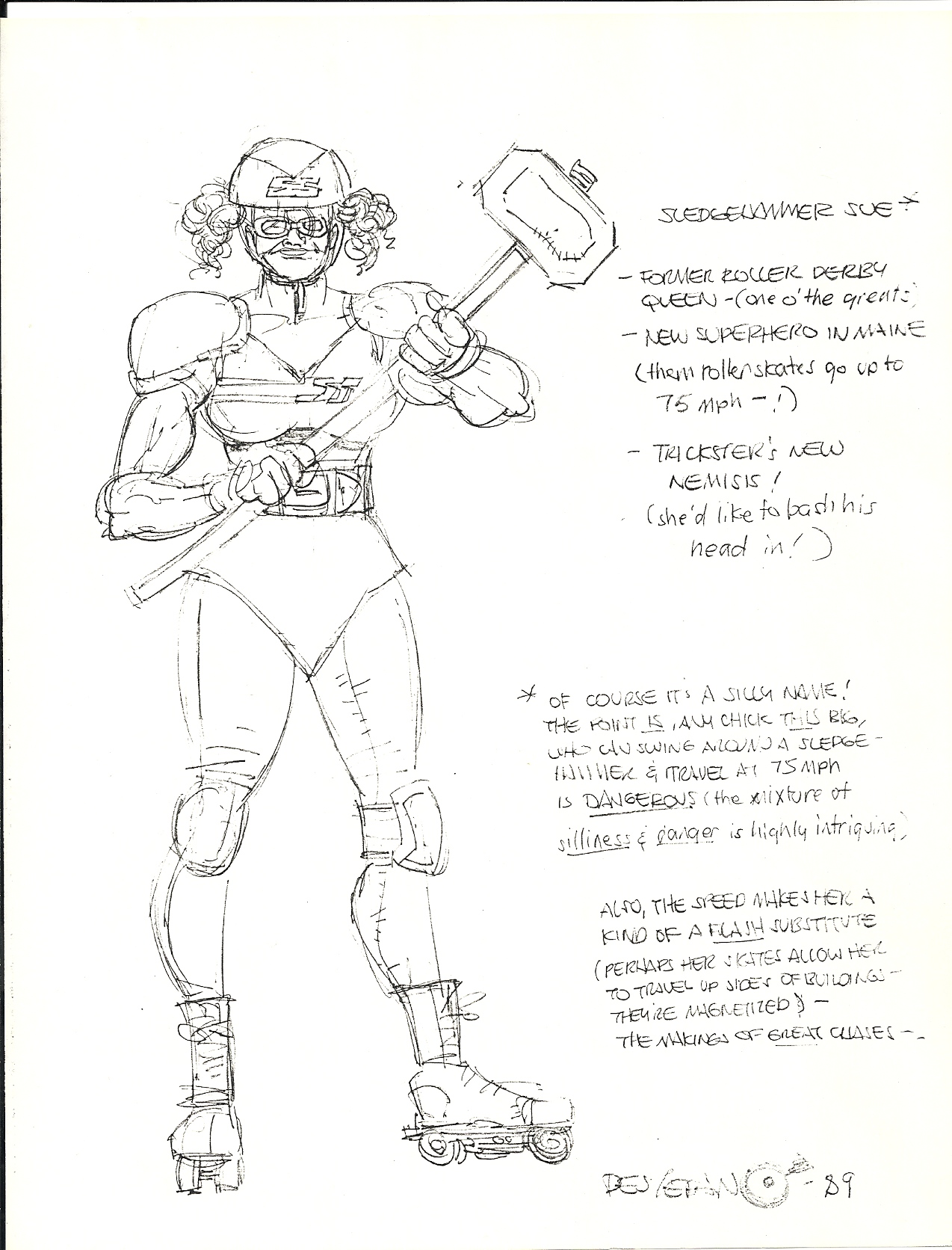
And it’s during that dream dinner that Walter Bunding’s “action” rolls into town: Sledgehammer Sue.  The former Roller Derby Queen and construction worker turned freelance underworld enforcer comes in with 40-pound sledge swinging, raising holy heck until she finds James.  He does what any guy would do in that situation — he grabs his date and hauls cargo.

James makes it home for his Trickster equipment, just barely, with Wendy caught in the middle of this madness.  Emma’s jealous that she’s not the damsel in distress.  The Trickster and Sue go at it, tearing up more of Crumbly in the process.

Trickster finally overcomes Sue and she’s forced to split… not that that exactly breaks her heart.  She thought James was kind of cute, but, hey, a contract’s a contract, right?  At least until she thinks she’s going to be beat.  And it’s not like she’s got any particular allegiance to the Bunding Group.

Bunding?  James starts to put two and two together…!

Meanwhile, in the present: The Trickster is dealing with Crosshair.  Crosshair does his work from a distance and is tough as the dickens to get a bead on.  So even Trickster isn’t surprised when he turns around to find Crosshair with all guns aimed dead-on at him, ready to blow his brains out.


TRICKSTER #4

“Balance of Power”

            The Trickster’s about three seconds away from meeting his maker at Crosshair’s hands.  It’s turning out to be one of those days…!

But at least he finds out that it’s true what they say about your life flashing before your eyes before you die.  He remembers back to when he was having some luck.  This was right after he’d defeated Sledgehammer Sue.

The aftermath saw James more popular than ever (except to Wendy, who wants nothing more to do with him).  The incident brought even more tourists to town, prompting the Council to erect a sign at the town limits proclaiming Crumbly home to America’s newest super-hero.  James’s “machine” is excited by this turn of events, forgetting the original purpose of his campaign.  But James hasn’t forgotten and he still doesn’t want the job.  But how to turn this thing around?  What if he were no longer a hero…?  That’s what Clyde and Walter Bunding are trying to arrange as well.

To that end, Bunding invites James in for a meeting at corporate headquarters.  James takes the meeting, not knowing it’s a set-up where he’s being videotaped.  Nothing of any substance is said at the meeting and James leaves, confused as to what that was all about.

Meanwhile, to accomplish his own fall, James invites someone to town to beat the tar out of him.  He’s asked an old “friend” who’s still in the villain game, Weather Wizard, fellow member of the old Flash’s Rogue’s Gallery, to do the honors.  He doesn’t know why Trickster would want to do this, but what the heck?  A win against this celebrated new hero wouldn’t hurt his own somewhat flagging reputation.

So, as scheduled, Weather Wizard shows up during James’s beachfront campaign rally.  He takes after James… and James runs.  Not, as everyone assumes, to change into his Trickster garb.  He just keeps running, much to the chagrin of the entire town, especially heartbroken Emma Washburn.  Wizard declares victory…

…  And then starts to take that victory seriously.  Wizard figures that since James is trying desperately to look like a wimp, he’s not going to jeopardize what he’s done by returning and playing the hero.  That gives Wizard the chance to sack the town before moving on.  James, a one-time super-heavy himself, will certainly understand Wizard answering the knock of opportunity.

But all James was trying to do was to make himself look bad.  Wizard’s rampage in Crumbly bothers him…  but going back after him would undo all his efforts.  What to do?  And the fact that the whole situation bothers him so much bothers him even more.  All he wanted was to preserve his nice, quiet life, but now his friends and neighbors are suffering.

It’s actually Emma Washburn who convinces James to do the honorable thing.  Despite the fact that he’s done everything in his power to cool her advances, she knows what kind of man he is, and that kind’s not a coward.  She also knows he’s not too hot on being mayor of Crumbly, so it’s not hard for her to put two and two together and figure out his game.  She shames him into doing the honorable thing.

Wizard is riding roughshod over Crumbly, enjoying his first real success in a lot of years as a super-villain.  The Crumbly cops are little threat to him and Flash’s nowhere to be seen, so he’s in no rush.

Until The Trickster pops up!  Wizard’s messed up his plan, forced him to do the honorable thing… and he’s going to pay him back in spades.  The Trickster lets loose all the stops and trashes Wizard, once again in full view of the cheering townspeople.  In the aftermath, everyone believes that The Trickster’s turning tail and running from Wizard was a deliberate ploy to catch the villain by surprise.  James just can’t seem to win…!

Especially in the here and now, with Crosshair’s finger tightening on the trigger… The Trickster closes his eyes, unable to watch… and then there’s the shot.  And The Trickster opens his eyes, very surprised to be alive.  And to see Gunner and Sarge, in full combat gear, coming out of the bushes after having shot Crosshair in the foot.  Yessir, that’ll teach them Japs to invade New Jersey!  James isn’t proud– he doesn’t object to being saved by a pair of crazed septuagenarians.

TRICKSTER #5

“Vote Early, Vote Often”

(Part 1)

            After the episode with Crosshair, it’s back to business as usual for James in Crumbly.  And there’s lots to be done.  Since his election, James and the Council have been working on bringing Crumbly back from the dead.  The whole wild, wacky circus atmosphere created by his campaign and battles with super-villains brought some temporary publicity and income into town, but now that the election’s over and things have returned to normal, all that’s slacked off.

The Council has been lobbying the State for improvements on the roads into Crumbly, a necessary civic improvement if the town ever hopes to go ahead with the planned shopping mall.  One of the results of James’s election was Bunding Corporation canceling the plans for their mall, leaving Crumbly a clear field for its own… provided a myriad of obstacles can be overcome.  Foremost among those obstacles is money.

And money is where James’s secret alliance with Clyde Farley comes in.  After the animosity of the campaign, Clyde came to James with hat in hand, seeking to heal the rift between them.  He works a whole song and dance on James, saying that he’s willing to work with James for the good of the town, blah blah blah.  James doesn’t believe a word of it and, while he can’t prove it, knows that Clyde was playing footsie with Bunding during the campaign.  He figured Clyde for someone from whom he should keep a safe distance.

Clyde figured James would figure things that way, so not only did he come equipped with a plan, he was also armed with a bagful of “persuasion,” including sicking the FAA on him for use of his airshoes in residential areas, sending the building inspectors after him for his something less than structurally sound old house, insisting that the local zoning board do something about his running a business out of his home, and generally making his life miserable in a never ending tangle of red tape.  And, to add icing to the cake, Clyde will use all his influence to oppose James on the Town Council.

Clyde intends to use that money, after it’s properly laundered through dummy corporations, to buy the Ferdy Fish Packing factory, reactivate it, and use that to build a tax base for Crumbly.  James has fallen far behind the schedule Clyde has set and he’s urging James to get cracking.  In fact, Clyde suggests that a perfect opportunity to catch up would be when James is in Trenton, the State capitol, with the rest of the Crumbly contingent on town business with the State legislature.

Who’d ever thought, back when he was a mere candidate that he’d be in this position?  He remembers when election day was drawing near and the campaign had gone into overdrive.  The Weekly Courier’s last poll has him neck and neck with Clyde, with Buck Daly a distant and disappointing third.  James still doesn’t want the job, but he doesn’t know what to do to insure not winning without screwing up everything.  He likes this place, the last thing he wants is to lose it.

Walter Bunding thinks he’s got a solution to his problem.  When he invited James in for a talk (in TRICKSTER #4), Bunding had secretly videotaped their meeting.  While nothing of any real substance was said, it was a simple matter to edit the tape to make it appear as though James had gone to Bunding with an offer to get the Crumbly Mall plan squashed, thereby clearing the way for Bunding’s effort in exchange for big wads of cash.  By releasing the tape on the eve of the election, there won’t be time enough for James to counter the charges.  By the time James can prove anything, it’ll be too late.

Meanwhile, a previous Bunding plan is about to return: Sledgehammer Sue.  After her disappointing premier outing as an enforcer-for-hire, Sue found work hard to come by.  Nobody was looking to hire someone who left a job undone, so she’s returned to finish up.  And she’s chosen Election Eve to make her move, since that’ll get her handiwork the maximum media exposure.

Meanwhile, back in the present, James and Council members Buck Daly, Ma O’Casey, Wendy Witherspoon, and Clyde Farley have arrived in Trenton, scheduled to appear before the State Legislature the following morning.  Clyde suggests that James make his move as The Trickster tonight, before the meeting.  James agrees and, after dark, sets off to find his night’s prey.  Of course, he’d done some advanced planning, tagging a major “suspected” drug dealer in Trenton’s inner city.

But Trickster’s not the only costumed guy on the prowl for dope dealers tonight in Trenton.  Dilton Samuals is new to the game, since his super-powers have only recently manifested themselves, a result of the gene-bomb from the INVASION!  Our new hero calls himself Origami, after the Japanese art of paper folding.  His newfound powers enable him to shift people and objects into the 2nd Dimension, leaving them without any depth and mass, like a sheet of paper.  Dilton was born and raised in Trenton and has watched the inner city deteriorate under the influence of gangs and drug dealers, seen his friends ruin their lives or die from drugs.  He’s fought these influences as a social worker, but as a meta-human, he’s in a position to strike directly at them.

The Trickster is on the streets, monitoring the street dealers, trying to locate the dealer’s cash house.  Some discreet surveillance work does the trick and soon he’s making preparations to get to work.  Origami is doing the same.

In the past, on the day before the election, when James opened his front door to find a horde of reporters laying in wait for him.  He’s shown a copy of the “anonymously obtained” videotape of him and Walter Bunding.  He also sees Bunding’s statement in reply, along with that of the local District Attorney, promising to investigate these charges.  The news is already all over town by the time James hears it.  Scoop Taylor’s been polling the town and has found that it’s not looking good for James.

But he doesn’t have to be a rocket scientist to figure out what’s going on: he’s been set-up.  And Walter Bunding would seem the obvious creator of the frame.  He’s the other person on the tape and James’s election would mess up the Bunding Group’s plans for their mall.  Two plus two equals… a job for The Trickster!

That night, The Trickster heads for an informal little meeting with Mr. Bunding.  He doesn’t know that Sledgehammer Sue is on his tail, but he finds out soon enough.  In fact, everybody in the Bunding building finds out when she attacks James before he can get in to see Walter Bunding.  The battle is on…

… Much like it is in the present, as The Trickster starts his assault on the drug ring’s cash house.  The Trickster finds that there are no perimeter guards on the place, although they’d been there when he’d scouted the place.  And just what are these weird, folded up man-sized cut-outs of the men who’d been there…?  The answer to that comes to him when he catches up with Origami.  The Trickster is appalled by Origami’s murderous methods and tries to get him to stop, but Origami isn’t going to stop before he’s even really started.  If The Trickster wants him stopped, then he’s going to have to do it the hard way…!


TRICKSTER #6

“Vote Early, Vote Often”

(Part 2)

            The Trickster’s simple little job’s gotten real complicated thanks to Origami.  All Trickster was looking to do was trash some crooks, steal their ill-gotten gains, and call a press conference to show off his accomplishments.  Origami, on the other hand, is out for blood, using his two-dimensional powers to fold, spindle, and mutilate the bad guys to death.  One touch from Origami will turn Trickster into a lifeless sheet of paper-like organic matter, but he’s got to try and stop him.

Much like when he went after Walter Bunding on election eve.  He’d planned to go in, confront Bunding, and get out of there with minimal muss and fuss.  But thanks to the returning Sledgehammer Sue, that idea went out the window.  The Bunding Building was turned into a war zone, complete with Bunding’s security forces and the State Police.

In the present, The Trickster and Origami are still going at it in Trenton with Trickster wishing he was anyplace else but here.  The cops have gotten in on the act, helping to evacuate the area, since Origami is endangering the populace.  At least James is getting the desired publicity, since the media’s shown up to cover the battle.  A fat lot of good it’s going to do him if Origami trashes him.

But that’s the weird thing– Origami appears to be going out of his way to avoid turning his powers on the cops or The Trickster.  Pretty strange behavior for a crazed killer, ain’t it?

Things were pretty strange on election eve as well, although that worked out a lot better than it seem to be going in Trenton: The Trickster and Sue are making a mess of the Bunding Building, in the course of which they crash their way through the security room, where all the building’s security cameras are monitored, including the ones in Walter Bunding’s office.  The Trickster doesn’t remember seeing any cameras in there when he met with Bunding, but the whole thing makes sense to him now… and it even gives him a plan of action.  He starts to direct the direction of the battle to take him and Sue to Walter Bunding’s office.

When they do reach The Trickster’s destination, Walter Bunding is there, using the safety of his office to direct his people in fighting off the invaders.  Sue is there to “complete”  her contract with Bunding… a can of beans she spills in Walter Bunding’s presence.  A fact that’s recorded on the security video system.  Bunding doesn’t think there’s any need for him to play it clever here, in the sanctity of his office, and he tells Sue to forget their contract.  He’s got all he needs to ruin James without her help.  Sue wants to know about the balance of their payment to her for the job.  Bunding tells her to forget that, just seconds before the Security guys and the State Police come busting in.  Bunding’s going to have them busted…

… But The Trickster tells the cops to hold on, that he can prove it’s Bunding who should be arrested!  Everybody troops downstairs to the Security room and Trickster pops out the videotape, effectively hoisting Bunding on his own petard.  He tells them it’s all part of his ongoing investigation into Walter’s illegal activities, even claiming that Sue was in on it to help gather the evidence to make it sound good.  Sue is startled, but she plays along… and thinks that now that she’s no longer under contractual obligation to kill Trickster, maybe they can get together sometime…?

So that all worked out just swell… except when the story came out the following day, James won the election in a landslide.  Like it or not, he was the mayor…

… Which is what brought him to Trenton and his fight with Origami.  But remembering that incident makes Trickster realize that everything isn’t always what it appears on the surface.  So far, Origami’s only directed his powers against the dope dealers, scrupulously avoiding harming Trickster and the cops.  Trickster figures that this guy just might have good intentions… and to confirm this, Trickster asks the guy, leaving himself wide open to Origami’s killing touch.  Origami can’t do it to Trickster and spills his guts.

For all his good intentions, Trickster can’t let Origami walk away from his crimes.  Origami realizes that the only way out for himself is to kill Trickster… or turn his own powers on himself, which he does, folding himself up and disappearing into the second dimension.

The following day, just before James and company head into the State legislature hearing, James has to report to Clyde that he failed to come up with the money.  Clyde is upset, moreso than James thinks the situation warrants… but enough to suddenly get James real suspicious about Clyde’s motives.

Paul Kupperberg on July 31st, 2012

In the previous posting, I discussed the background of the proposal I wrote for Flash rogue, The Trickster (with the talented Stephen DeStefano to be supplying the art). Here’s the first part of said proposal, accompanied by some of Stephen’s character sketches.
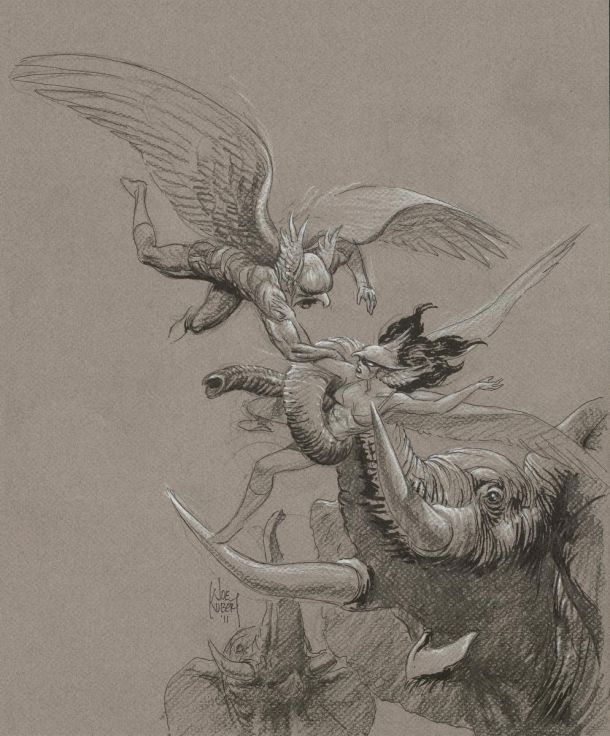
The Trickster, Gunner and Sarge, Pooch, and whatever characters and elements are appropriate are (c) DC Entertainment. The rest of it (c) Paul Kupperberg.

The TRICKSTER

Proposal for an Ongoing Series

by Paul Kupperberg & Stephen DeStefano

James Jesse has just finished a stay as a guest of the State of California, its way of repaying him for his activities as the super-villain, The Trickster.

James tried to be good, but the cards were stacked against him.  After getting fired as a Hollywood special effects man, he found himself having to turn back to crime…

… Which led to the return to prison.  This time, when he got out, he had finally, absolutely, positively, this time for real, he’s not kidding around, you can bet the house on it, given up on crime.  This time, The Trickster had retired for good.

Yeah.  Right.

1.  The Life and Times of James Jesse

 James Jesse was born Giovanni Giuseppe, the youngest member of the Flying Jesses, a family of third-rate circus aerialists and high-wire walkers.  James may have been raised under the Big Top, but his heart and imagination were firmly rooted in the daring days of yesteryear in the time of the Old West, particularly where it concerned Jesse James.  The young aerialist regarded the famous outlaw as his namesake and studied him with religious fervor, almost to the exclusion of show biz.

And that was just fine with James, because if the truth be known — and the youngster did everything in his power to see that it never was — he was scared of the high wire.  Really afraid… of his father, a grade-A klutz.  Papa Giuseppe couldn’t catch a cold, much less his somersaulting boy in mid-air.

But James was a bright kid, something of a tinkerer, and that’s where he found the way out of sudden, jarring drops and abrupt stops.  It was jet-shoes, shoes that fired jets of compressed air powerful enough to support his weight, giving the illusion of flight.  Or, more importantly, of his effortlessly working the high wire.

James’s contribution to the act brought the Flying Jesses their first success in four generations.  His stunts were the lynchpin of the act, but after a few years on the wire, James got bored and went looking for something a bit more challenging to hold his interest.

He turned to his “namesake,” Jesse James for inspiration.  He turned his jet-shoes, and himself, to crime.  He devised the harlequin-like alter ego of The Trickster, added a bag of tricks to assist in his criminal career, and headed off to emulate Jesse James… with a modern twist.  The outlaw would hold up stagecoaches and railroads.  The Trickster preyed on airplanes… in mid-flight.

The Trickster did all right for himself until he ran afoul of the Flash, who not only uncovered his true identity, but put him (repeatedly) in prison, giving the criminal clown the dubious distinction of membership in the Scarlet Speedster’s infamous Rogues Gallery.

After a long and frustrating career, James gave up his criminal activities and turned his talent for tinkering into a job as a special effects designer for films at Verner Brothers Studio.  He also obtained work as a “technical advisor” to the Institute for Hyper-Normal Conflict Studies.  But both these gigs eventually went the way of all things and, in desperation, he returned to crime, intending to steal only enough to get by until he found honest work… but you know what they say about the best laid plans.

James was captured and imprisoned, and when he was released this time, he swore that no matter what happened to him, he was never going back behind bars.

Even if it meant going straight for real.

But to do that, he decided he was going to have to give himself as big an edge as possible.  He’d avoid the big cities and all their illicit, settling instead in some small, peaceful little town.

Like, say, somewhere on the New Jersey shore, in Crumbly (population 25,357), on the coast of the state.  James’s Aunt Gussie Carbonetti (on his mother’s side) had left him some property there several years back.  Over the years he’d been paying the property taxes on the house, figuring that some day he might want a place to retire (or hide-out).  That day had finally come.
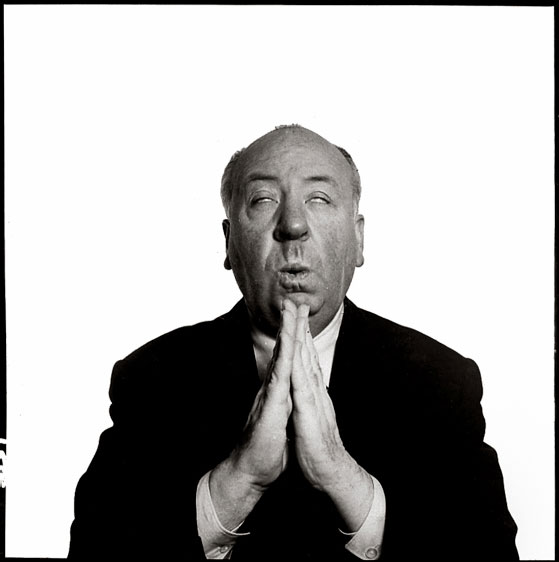
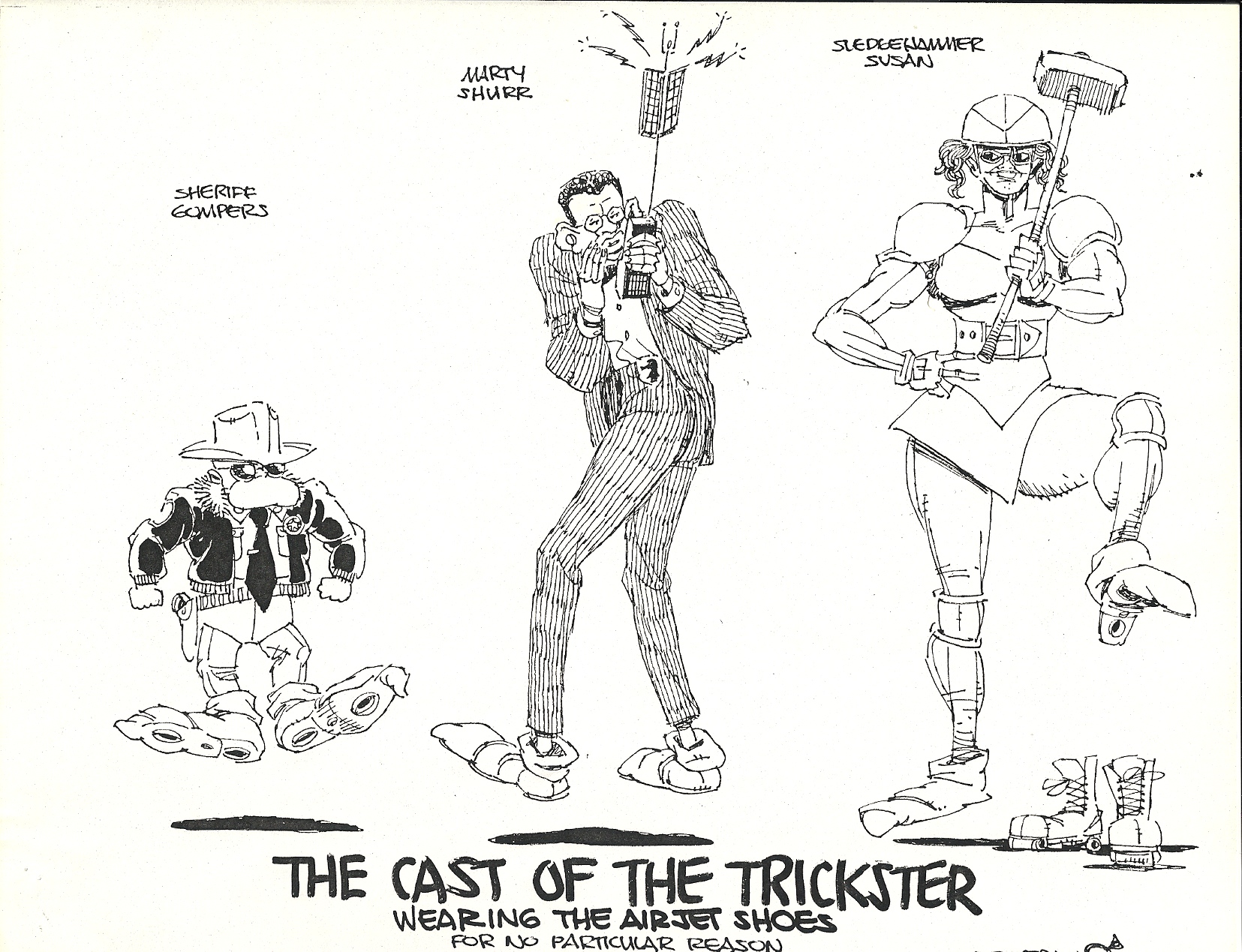
But Crumbly’s in trouble.  The population’s been dwindling and the town losing momentum since the closing of the fish cannery that was once its major source of employment.  The Ferdy Fish Packing Company, owners of the cannery, refuse to reactivate the plant, preferring to keep it as a corporate tax write-off.

There’s also the looming threat of a shopping mall to be built outside of town, on the Interstate that bypasses Crumbly, removing shopping as one of the few incentives outsiders had for coming to town.  There’s a City Council dogfight going on to get Crumbly to build its own mall first, while the Bunding Corporation (developers of the outside mall) is still buying up the land on which to build theirs.

But it’s a small, quiet, friendly community.  James makes no secret of his being an ex-con, but he’s a quiet, respectful, helpful presence and the people of Crumbly gradually come to accept him.

When finding a job in the depressed local market proves tough, James starts a messenger service, delivering goods in town and to surrounding communities.  His air-jet boots come in handy here, getting him between places fast when it absolutely, positively has to be there on time.  He proves fast and reliable and gets enough work to get by, but the future doesn’t look rosy.  Folks are leaving town in droves and businesses are closing up left and right.  James would leave himself except he’s flat broke and, due to the shakey economic situation in Crumbly, his house and property are virtually worthless on the marketplace.

2. JAMES JESSE, The Man

As a kid, James was something of a nerd-genius, not to mention somewhat of a coward, both factors in the creation of his jet-shoes.  When it comes to direct physical conflict, James prefers to leave the fisticuffs to others.  But, like a lot of people who are physically afraid, he’s very cunning.  Because he’s been whupped so often, people tend to underestimate him, but this is the man who created all the amazing gimmicks he uses.  He’s no dummy.

James tries to never to be directly in the middle of anything, preferring instead to work behind the scenes, setting events in motion and letting everybody else trip over themselves while things happen.  He doesn’t see himself as one of those macho guys who dukes it out with every Tom, Dick, and Dirty Harry who comes along.

He turned to crime because he felt it was the easiest way to make a buck without having to work too hard and he was confident and cocky enough to believe his smarts would keep him from getting caught.  Besides, he was ready to do anything to get out of the transient, smelly, backbreaking life of the circus.

In civilian life, James favors Western garb and country music, influenced by his Jesse James obsession.  His hobbies include practicing with antique six-shooters, collecting Western memorabilia, old Penny Dreadfuls and Dime Novels about Jesse James and other Western outlaws.

Even during his criminal days, James was never a cruel man; he just wanted to steal from people without hurting them.   Now he’s trying to be a good guy, lead a straight life, and be a productive member of the community.

3. THE TRICKSTER’S Pals ‘n’ Gals

CLYDE FARLEY

A member of the Crumbly Town Council, President of the town’s Merchants Association, and owner of Farley & Sons Funeral Home, Clyde is very much the power behind the town.  He sees himself as a smart, shrewd businessman who’s held back by the limited potential of a place like Crumbly.  He’s always got an eye out for the quick, easy buck and, by the time our story begins, he’s reached a point in his life where he’s not terribly particular about the legality of those bucks.  And that makes Clyde a prime target for the approaches of outside interests involved in the development of the shopping mall just outside of town.

HUEY OGLETHORPE

Huey is the four-term mayor of Crumbly and owner of the town’s hardware store.  He’s a bit pompous and loudmouthed, not exactly a rocket scientist, something of a loud dresser with his plaid suits and bad toupee.  In spite of these few personality quirks, Huey’s basically a nice guy who means well and wants good things for Crumbly.  He works hard for the town and to do the right thing, which accounts for his continued re-election.  Up until now, he’s been able to handle the job, but when he starts to see that what’s going on in town is beyond his abilities to handle, he is willing to relinquish his spot on the ticket and let some new, more capable blood take over.

WENDY WITHERSPOON

The object of James’ affections, the rather affected survivor of a once wealthy local family which fell on hard times when her father invested the entire Witherspoon fortune in a phony Oklahoma oil drilling scheme.  Wendy owns and operates the Crumbly Boutique, a trendy clothing and doo-dad shop in a town about 25 years behind the times.  She’s something of a clotheshorse, changing her attire practically every hour.  James pursues her relentlessly and without shame, but she’s not interested… at least she won’t let herself be interested.  Wendy’s convinced herself that what she wants in a man is what her father used to have — wealth and power.  She was born with a silver spoon in her mouth, lost it, and wants it back.  To get it, she needs someone with the lifestyle to which she expects to become re-accustomed.  James is a nice guy, but he’s not socially acceptable.

EMMA WASHBURN

Emma is the flipside to Wendy, the mousey librarian-type who owns the antique shop next to James’ place of business.  She’s desperately in love with James, would do anything for him, but he’s only got eyes for Wendy and hardly even notices Emma’s devotion.   As far as he’s concerned, she’s just a nice lady and a friend.

Characters (c) Paul Kupperberg. Art (c) Stephen DeStefano.

MRS. PARTRIDGE

James’ housekeeper/cooker, a former prison matron, a woman with a bad attitude and a profound dislike for having to move from in front of the TV soap operas.  James usually winds up doing the work himself because he’s too intimidated to fire her.

SHERIFF GOMPERS

Gompers is a town native who’s been sheriff of Crumbly for 23 years.  He’s a man who likes things peaceful and quiet in his town.  Most of what he has to deal with are hotrodding or rowdy teen-agers, the occasional boisterous drunk, and other relatively harmless breaches of the peace.  That’s just fine with Gompers, but if and when things do get serious, he’s there, ready and able to deal with the situation by whatever means necessary.  All he cares about is peace and quiet.

GUNNER and SARGE

After serving together during the Second World War, Gunner and Sarge remained good buddies, sticking together through thick and thin, even after leaving the Marines, taking with them their K-9 Corps partner, Pooch.  As official Combat Happy Joes, these guys missed the action and excitement (and Gunner always really liked the boom of the bazooka), so they spent the next three decades hiring themselves out as mercenaries all over the world.  Eventually they got too old for the work, so they settled in Sarge’s old hometown, Crumbly, New Jersey, opening the Shoot ‘N’ Stuff Shop (“One Stop Shopping for all Your Firearm and Taxidermy Needs!”).  Pooch is still with them… well, Pooch IX, at any rate, although a lot of interbreeding has produced something a lot closer to a dust bunny than a German Shepherd.  The first eight Pooches have been preserved for all time in their taxidermy shop.  The two old vets sometimes forget that the war’s over and are always ready to pick up the old bazooka and M-1 and go for a little skirmish with the Nazis.

BUCK DALY

Buck is the owner of the Crumbly-By-The-Sea Motor Lodge, a crumbling motel that’s seen better days when Crumbly was a seaside resort town.  Buck is continually trying to push promotional schemes to return the tourist trade to the town but nothing ever seems to work.  There’s no money to make the plans work.  When Huey announces his intention not to run for a fifth term as mayor, Buck throws his hat into the ring, running on a platform based on promoting Crumbly as the new in-spot of the Jersey shore.

 “MA” and “PA” O’CASEY

The O’Caseys run the Crumbly General Store.  Pa is the proverbial soft touch, ready to extend a hand-out or unlimited credit at the drop of a hard luck story.  Ma, though as kind and good hearted as her husband, is the more hardheaded and practical of the couple.  Ma has also been a member of the Town Council for almost 20 years, where she sits quietly with her knitting, listening to all sides of the argument before coming to her well-considered and rock solid conclusions.  The O’Casey’s have become sort of surrogate parents to James, “adopting” him as the new kid in town.

ALFRED “SCOOP” TAYLOR

The 67 year old editor and publisher of the Crumbly Weekly Courier, a crusty, feisty journalist in the old Hecht/MacArthur mold.  An old time reporter from the Baltimore Sun, Taylor retired over a decade ago and, with his life savings, bought the Crumbly weekly, a two man operation (along with reporter/photographer/typesetter/circulation manager Kyle McDemmett).  Taylor is tough and incorruptible, willing to lose advertisers before his integrity.

THE CRUMBLY TOWN COUNCIL

 Includes, in addition to James, Clyde Farley, Wendy Witherspoon, Buck Daly, and Ma O’Casey, Mrs. Henrietta Pinchot (wealthy widow), Wilson Henderson (drugstore owner), Max Durham (town barber), and his wife Cybil (hair dresser), with whom Max is always squabbling.  Mayor Oglethorpe has the deciding vote in case of a tie.  The Council is pretty much split down the middle on what to do for Crumbly, although on the important issue of building the Mall in town, they’re split five who don’t believe it’s economically feasible for the financially troubled community against four who think Crumbly’s only chance of survival rests with the mall and that it’s worth any price or transitory hardship in the form of taxes and bond issues to get it built while the Bunding Group is still working on acquiring the land for their development.

THE BUNDING GROUP

Founded and presided over by self-made millionaire Walter Bunding, the Bunding Group is a multi-national mega-corporation with holdings in department stores, fast food franchises, entertainment and amusement… and shopping malls.  Lots of shopping malls in the American West and Southwest and Canada, among which they soon hope to number the mall outside of Crumbly.  This Jersey location will be Bunding’s first in the East, opening a whole new lucrative territory for them. Walter Bunding wants this mall and the Eastern territory, needing a strong string of corporate successes to help bolster Bunding stock for a planned hostile takeover of a communications company that owns a small network of television stations across the country.  He’s not about to let a bunch of small town rubes outwit him, not with all that’s at stake, and the mall fight becomes personal.  And Walter Bunding didn’t reach the top by being a nice guy.


4. THE TRICKSTER: Year One

But first, a few words about the feel and tone of THE TRICKSTER:

It will be fast paced, with lots of snappy patter, a là films like “The Front Page,” and with a decidedly satiric edge.  The satire, however, will be on a “realistic” level, always maintaining THE TRICKSTER’S internal logic.

THE TRICKSTER will be commenting, in context, on the absurdities of the whole super-hero genre, such as the inherent silliness of costumed villains.  Crooks should want to be quiet and unobtrusive so they can go in, do their jobs, and get out without attracting attention.  How bright can they be to start with if these guys go around in gaudy costumes, making a lot of noise?  Or the grim, psychotic behavior of your average super-hero.  Why the heck do these guys take themselves so seriously?  Of course, whenever he tries to get a hero to lighten up, The Trickster inevitably winds up getting his head handed to him.

There’s a hierarchy in the world of super-powered bad guys, ranging from guys like The Joker and Darkseid at the top of the scale, down to the “wimps” like Dr.  Light, The Prankster, Tweedledee & Tweedledum, Captain Boomerang, Gorilla Grodd, and Terra-Man, villains who are either always getting their butts kicked in a big way or are just plain silly.  The Trickster falls into the latter category, but unlike the others who keep on going despite that fact, he’s always been embarrassed by his reputation.  Even Darkseid isn’t such hot stuff to The Trickster’s way of thinking; after all, if he’s so all fired tough, why’s he always getting his head handed to him by every super-hero he runs into?

Life’s not easy even during the best of times, but James Jesse wouldn’t know the best of times if they bit him on the ankle.

Next time: The rest of the story!