Paul Kupperberg on July 7th, 2018
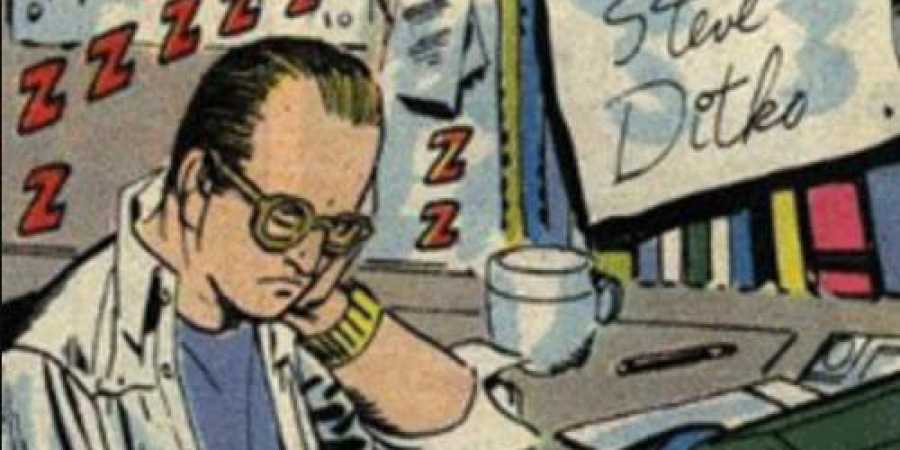
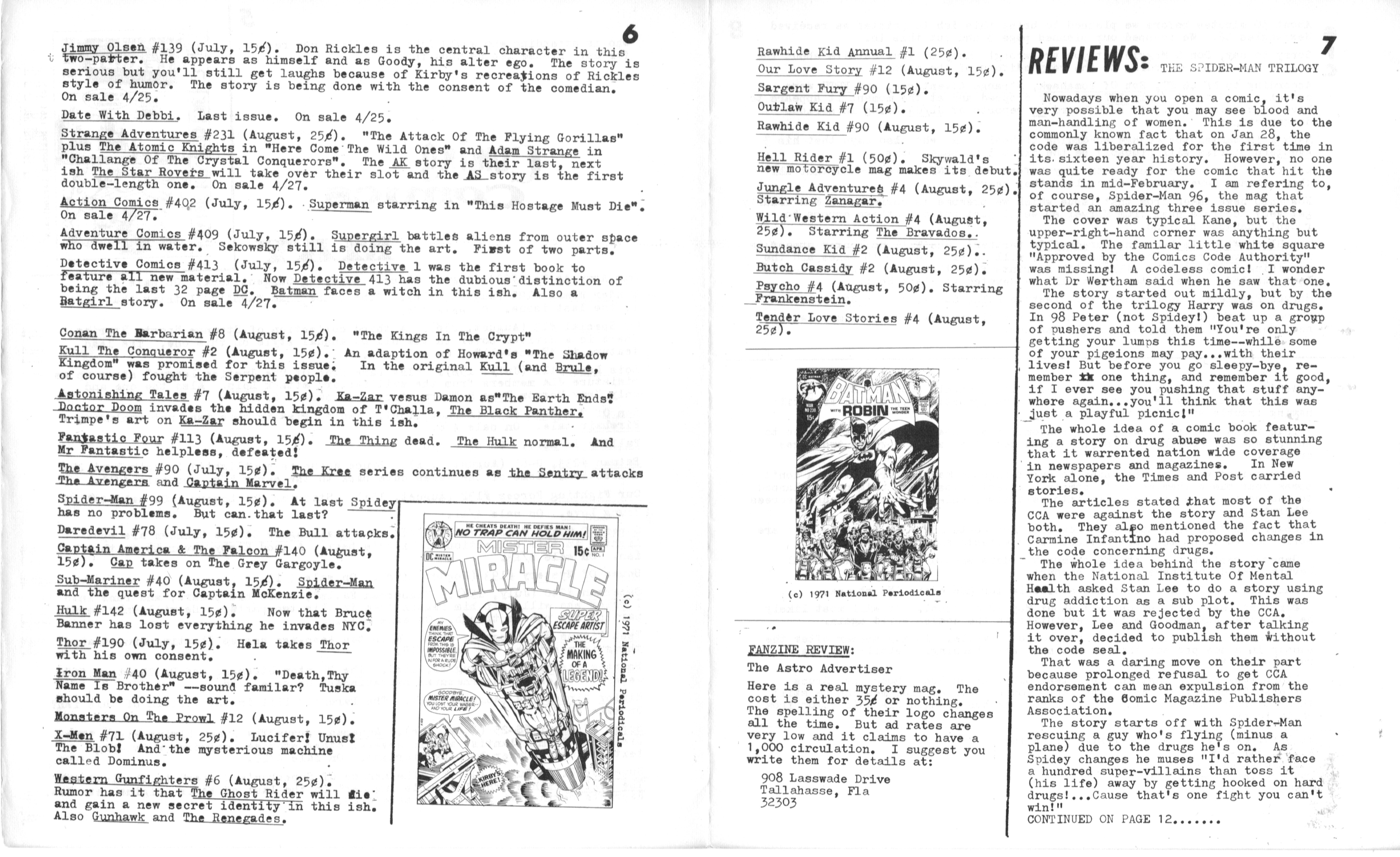
Steve Ditko. Wow. It’s hard to process. I only ever met the man once, during my editorial tenure at DC Comics, but I was first introduced to the creator Steve Ditko in the pages of Amazing Spider-Man and Dr. Strange in the early 1960s. His art was revelatory to a young reader like me more accustomed to the tamer stylings of Curt Swan, Wayne Boring, and John Forte. Ditko took what I thought of as comic book art and twisted it in startling and amazing ways, creating an entirely new way (in my experience) of portraying action and emotion. I was hooked, especially on his originating run on Dr. Strange in Strange Tales.
 
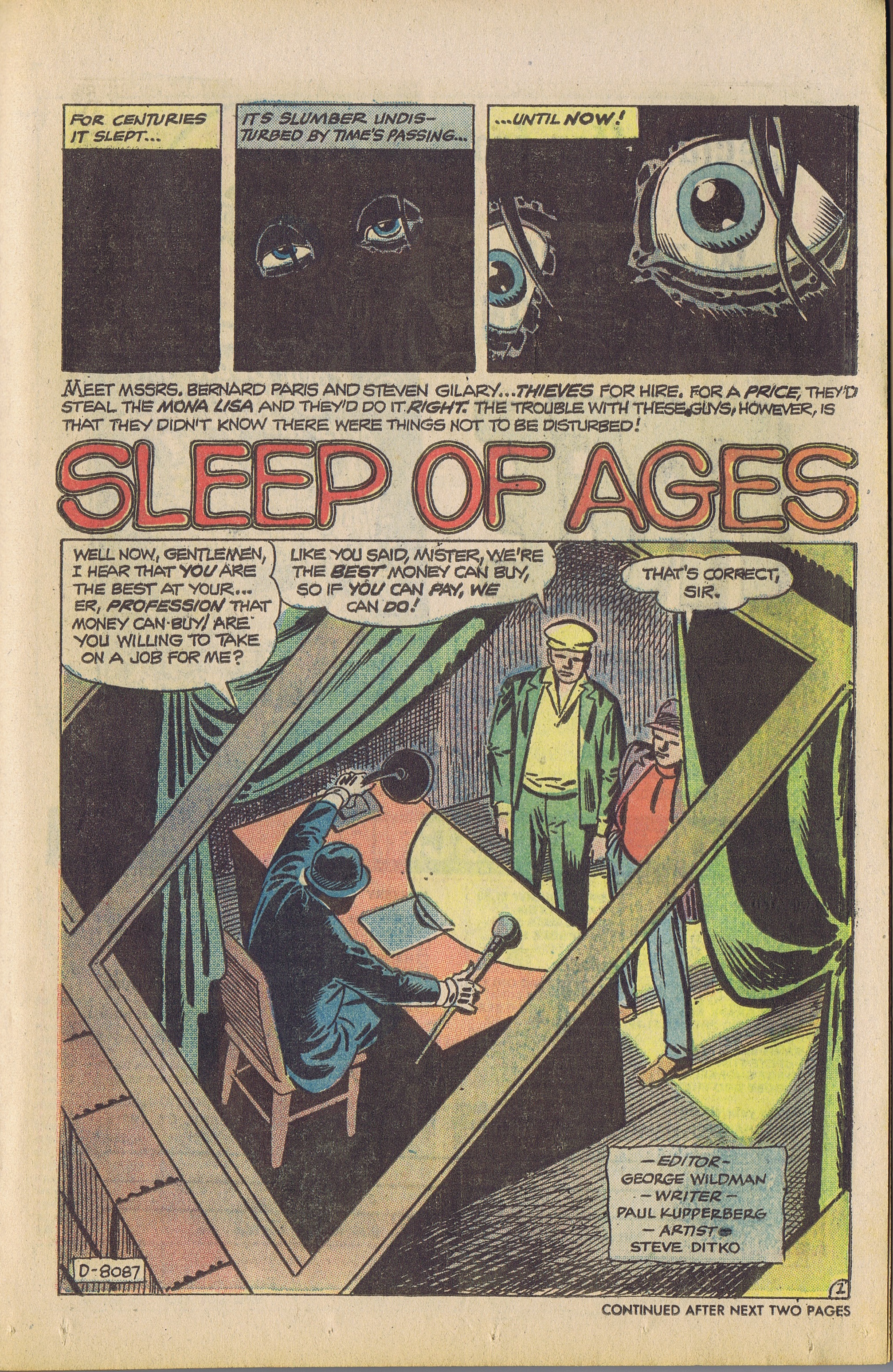
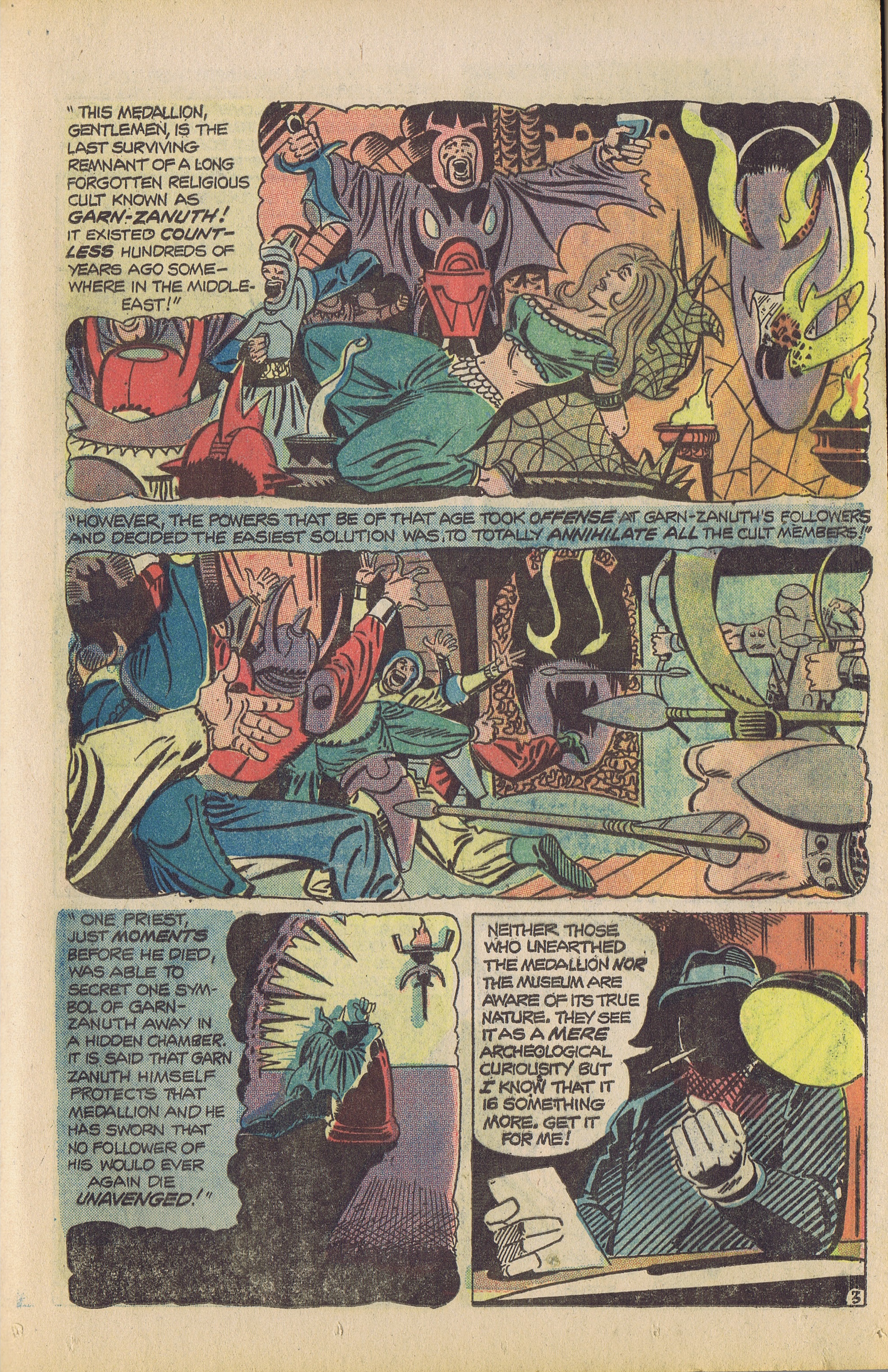
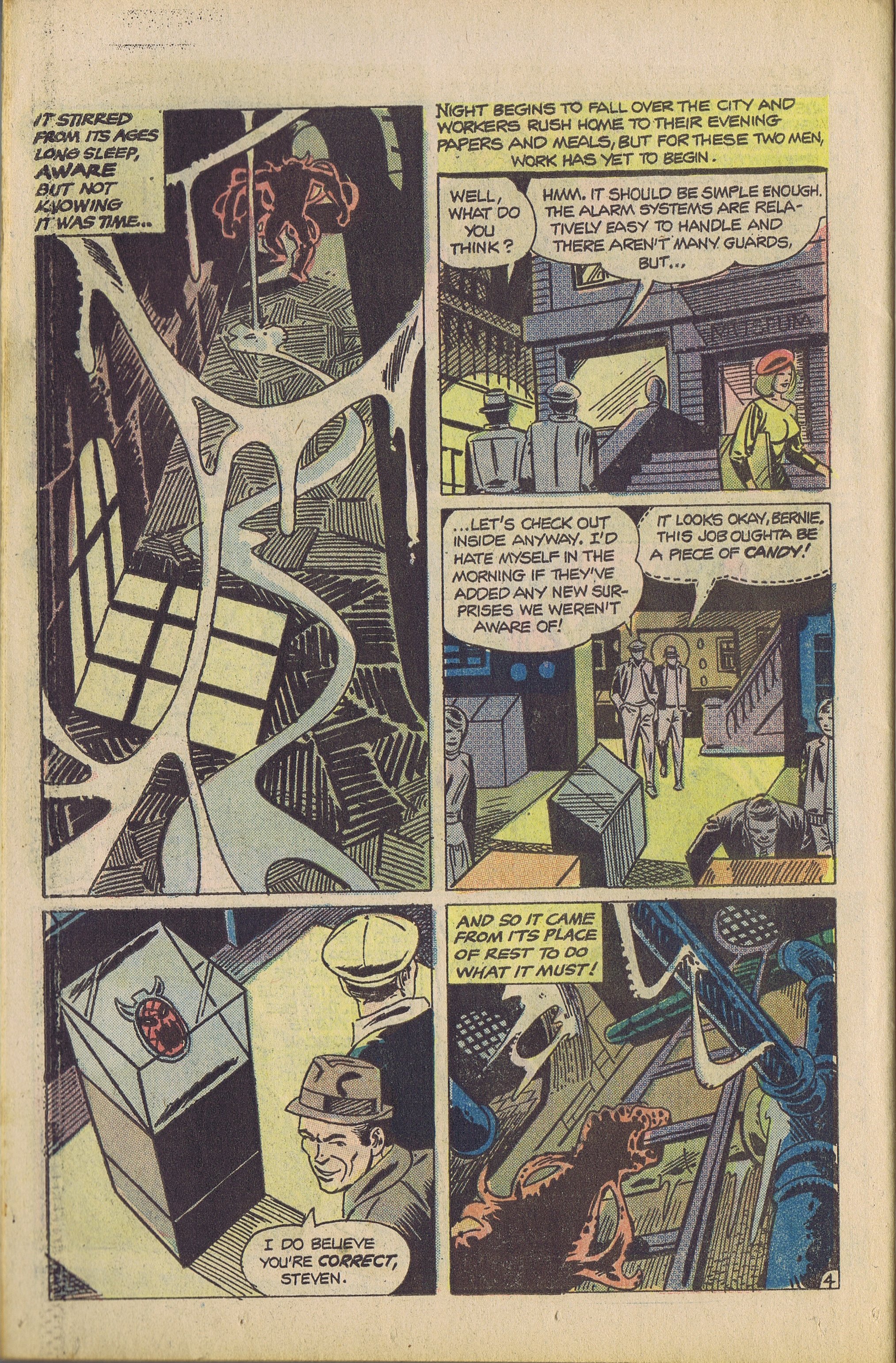
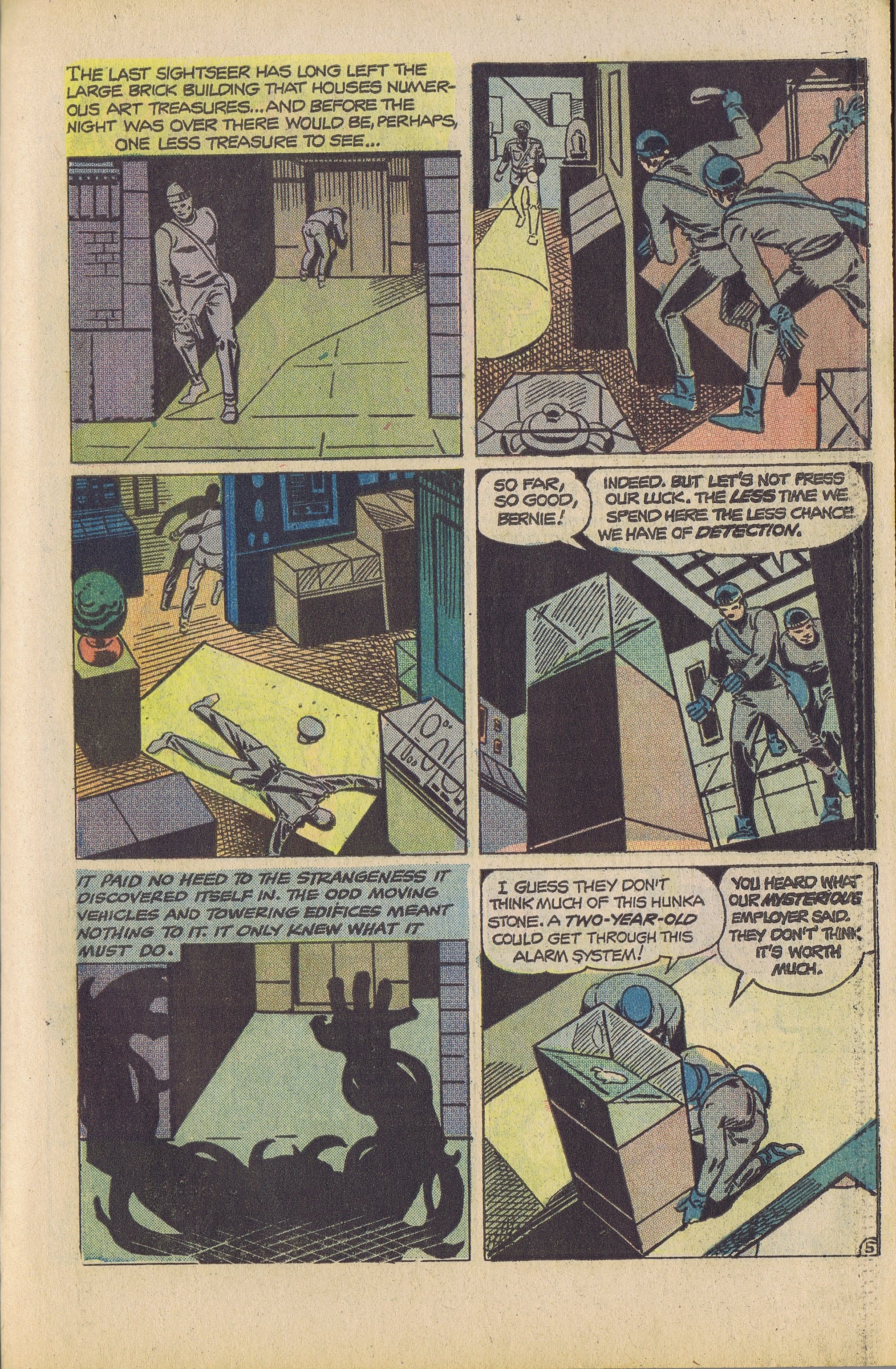
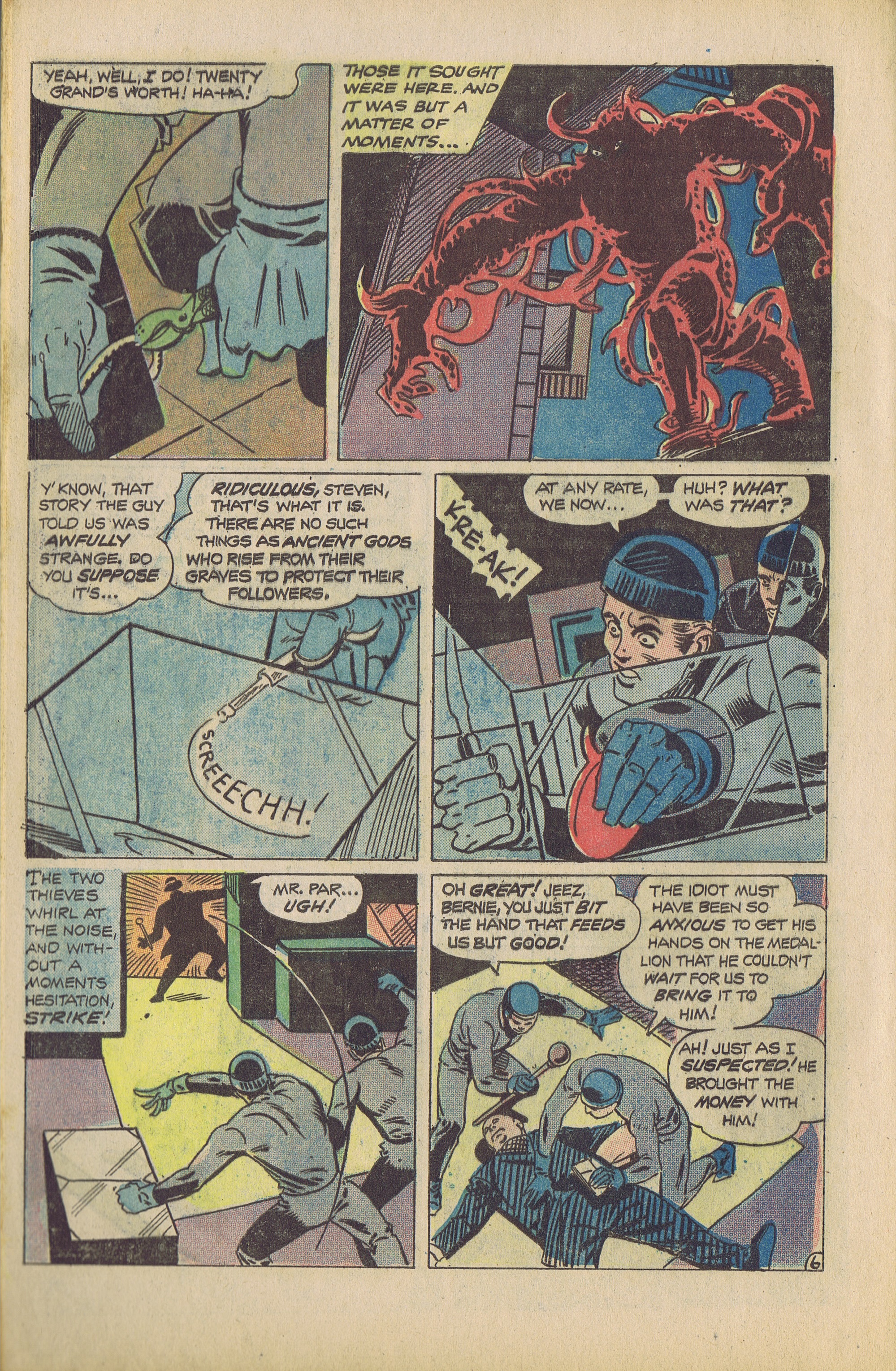
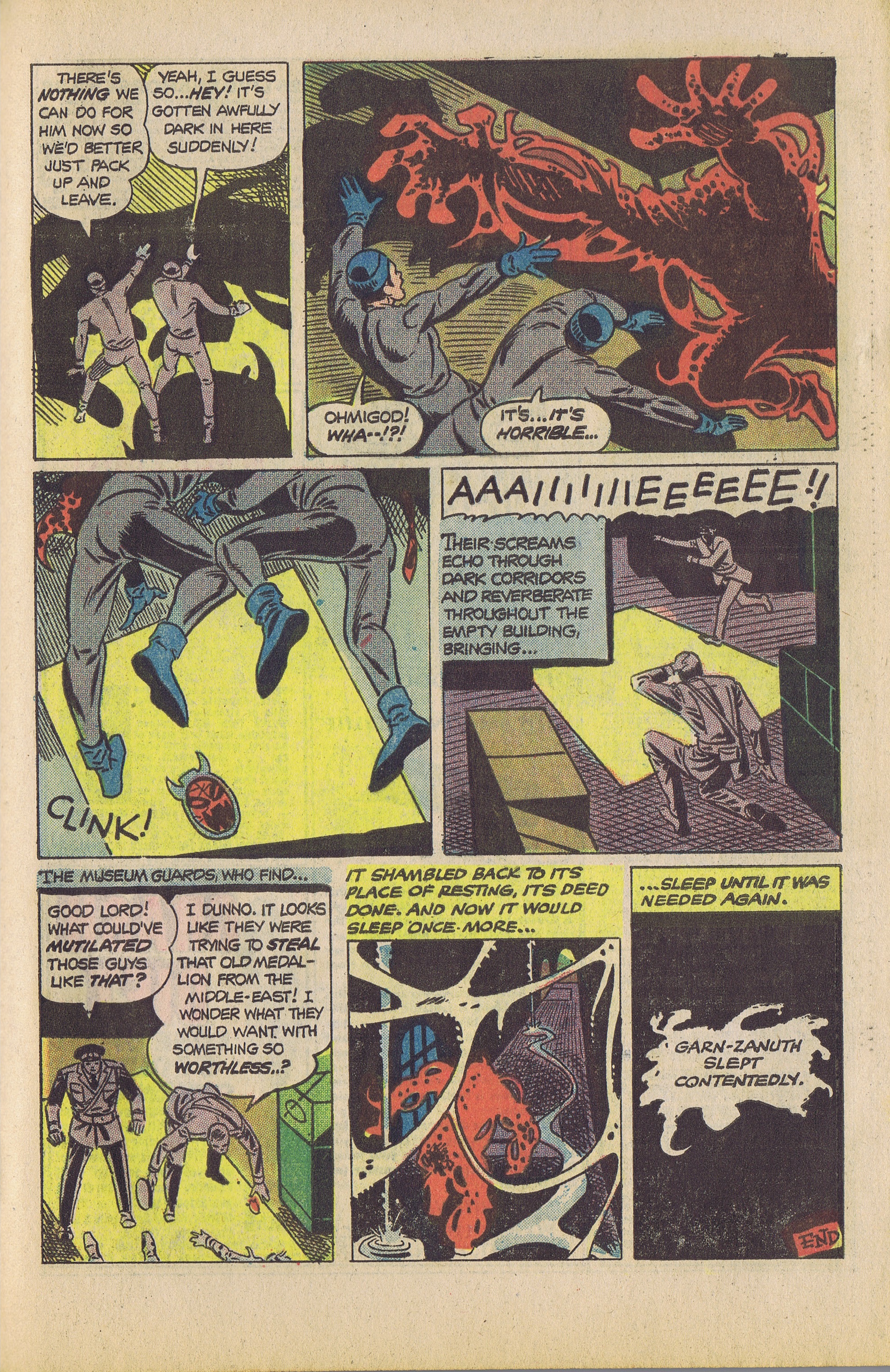
In 1975, one of the first few scripts I sold to Charlton Comics, a 7-page horror story, “Sleep of Ages” was drawn by Steve Ditko. The odds of his being given one of my scripts was, in retrospect, pretty high; there was probably a Ditko story in practically every issue of every horror title they published in those days, but when I opened the pages of Ghostly Haunts #52 (which cover featured the story with a painted cover by Pat Boyette) and saw the name “Steve Ditko” lettered in the credit box beneath my name, my heart skipped a beat and I still remember the rush I got seeing it. I was waiting at the bus stop right outside the candy store where I’d just purchased the issue for the Nostrand Avenue bus to go to classes at Brooklyn College. (You’ll find “Sleep of Ages” below, at the end of the post.) 
 
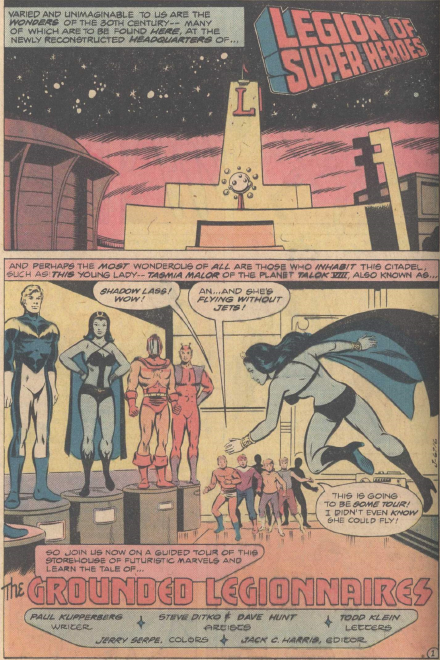
Five years later, I scripted an 8-page back up that Steve would end up pencilling (inked by Dave Hunt) for The Legion of Super-Heroes #267. Another rush. Another brush with this legendary artist.
 
In the late-1990s, as editor of the New Gods title at DC, Mark Millar pitched me a 5-page back-up story, “Infinitely Gentle, Infinitely Suffering; A Tale of DeSaad.” It was a tidy little story and I happily accepted it. Mark had one request: Did he think I could get Steve Ditko to draw it? The answer to that sort of question was always, “Don’t know if I can get him, but I can certainly ask him!”
 
So I picked up the phone and dialed. Several blocks away in his studio, Steve answered. I introduced myself, told him it was a 5-pager that featured Jack Kirby’s New God characters, and asked if he might be interested in drawing it.
 
“The New Gods?” he said. “Okay.”
 
I told him I would send out the script and paper to him, but he told me not to bother. He was just a few blocks away and could come by and pick it up. Would tomorrow be alright?
 
Tomorrow came and so did Ditko. It was summer and he was wearing an untucked lightweight short sleeve shirt, slacks, and a trilby hat. I brought him into my office, sat him down in my guest chair and in about two minutes, covered the basics of the assignment, gave him the reference on the characters, and had him sign a voucher. He was all business, very pleasant and relaxed, but no small talk.
 
Still, I was and am a fan at heart, but seeing that he had a bit of a wall up and knowing his reputation as someone who didn’t like to revisit the past, I tried to keep my inner fan at bay. But once the business was finished, I couldn’t help but say, casually, “I doubt you’d remember it, but you drew one of my stories at Charlton, one of my very earliest, in fact.”
 
A pleasant but non-committal smile appeared, “Did I?”
 
I will confess, I had a Sharpie and a copy of Ghostly Haunts #52 in my desk drawer, ready to be whipped out for a quick Ditko signature, but the tone of his “Did I?” stopped me cold.
 
“Yes,” I said, retreating from my fannishness. “I always thought it was a beautiful job.”
He smiled again and changed the subject, “It should be interesting to draw Jack’s characters.”
And that was it. Two weeks later, he dropped the pages off with the receptionist. They were, of course, spot on. The characters were clearly Kirby’s creations but drawn with that unmistakeable Ditko flair, and there was nothing to do but have it lettered and inked. The story (inked by Mick Gray) would finally see print in the 2008’s Tales of the New Gods trade paperback.
It would have been fascinating to spend even a few minutes talking comic books with a master of the form like Steve Ditko, but he believed that the art and not the artist should take the spotlight and speak for itself, leaving creators free to create, what they wanted and how they wanted.
And now, since he never made appearances or gave interviews, his work is all we have left. Spider-Man, Dr. Strange, The Creeper, The Question, Captain Atom, Blue Beetle, Hawk and Dove, Shade the Changing Man, Mr. A…the list goes on, not to mention the many, many hundreds of short stories drawn for Charlton, Marvel, and others. Fortunately, it’s a body of work that speaks loudly and clearly about who created it. We’ll still be listening to Steve Ditko, on his own terms, for generations to come.

Tags: , , , , , , , , , , , , , , , , ,

Paul Kupperberg on March 13th, 2018

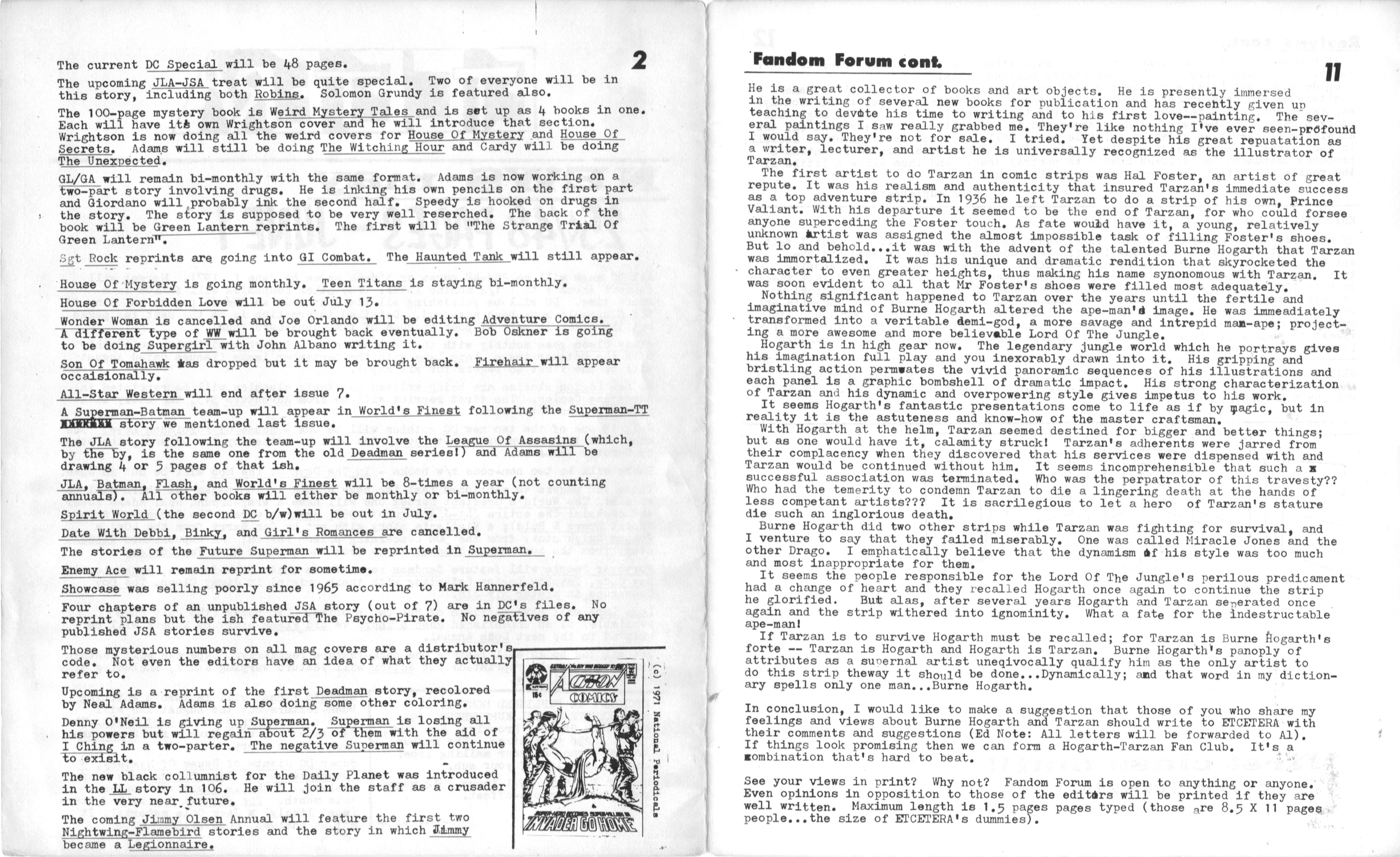
Here’s what you missed if you weren’t around in May, 1971:

Tags: , , , , ,

Paul Kupperberg on March 10th, 2018

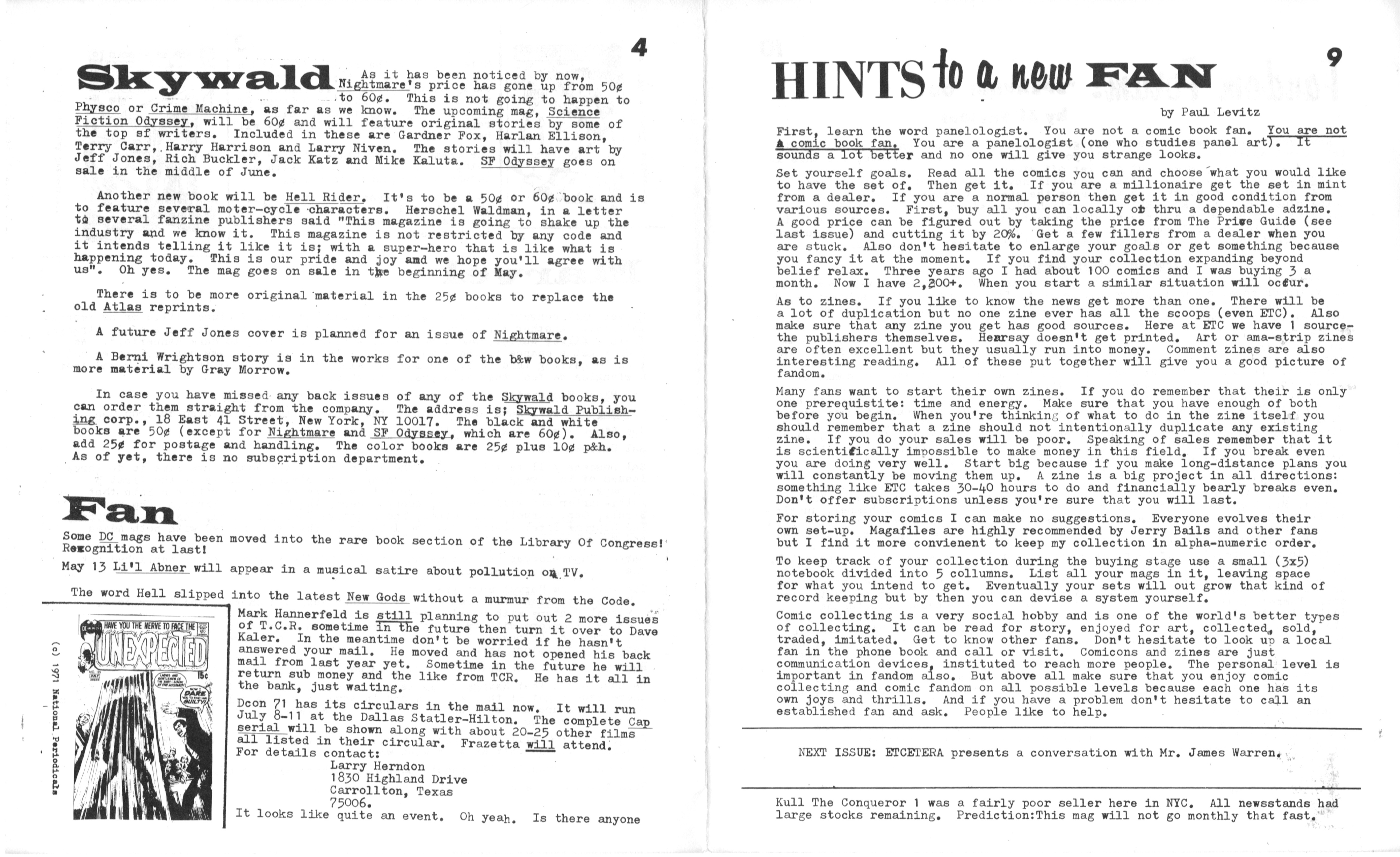
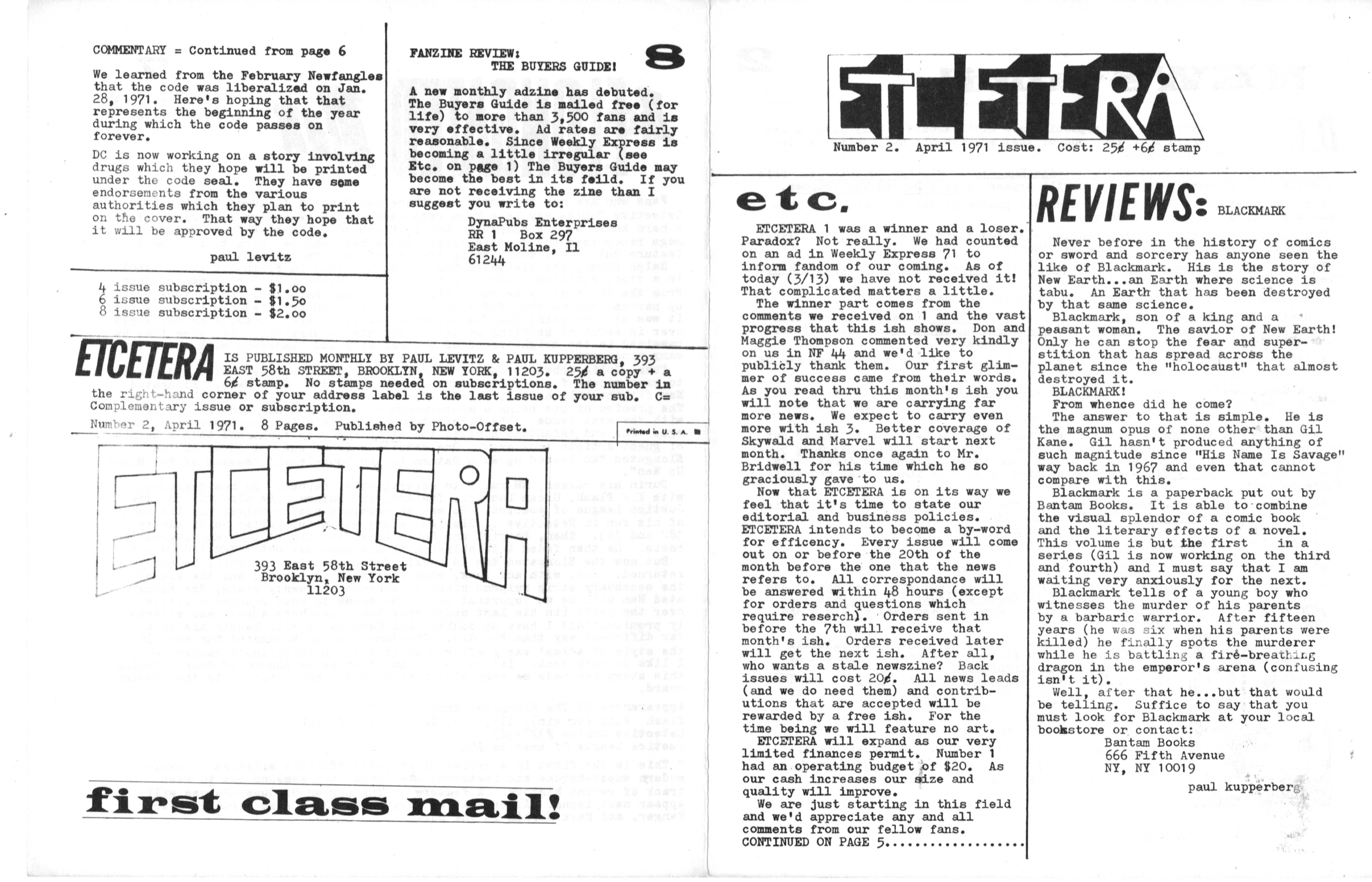
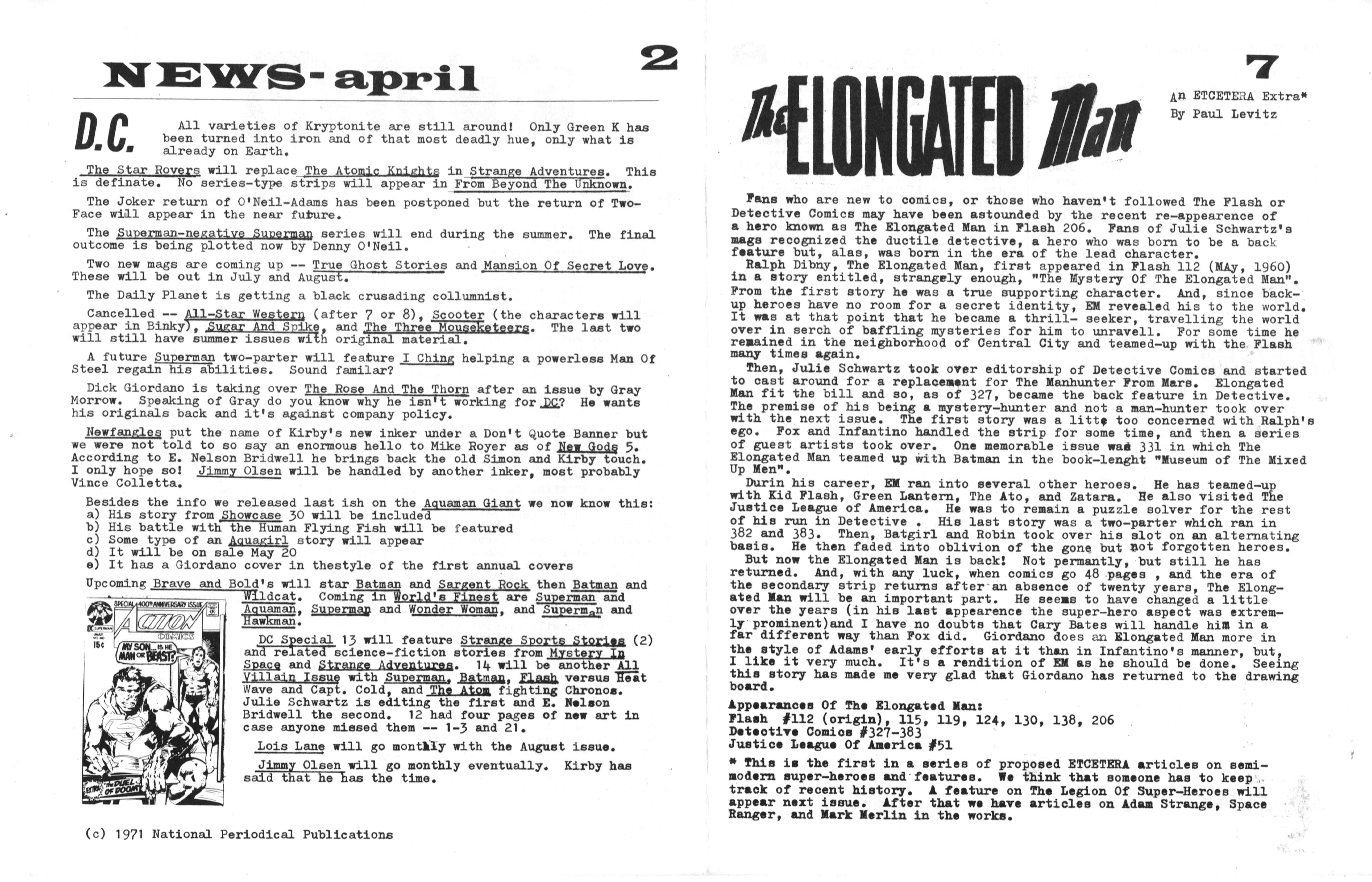
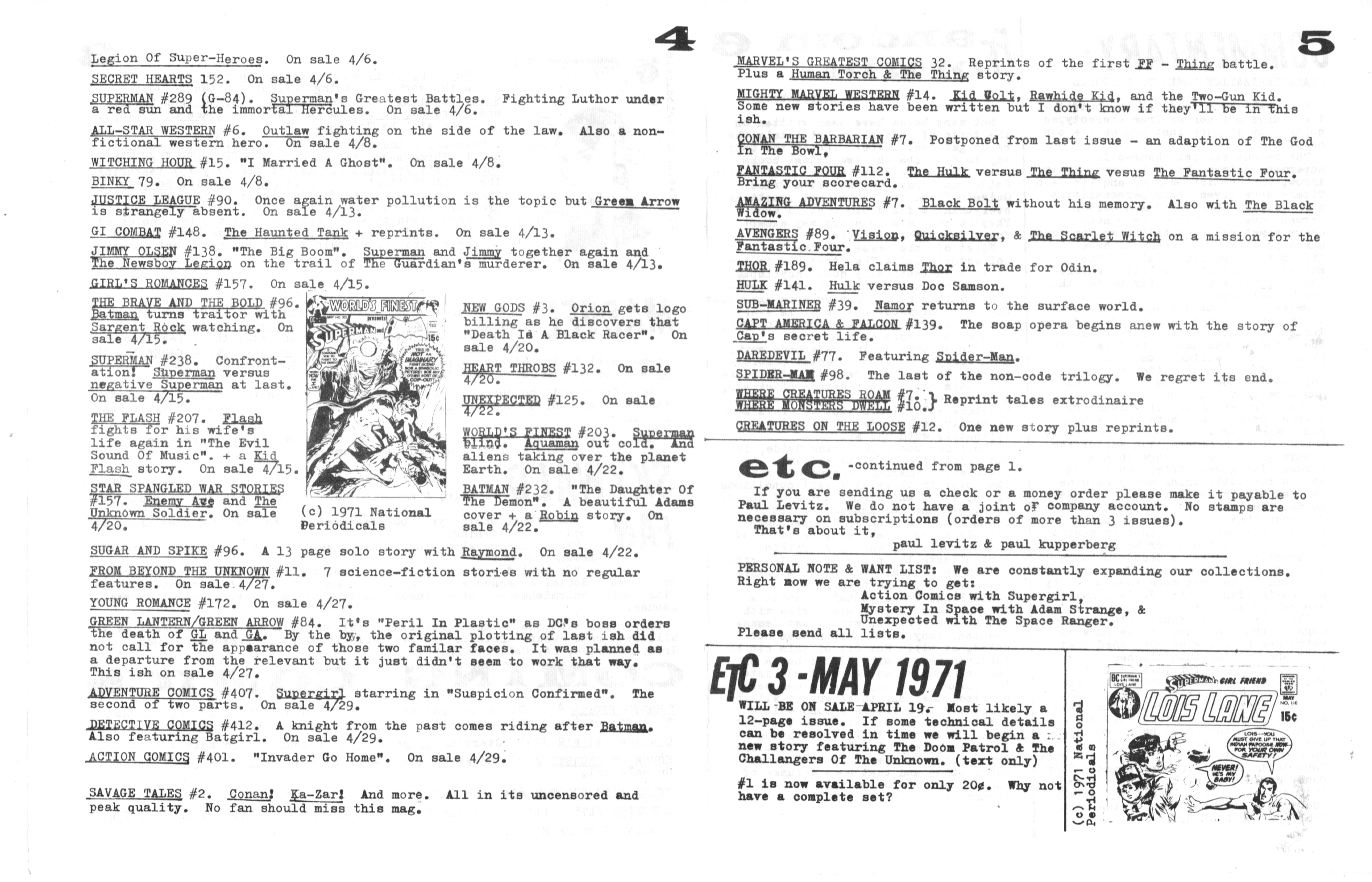
Here’s what was going on in comics in April of 1971, according to Etcetera #2, published by Paul Levitz a and me. I still really like Blackmark, by the way.

Tags: , , , , , ,

Paul Kupperberg on March 7th, 2018

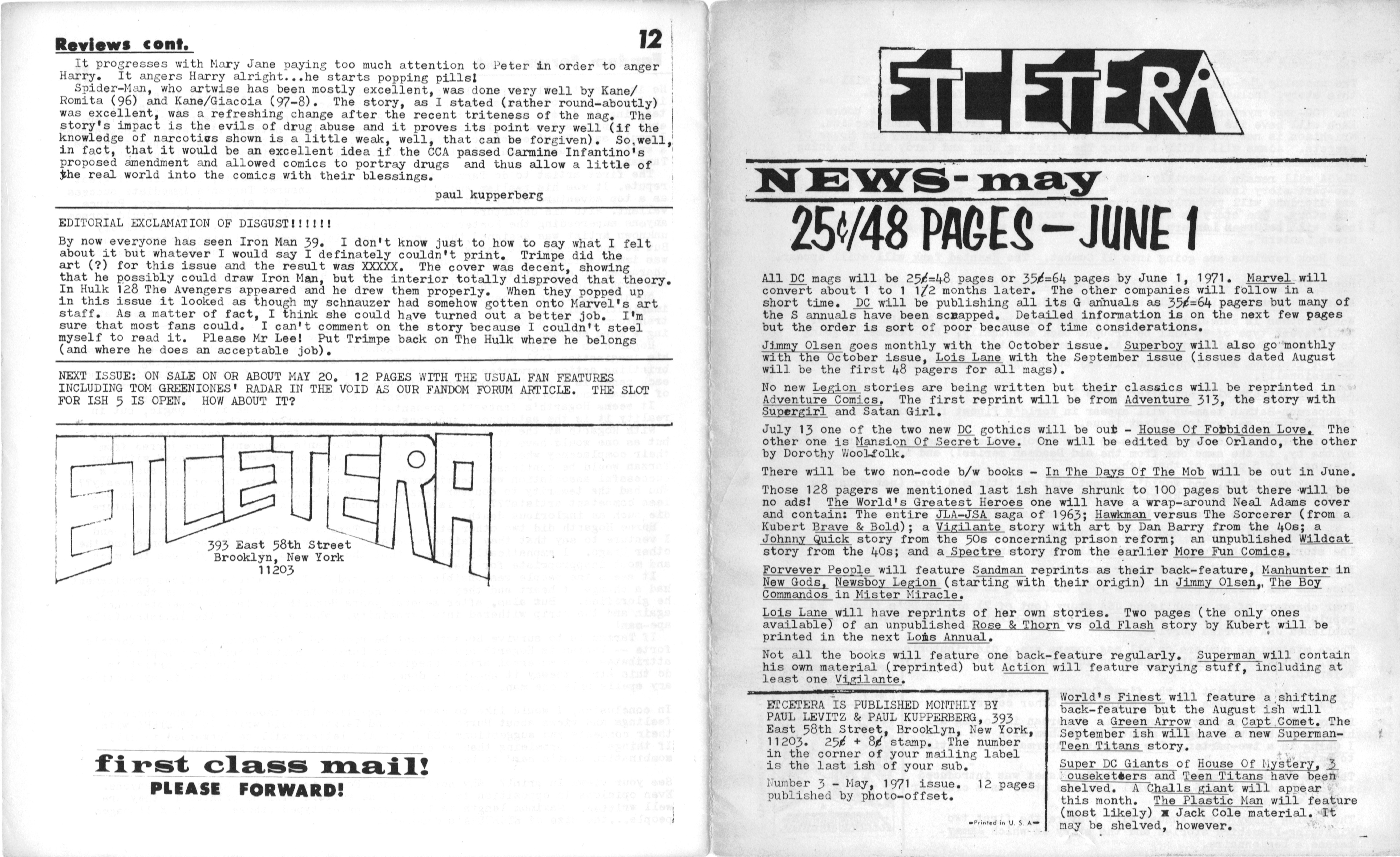
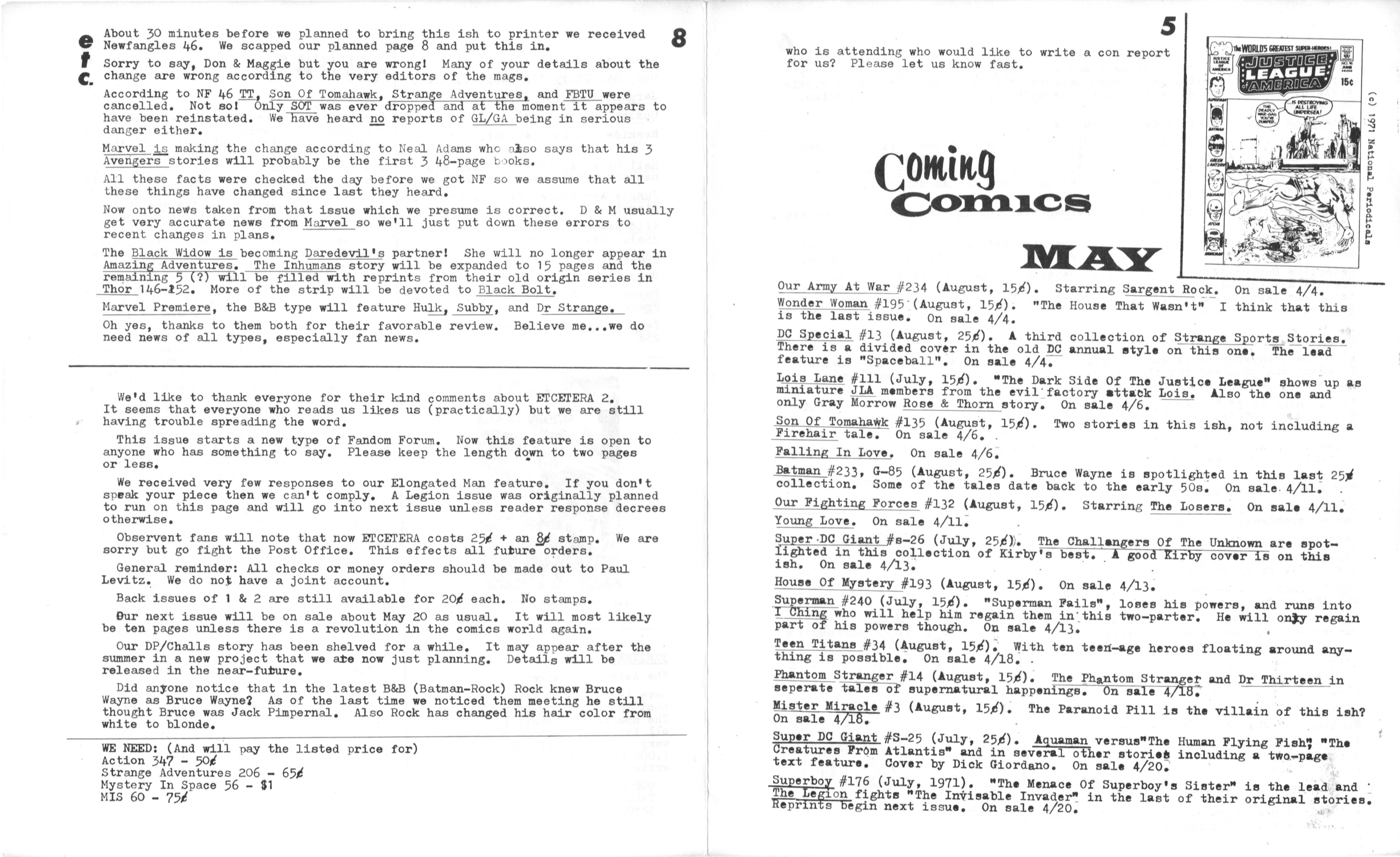
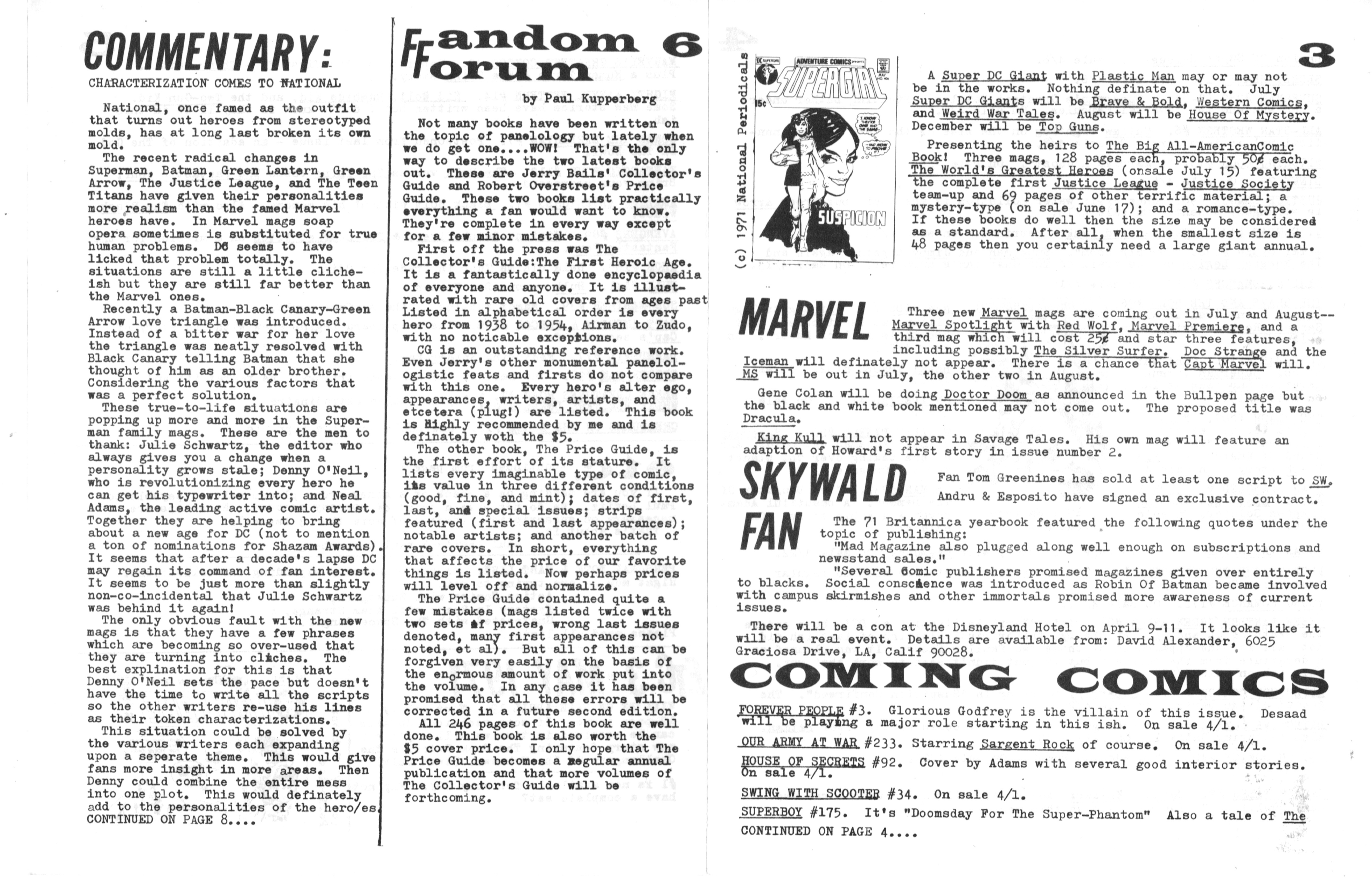
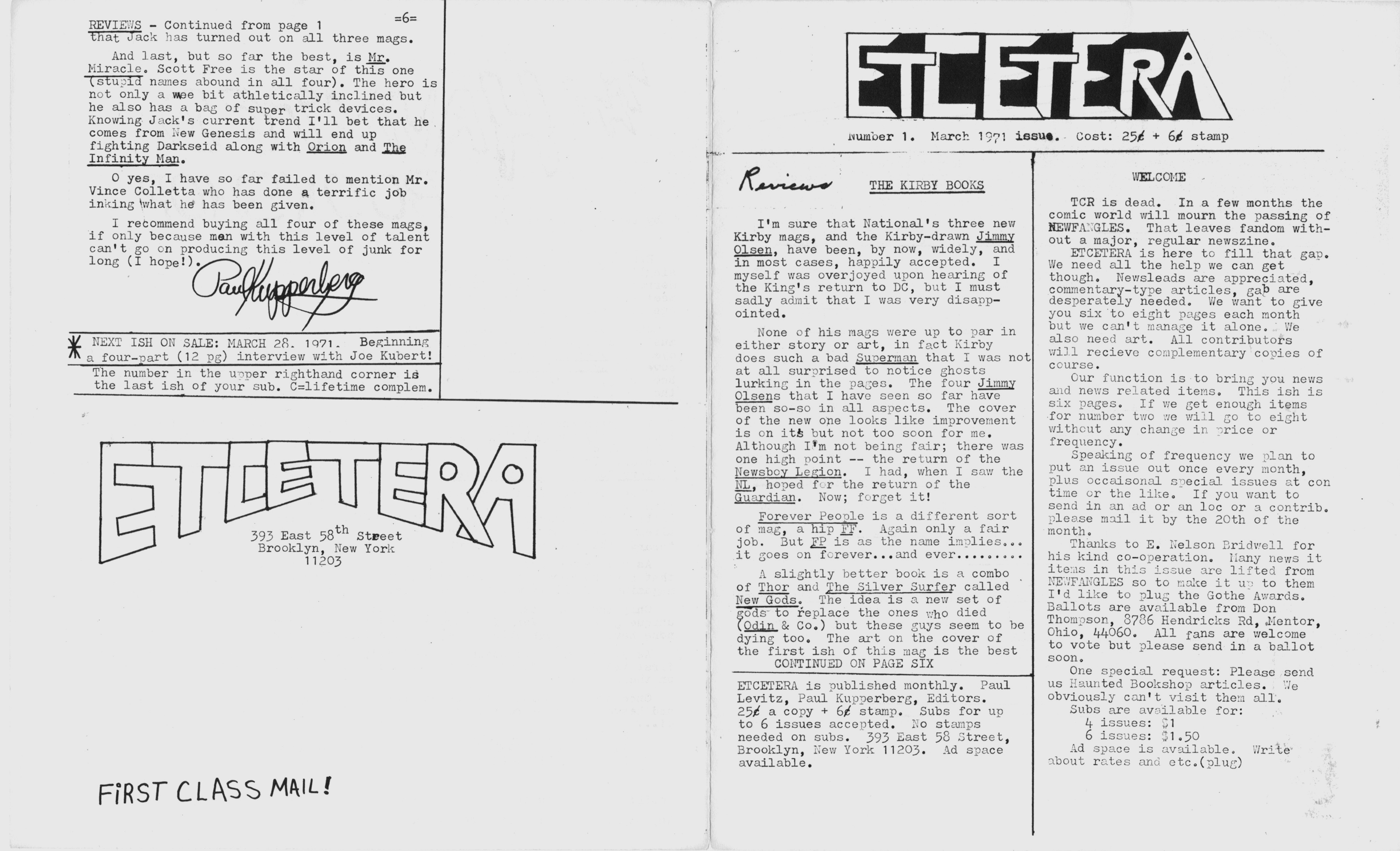
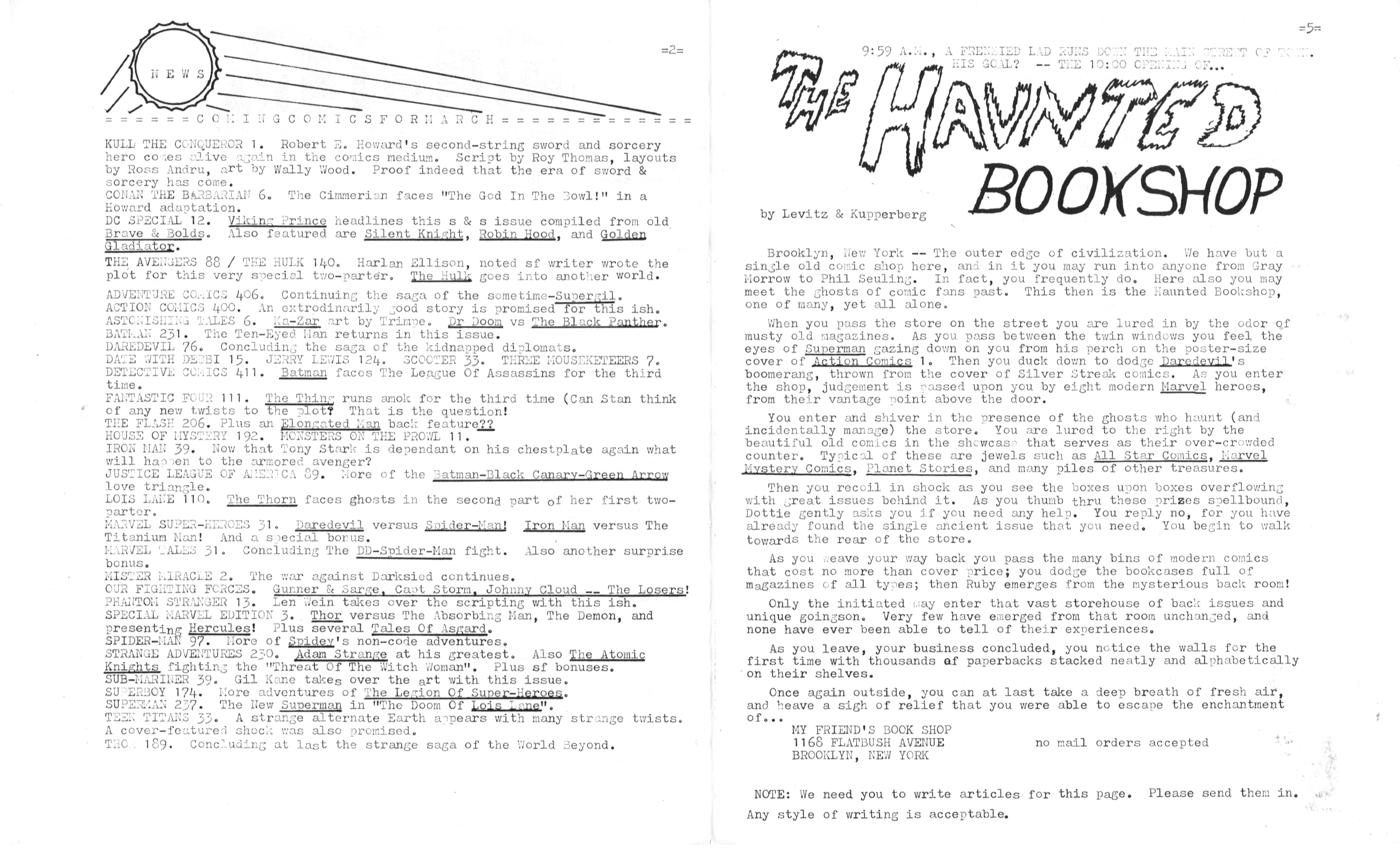
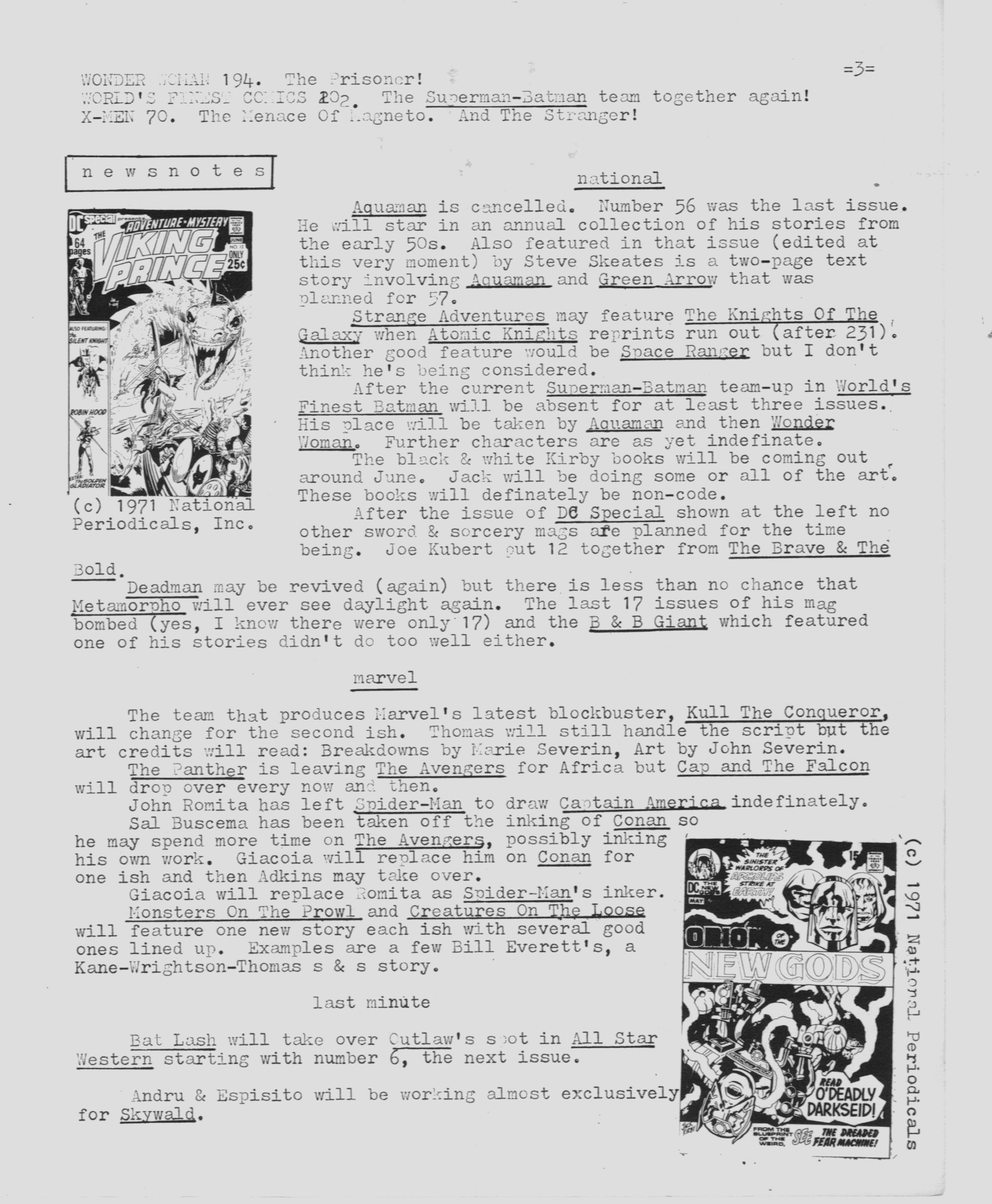
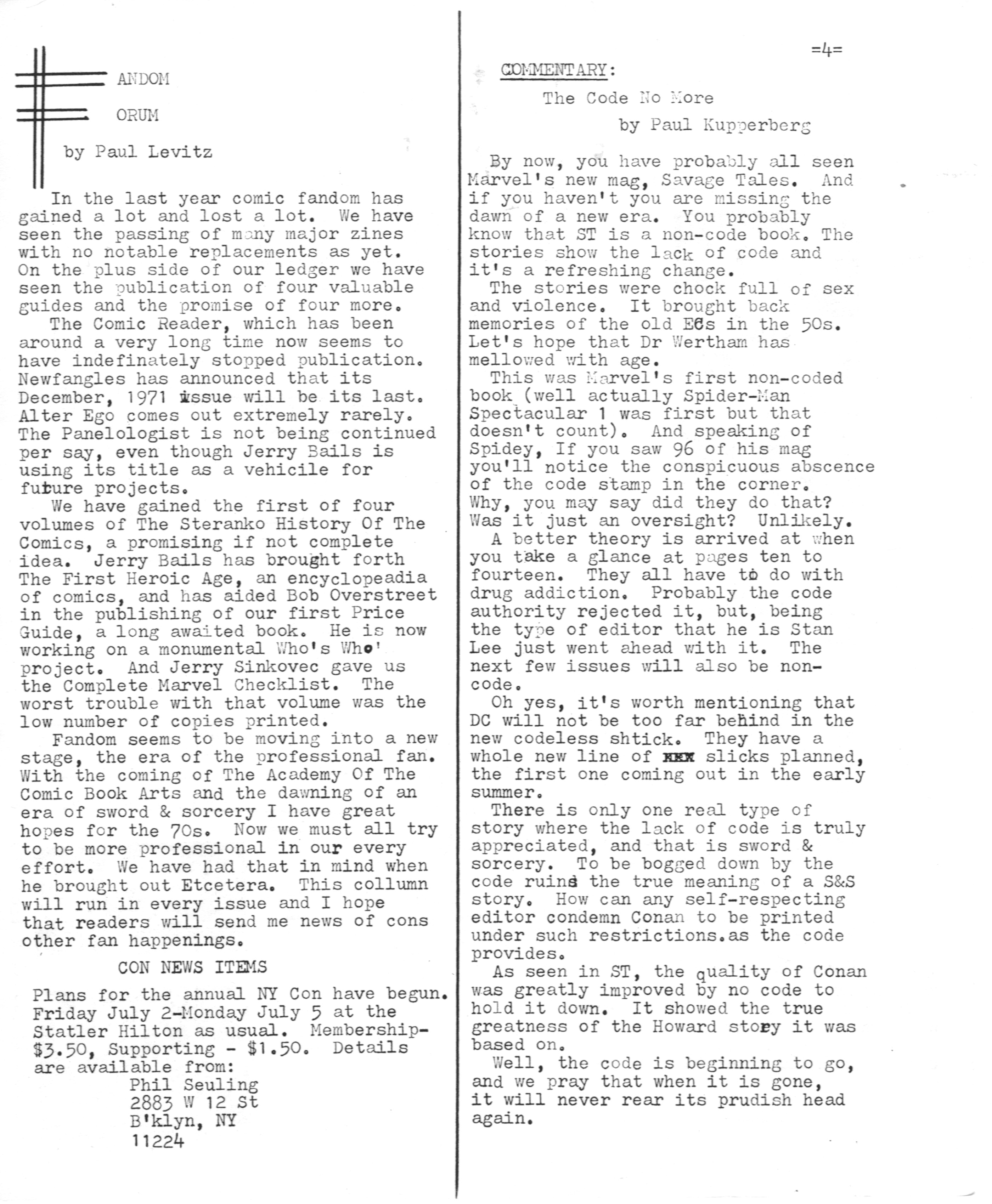
Back in 1971, two plucky Pauls from Brooklyn decided to publish a fanzine called Etcetera, which paved the way for them to jobs in the comic book business. Not to keep you in suspense, one of the Pauls was me, the other was a kid named Levitz, and the rest is history. Etcetera was a newszine, created to replace Don and Maggie Thompson’s Newfangles, which they announced would soon cease publication. Several months down the line, Etcetera merged with The Comic Reader, and became one of the most widely read ‘zines of the early-1970s, the self-styled “TV Guide of the comic book industry.” Here’s the first issue, date March, 1971:


The opinions expressed in this relic are those of these two clowns, so really, how serious are you gonna take them?

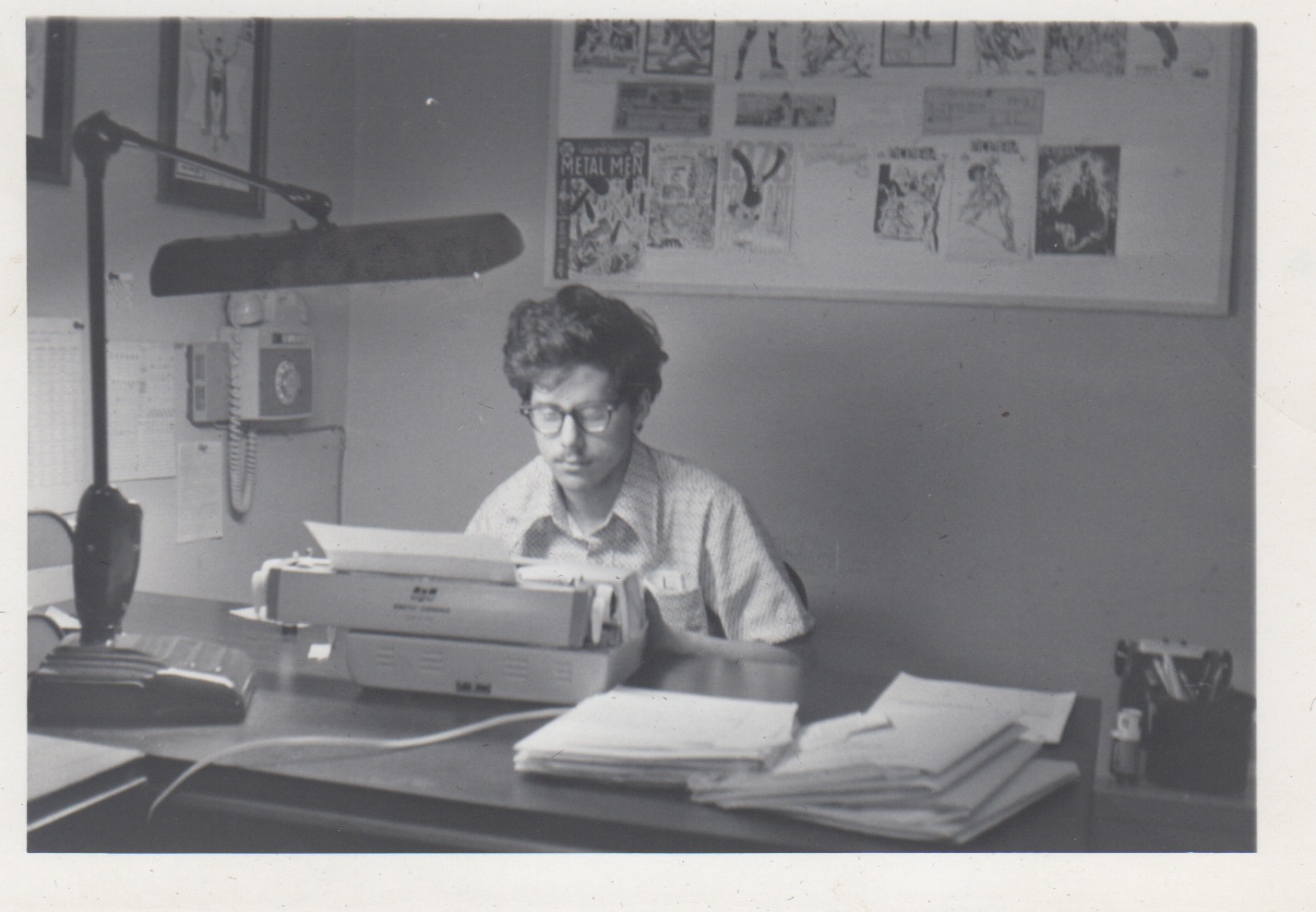
Paul Levitz, 1973

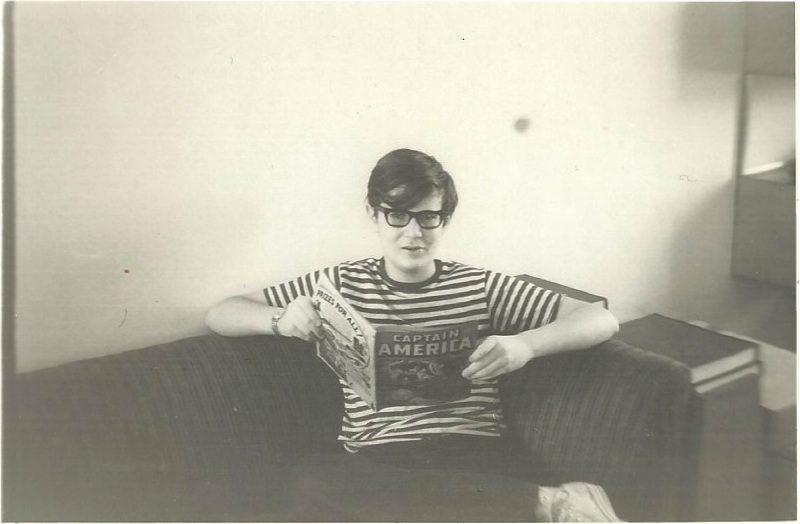
Paul Kupperberg, 1972


Tags: , , , , , , , , ,

Paul Kupperberg on January 14th, 2018

One of my duties in the early 2000s as an editor in DC Comics’ Licensing Group was to write or re-write a variety of DC Superhero themed stunt and stage shows presented at the various Six Flags Amusement Parks across the country. Many of these shows had been running for several years and were usually loosely “based” on at least the casts of Batman (1989), Batman Returns (1992), Batman Forever (1995), and Batman & Robin (1997), and were not particularly good.
Most of the shows were written by Six Flags employees, people without a comic book background, and were not only very corny, but badly outdated. I could clean up some of the corn and update the characters and references, but there wasn’t much I could do about the basic stories themselves, which were thin excuses for the villains to capture the heroes and then have everybody fight. I was constrained by the existing sets, stunt set-ups (lots of zip-lines, rappelling, swinging, and falls), and casts (determined by whichever villain costumes the park had), but as my boss at the time, writer/editor Martin Pasko told me when he handed me the assignment, “You ain’t writing Chekov here.”

Max and me propping up DC at the gate to Six Flags Great Adventure’s DC Comics Superheroes themed section, 2002.

My family and I spent a day as a guest at Six Flags Great Adventure in Massachusetts, wandering the stunt show set, meeting with the director and some of the technical crew, and watching a production of their show, which was the first one I was to rewrite. After that, I worked on three or four other stunt shows, wrote a couple from scratch (including a water stunt show), and “freshened up” this script for a Batman and Robin and the Joker meet-and-greet show. When you read it, remember: it was even worse before I got my hands on it! And, no, I don’t know why they insisted on having Robin onstage but not give him any lines.

Six Flags Stage Show: “HEROES AMONG US” — 2nd Draft 11/13/03

CAST:

HOST

BATMAN

ROBIN

THE JOKER

MALL SECURITY GUARDS

(INTRODUCTION: TRACK OF MUSIC AS THE HOST TAKES THE STAGE.)

HOST

Boys and girls, ladies and gentlemen, welcome to (FILL IN NAME OF VENUE). We have what you might call a super surprise for you today, a very special guest, courtesy of the Wayne Foundation and the Gotham City Civic Council. That’s right, direct from Gotham City, the world’s greatest crime-fighting team, the Dynamic Duo…Batman and Robin!

(MUSIC TRACK BUILDS THROUGH INTRODUCTION. DURING THE HOST’S INTRODUCTION, BATMAN AND ROBIN MAKE THEIR WAY FROM THE REAR OF THE CROWD AND WALKED THROUGH A STANTIONED OFF PATH DOWN THE MIDDLE AISLE. THEY MAKE THEIR WAY TO THE STAGE OCCASIONALLY SHAKING HAND WITH CHILDREN.)

(BATMAN TAKES CENTER STAGE. ROBIN STANDS AT STAGE LEFT.)

BATMAN

Thank you and good afternoon. On behalf of Robin and myself I want to thank you all for coming out today. We’re usually kept pretty busy fighting crime and helping keep the streets of Gotham City safe. In fact, Robin and I are taking a short break in our search for the Clown Prince of Crime, The Joker, to be here to talk to you today. Because we believe this is that important a topic…and one we both know a little something about: heroes!

Now, I’ll bet when you think of heroes, you think about people like Robin and myself. Men and women with super-powers in colorful costumes who fly around the universe fighting off alien invasions and super-villains.

THE JOKER (V.O.)

(laughing)

HA HA HA HA! When I think of super-heroes…it gives me a super-headache!

(BATMAN AND ROBIN REACT, LOOKING AROUND THE AUDIENCE FOR THE JOKER. AFTER A FEW SECONDS OF THIS, BATMAN MAKES A CALMING GESTURE WITH HIS HANDS, SETTLING THE AUDIENCE DOWN.)

BATMAN

The Joker! Well, sounds as if we’re closer to capturing him than we thought.

But…where was I? Ah, yes, heroes. You might be surprised to learn that even though I wear a costume, I have heroes of my own. As a member of the Justice League, I work regularly with some of the world’s greatest super-heroes, including Superman. Who here has heard of Superman?

(BATMAN SMILES AT THE AUDIENCE’S RESPONSE.)

BATMAN (continued)

You’ll probably also be surprised that the reason I admire Superman and the rest of my fellow Justice Leaguers isn’t because of their great powers and abilities or cool gadgets like my Batarangs. It’s because of their character, their concern for their fellow man, and their desire to help anyone in trouble…because that is what makes a hero, not what he wears. Their unselfish devotion to others and what’s in their hearts.

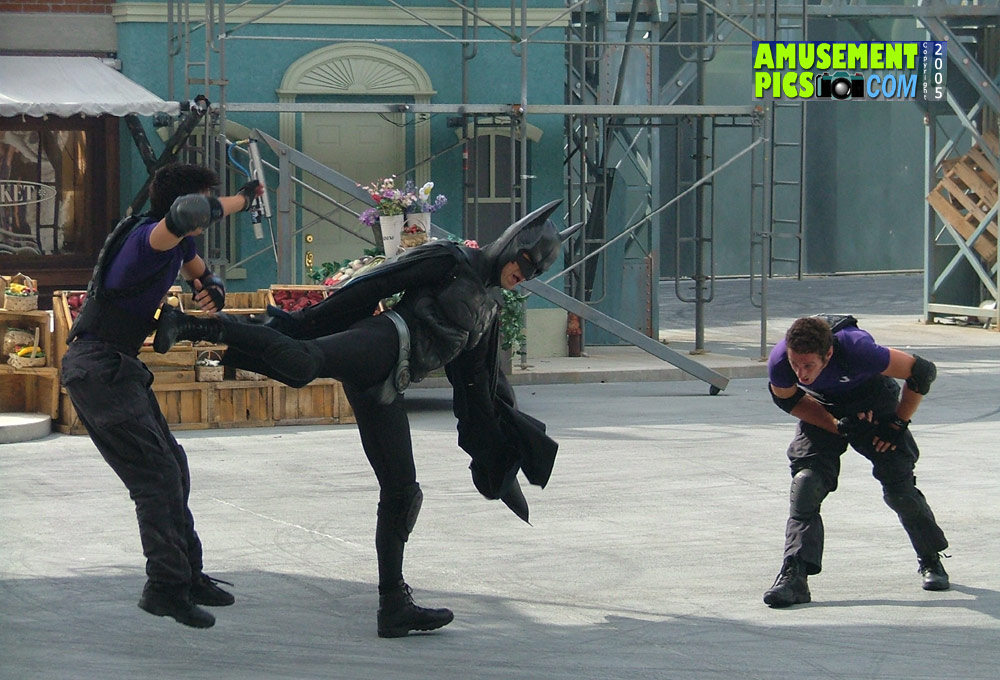
Shot NOT from “Heroes Among Us.”

THE JOKER (V.O.)

(laughing)

Talk, talk, talk! Some hero you are, Blab-man!

BATMAN

Ignore him, everyone. The only thing The Joker knows about heroes is that they’re always sending him to jail!

As I was saying, heroism isn’t about big muscles or cool cars. It’s about courage…even in the face of the scariest thing you can think of. I’m going to let you in on a big secret: even heroes get scared. But a real hero isn’t anything more than an ordinary person who’s able to do the right thing even when they are afraid!

And those are the kinds of heroes I’m here to talk about. Real, everyday heroes…the kind who live and work in your community. Men and women who don’t wear costumes, who might not even wear a uniform but who still do the right thing, who are dependable and honest and selfless, who you can always turn to in times of need. Can anyone think of real-life heroes who fit that description?

(AUDIENCE RESPONSES WHILE BATMAN LISTENS, NODDING IN APPROVAL.)

BATMAN (continued)

Police officers! That’s right! Not only do they prevent and fight crime, they also serve their communities in dozens of different ways, volunteering their time to help the less fortunate. Can you think of another kind of hero?

(BATMAN WAITS FOR AUDIENCE RESPONSE.)

BATMAN (continued)

Fire fighters! Excellent. Talk about unselfish! Fire fighters risk their lives to save others every single day, battling fires and racing into burning buildings…and don’t think that’s not about the scariest thing anyone can do! Now, who else do you think is heroic?

(BATMAN WAITS FOR AUDIENCE RESPONSE.)

BATMAN (continued)

That’s right, teachers! They might not risk their lives or fight criminals, but they work long, hard hours to make sure that each and every one of you gets the best education available and a chance for a bright future. A teacher can be the most influential person in a child’s life.

THE JOKER (V.O.)

(laughing)

HEE! HEE! HEE! I’ll never forget my old reform school teacher. Why, he taught me everything I know…about larceny!

BATMAN

Maybe if The Joker had had a good teacher when he was younger, he wouldn’t have turned to crime. Or if he had been lucky enough to have a family member who he could have looked up to, someone like a parent, or even an older brother or sister. Think about how hard your mom and dad work every single day to do the right thing, to see that you grow up protected and safe and learn the values you need to become good grown-ups just like them.

And someone doesn’t have to be related to you to be part of your family. In fact, I’ll tell you another secret about myself—I lost my parents when I was a young boy and though I was left a lot of money, I had no family to take care of me. But there was a man who worked for my family who came to my rescue, becoming, in some ways, even more than a parent to me. Because he didn’t have to step up and raise me…but he did the right—the heroic thing, teaching me in a way that would have made my real dad proud. That man will always be my greatest hero!

THE JOKER (V.O.)

(mocking)

Boo-hoo, Bat-boob! It’s enough to make a clown cry! HA HA HA HA!

Another shot NOT from “Heroes Among Us.”

BATMAN

Listen, The Joker can laugh all he wants, but we know the truth, right, kids? In fact, because of what that man did for me, I grew up to help another boy who lost his family, just like I had. I remembered how lost and helpless I felt, like I was all alone in the world…but I was lucky enough to have my friend come to my rescue. So I did the same for this boy and discovered something amazing.

I thought I was helping him…but it turned out that he gave back to me even more than I had given him. He made me forget my own loneliness and learn to care for someone else. He gave me a family and one that I have every reason to be incredibly proud of.

(BATMAN TURNS AND GESTURES PROUDLY AT THE NEARBY ROBIN.)

BATMAN (continued)

And that boy is, in more than just name, a Boy Wonder! He is Robin.

(ROBIN STEPS FORWARD AND ACCEPTS THE AUDIENCE’S APPLAUSE, SMILING AND WAVING TO THE AUDIENCE.)

THE JOKER (V.O.)

Oh, this is just too sappy!

(THE JOKER COMES RUNNING DOWN THE CENTER AISLE, WAVING A CANE IN HIS HAND. HE RACES RIGHT AT BATMAN AND ROBIN.)

THE JOKER

I’d rather be in prison than listen to this slop!

BATMAN

Careful, Robin! We don’t know what that clown may have up his sleeve! Flank right!

(AS THE JOKER LEAPS UP ONTO THE STAGE, WAVING HIS CANE AND LAUGHING MANIACALLY ALL THE TIME, BATMAN AND ROBIN SLOWLY MAKE THEIR WAY DOWN THE SIDES OF THE AUDIENCE.)

THE JOKER

HAH! I thought they’d never leave! Listen, all that dribble about heroes…who needs ‘em? All the police do is put me and my friends in jail and fire fighters…phooey! I can’t tell you how many perfectly good fires I’ve started that they’ve ruined…even before I could roast a single marshmellow! HA HA HA HA!

And don’t get me started on teachers and parents and all the rest of the goody-goodies in this world. What’s so good about being good? Good is so…booooring! But bad—now there’s some kind of fun. Robbing banks, stealing from the rich and keeping it so you’re not poor! Looting! Pillaging! Rioting! Mayhem! Misery!

Still yet another shot NOT from “Heroes Among Us.”

(THE JOKER RAISES THE CANE UNDER HIS ARM, AIMING IT LIKE A RIFLE AND STARTS TO SWING IT BACK AND FORTH ACROSS THE AUDIENCE TO THE ACCOMPANYING SFX OF MACHINE GUN FIRE.)

THE JOKER

(laughing)

Oooh, I’m getting goosebumps just thinking about it! HA HA HA!

But what kind of fun do heroes have? What’s the reward for being a good guy? There’s no loot, no diamonds and jewels, no nothing!

(BATMAN AND ROBIN HAVE CIRCLED AROUND, COMING UP BEHIND THE JOKER AS HE RANTS AND RAVES TO THE AUDIENCE.)

BATMAN

That’s right, Joker. All anybody ever got out of doing the right thing was knowing that they’ve helped someone and maybe made the world just a little bit better!

(THE JOKER WHIRLS AROUND, POINTING THE CANE AT BATMAN AND ROBIN AS THEY ADVANCE TOWARDS HIM.)

THE JOKER

Exactly my point, Bat-brain! Why would anybody want to do that?

(BATMAN WHIPS A BATARANG OUT FROM UNDER HIS CAPE AND HOLDS IT, POISED TO THROW IT AT THE JOKER AS ROBIN CIRCLES AROUND BEHIND THE DISTRACTED VILLAIN.)

BATMAN

You know, Joker, I can’t think of a worse punishment for someone like you than never knowing just how good that can feel.

(BATMAN THROWS THE BATARANG, WHICH HITS THE JOKER AND SENDS THE CLOWN SPINNING AROUND AND DROPPING HIS CANE, DAZED. ROBIN IS BEHIND THE VILLAIN TO CATCH HIM.)

THE JOKER

Zorch!

(BEFORE THE JOKER CAN RECOVER, ROBIN HAS SNAPPED HANDCUFFS ON HIS WRISTS. TWO MALL SECURITY GUARDS ENTER TO TAKE THE JOKER AWAY.)

THE JOKER (continued)

Hee Hee Hee!! You may have won the battle, Bat-buffoon and Bird-boy…but the war isn’t over! I shall return! HA HA HA HA! Badder than ever!

(THE SECURITY GUARDS ESCORT THE JOKER OFF-STAGE, LAUGHING ALL THE WHILE. BATMAN AND ROBIN RESUME THEIR SPOTS ON STAGE.)

BATMAN

As many times as he keeps getting sent back to prison, The Joker never seems to learn the simple lesson that I’ll bet every kid here already knows…that being one of the good guys is the way to go. And remember, you don’t a costume or have to fight crime to be a hero. You just have to be there in every day life to do the right thing for the people around them.

In fact, I’d like to give all of you here the chance to honor the people you know who are the heroes in your life. Who here already knows who their heroes are?

(BATMAN SMILES IN SATISFACTION AT THE AUDIENCE’S RESPONSE.)

BATMAN (continued)

That’s great! And Robin and I are going to make it easy for you to show your heroes how you feel by giving everyone here special hero badges. Each person will get five badges and it’s up to you to write your name on the badge and give them to each of your heroes. What do you think? Can you guys do that?

(BATMAN AND ROBIN ARE BOTH PLEASED BY THE AUDIENCE RESPONSE.)

BATMAN (continued)

And I need you all to do one more thing for me…promise me that you’ll do your best to grow up and become a hero to someone else!

All right. Now, who wants to come up and meet Robin and myself?

(AT THIS POINT THE LINE INSTRUCTIONS ARE GIVEN AND THE MEET AND GREET BEGINS.)

# # #

One last shot NOT from “Heroes Among Us.”


Tags: , , , , , , , , , ,

Paul Kupperberg on May 30th, 2017

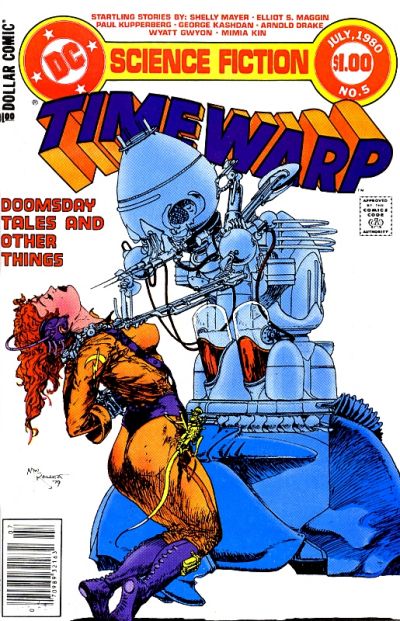
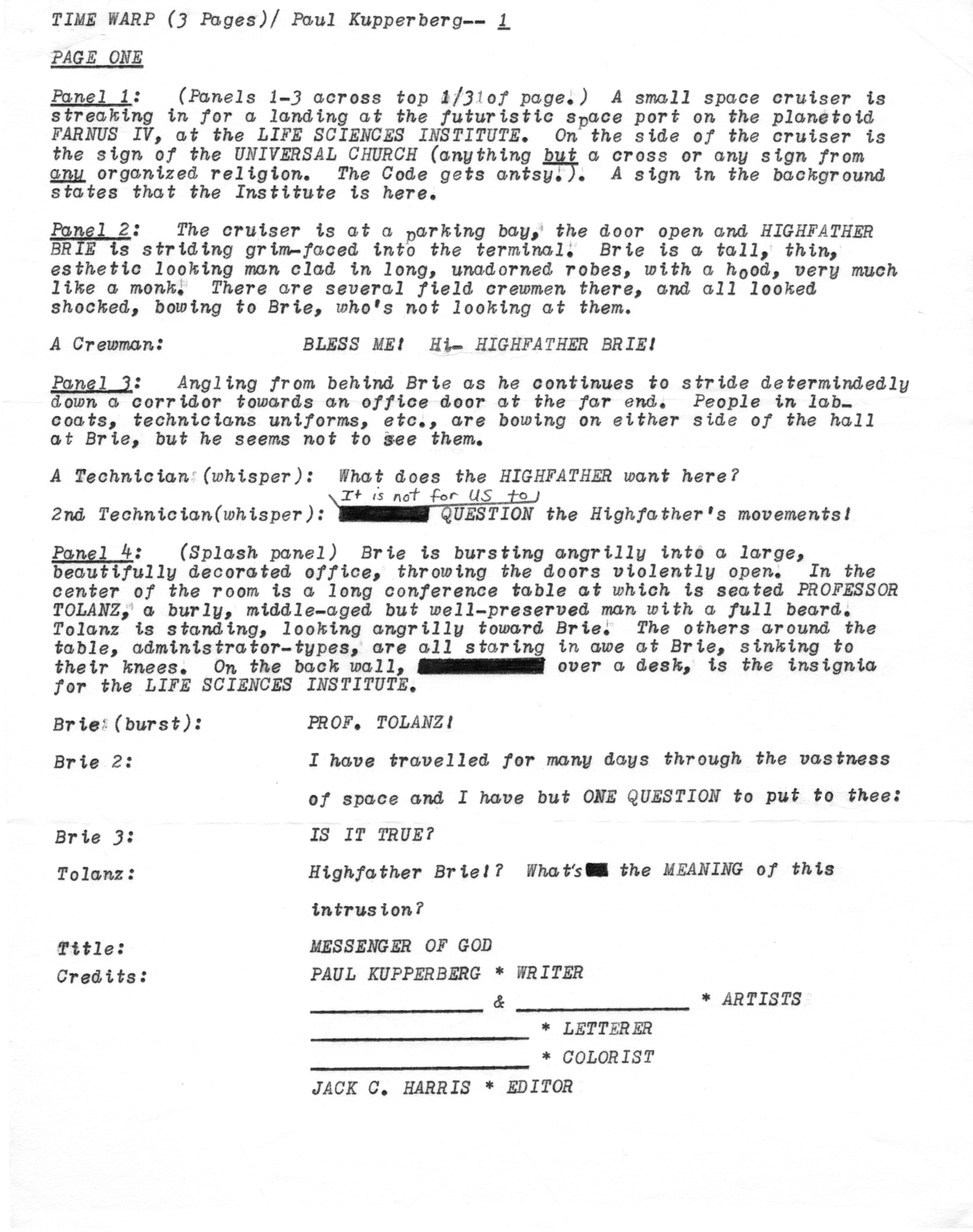
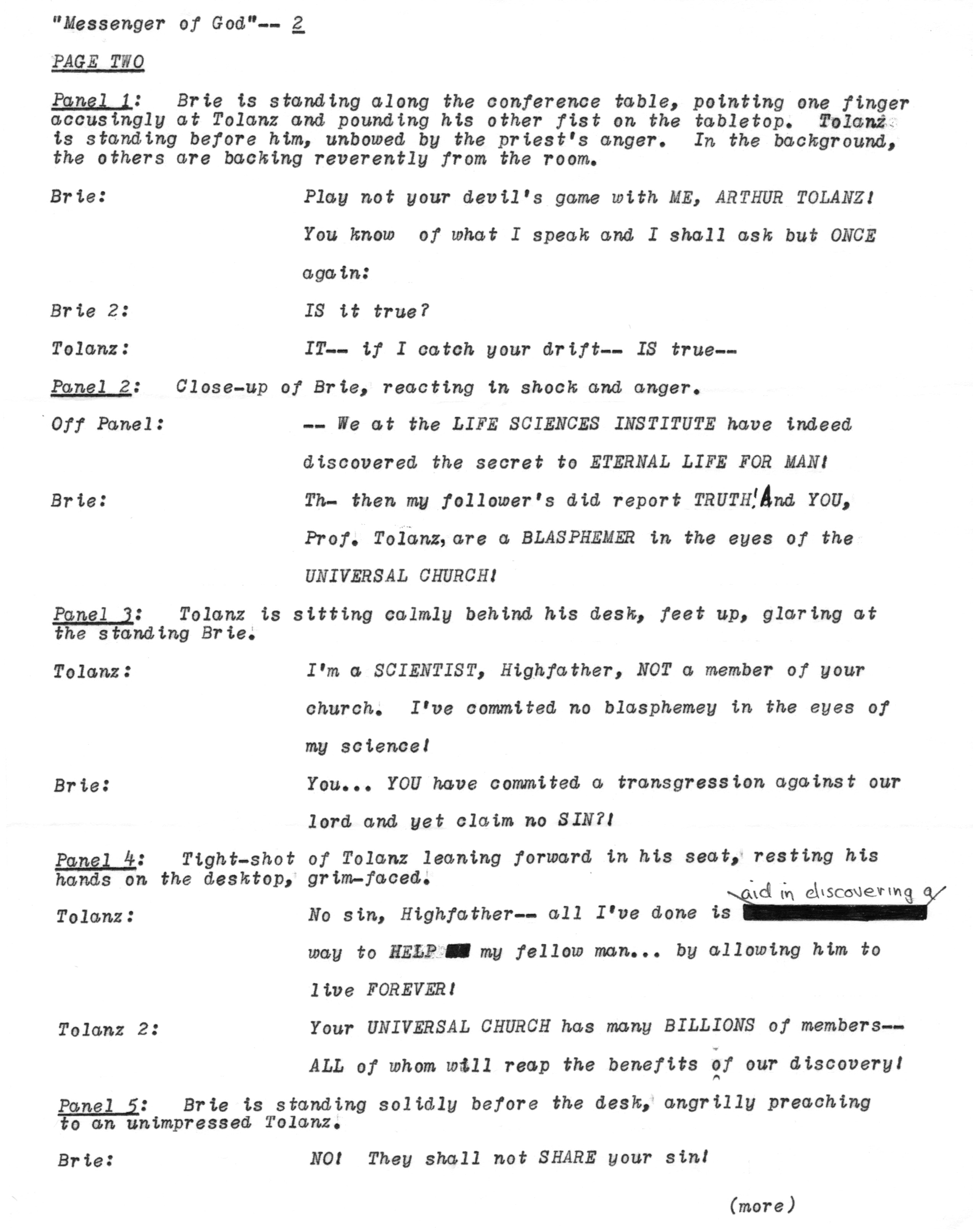
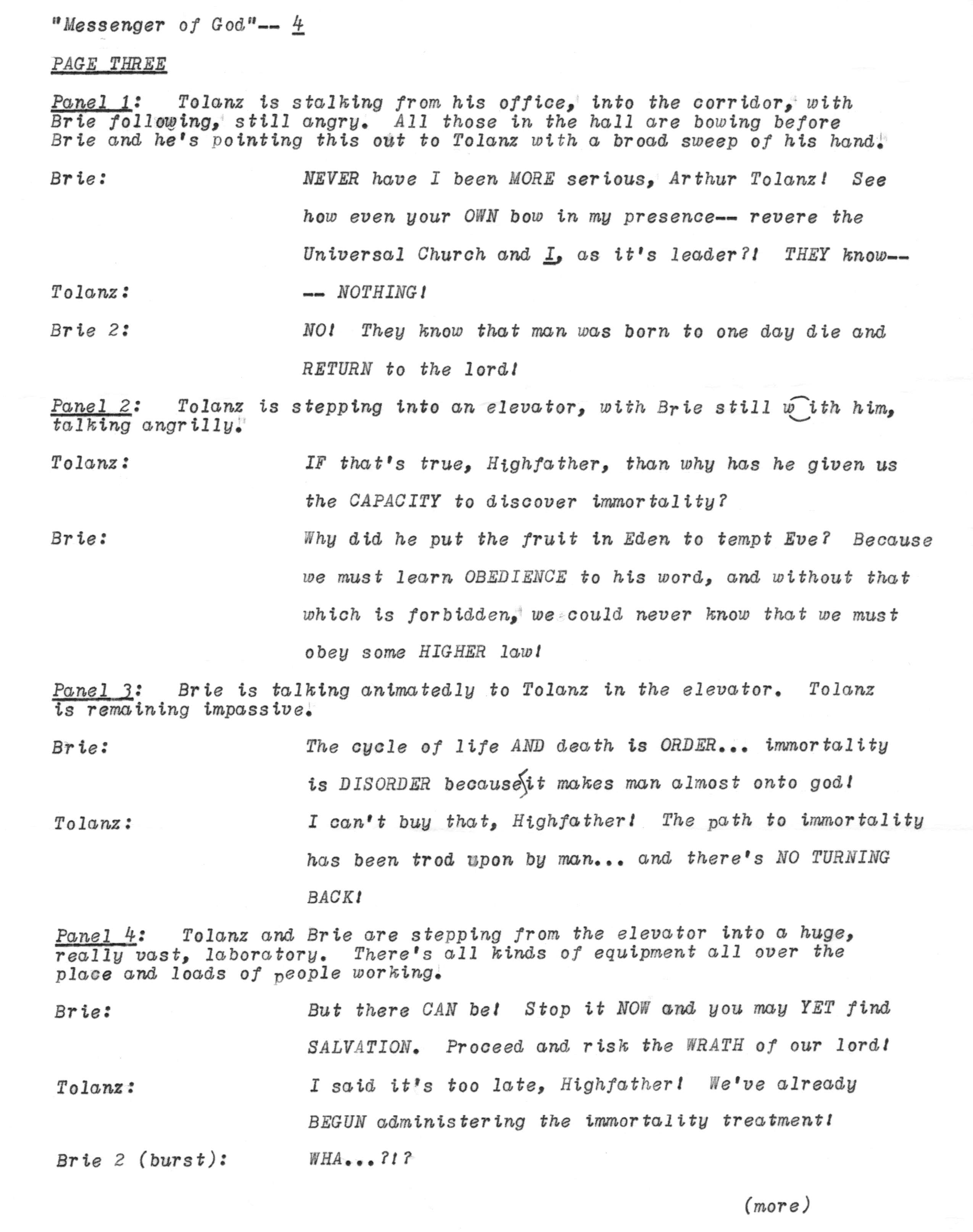
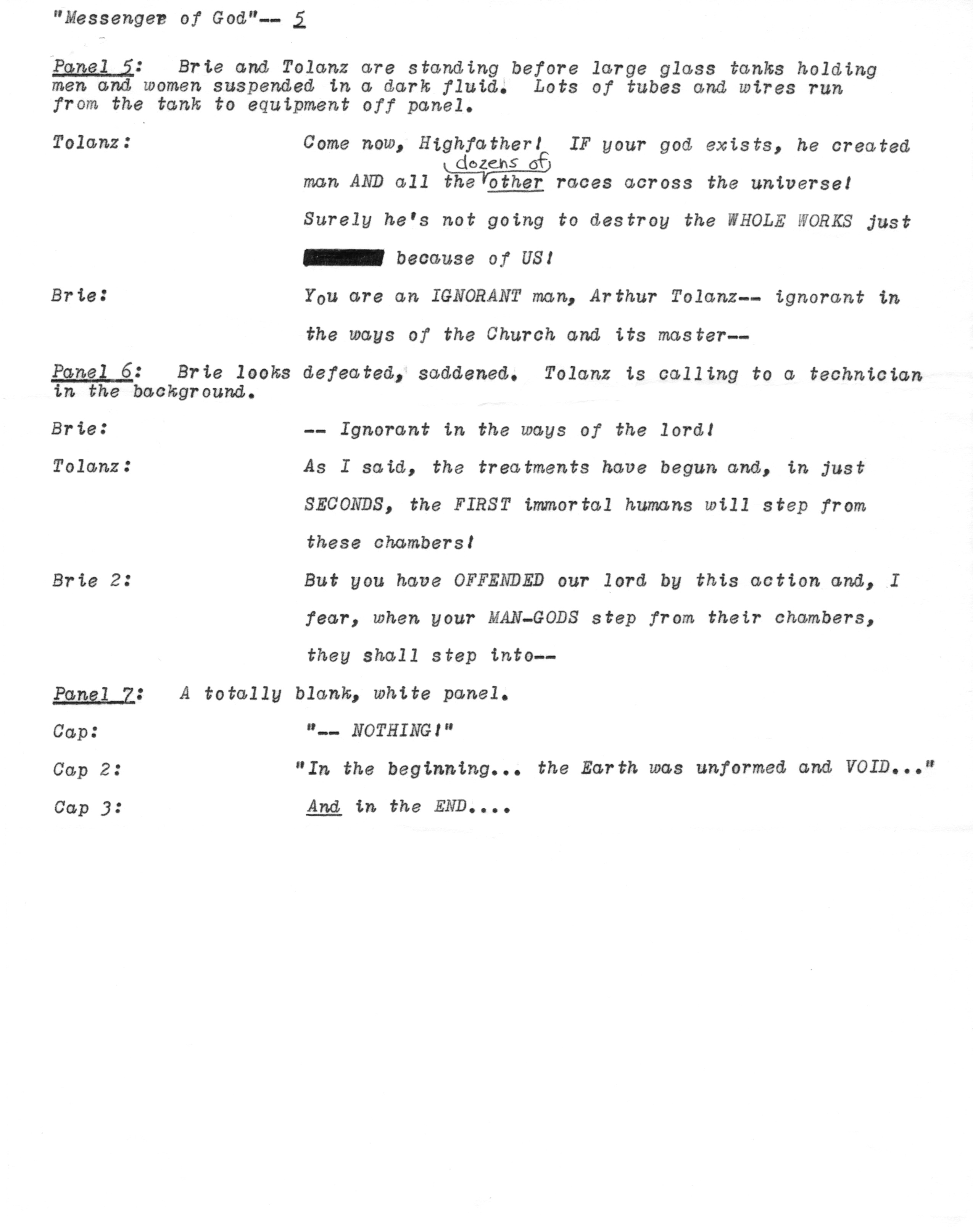
Time Warp was a DC Comics science fiction title that ran for five issues between October-November 1979 and June-July 1980. Published in the Dollar Comic format (64-pages, no ads, for a buck) and sporting covers by Michael Kaluta, Time Warp featured all new stories by a variety of talent. And me. I wrote three stories for Tine Warp, only one of which was published, “Union in Steel” with art by Don Newton and Steve Mitchel, in #5, which grabbed the cover spot. A second story (“The Man Who Would Be Conqueror,” with art by Michael Adams and, I believe, Steve Mitchell) was drawn and lettered but never published (and can be seen by clicking here). I had forgotten all about the third story, a 3-pager, “Messenger of God,” which appears to be a…oh, let’s call it a homage to Arthur C. Clarke’s “Nine Billion Names of God,” until I came across the script in my files.

Tags: , , , , , , ,

Paul Kupperberg on May 22nd, 2017

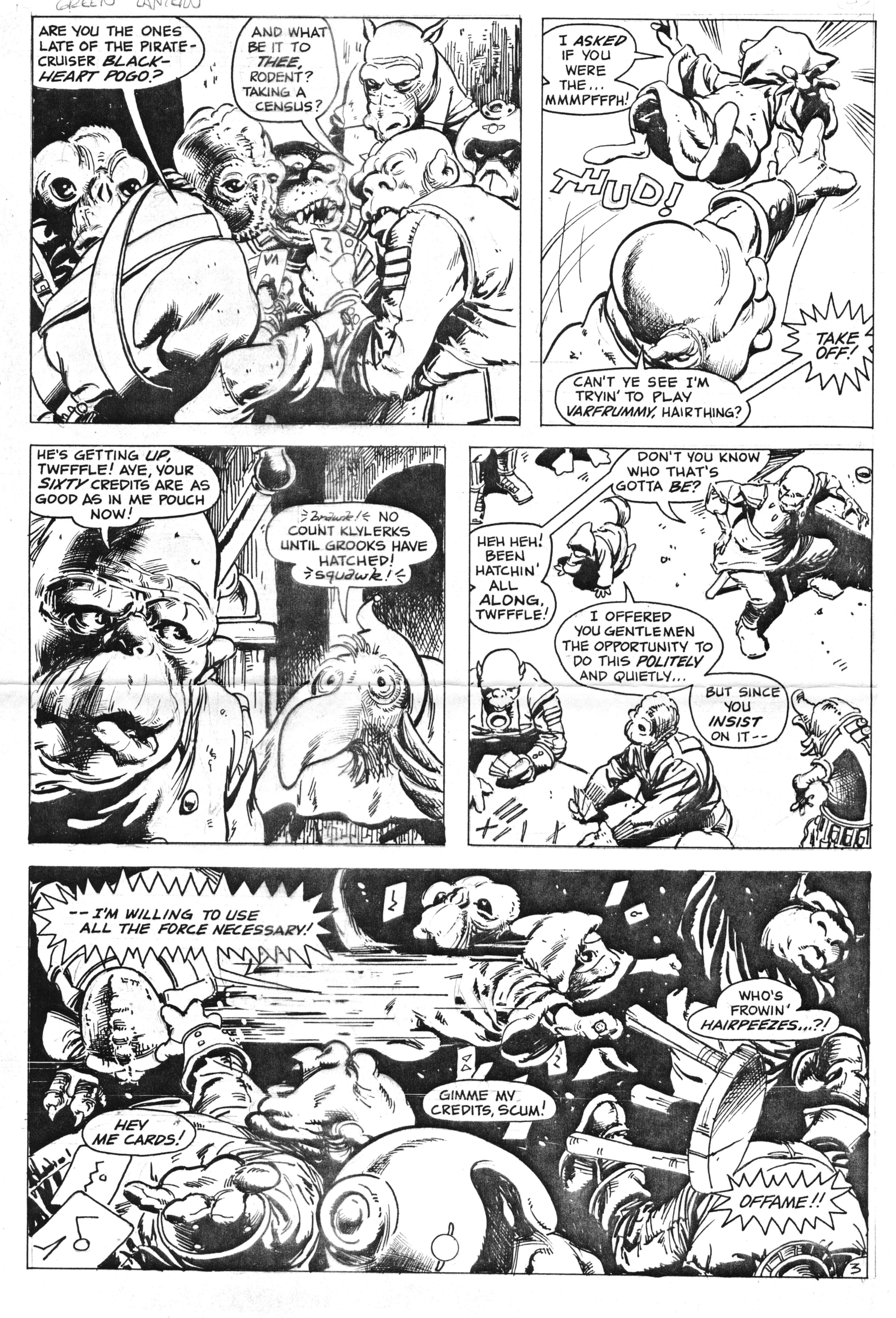
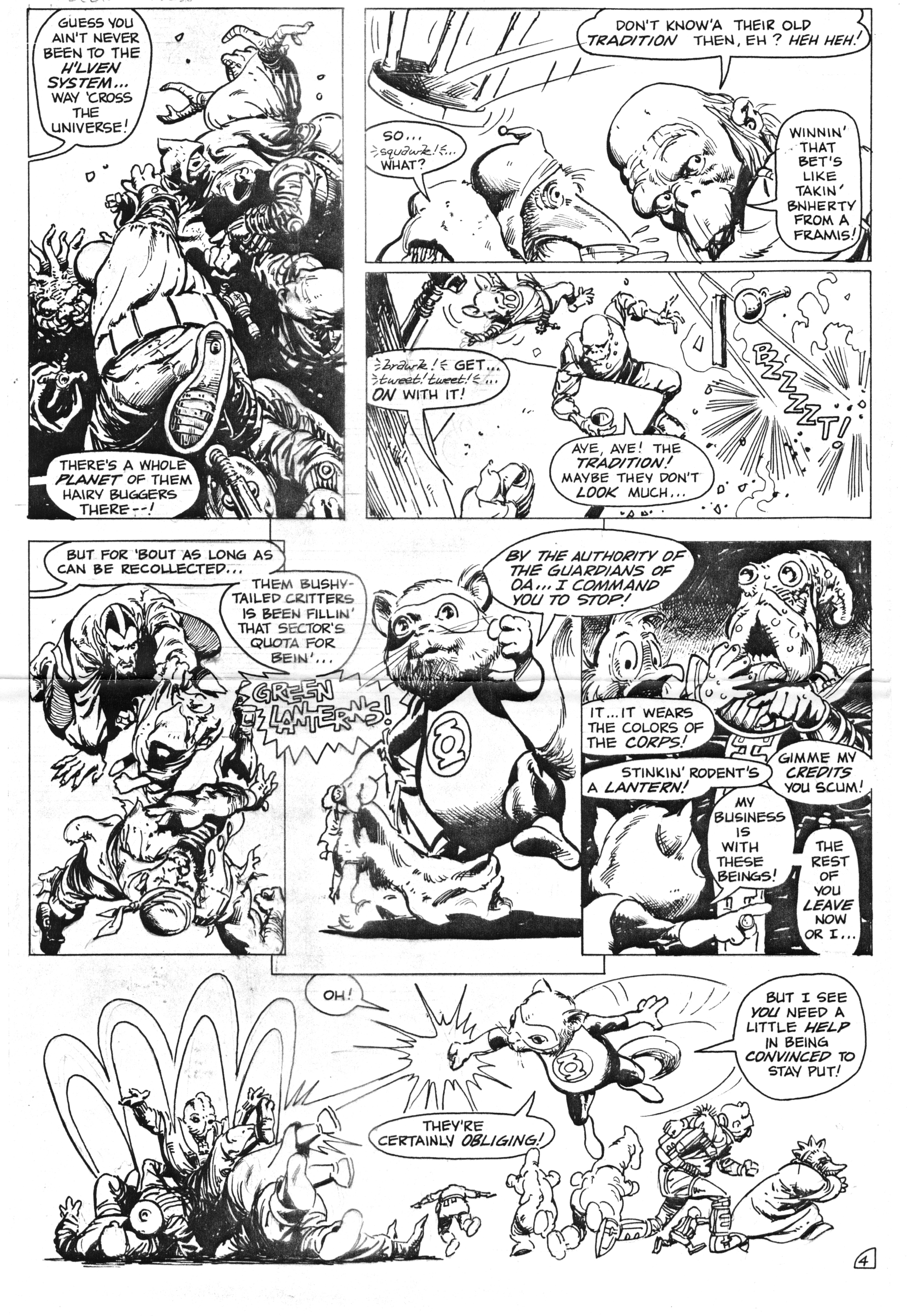
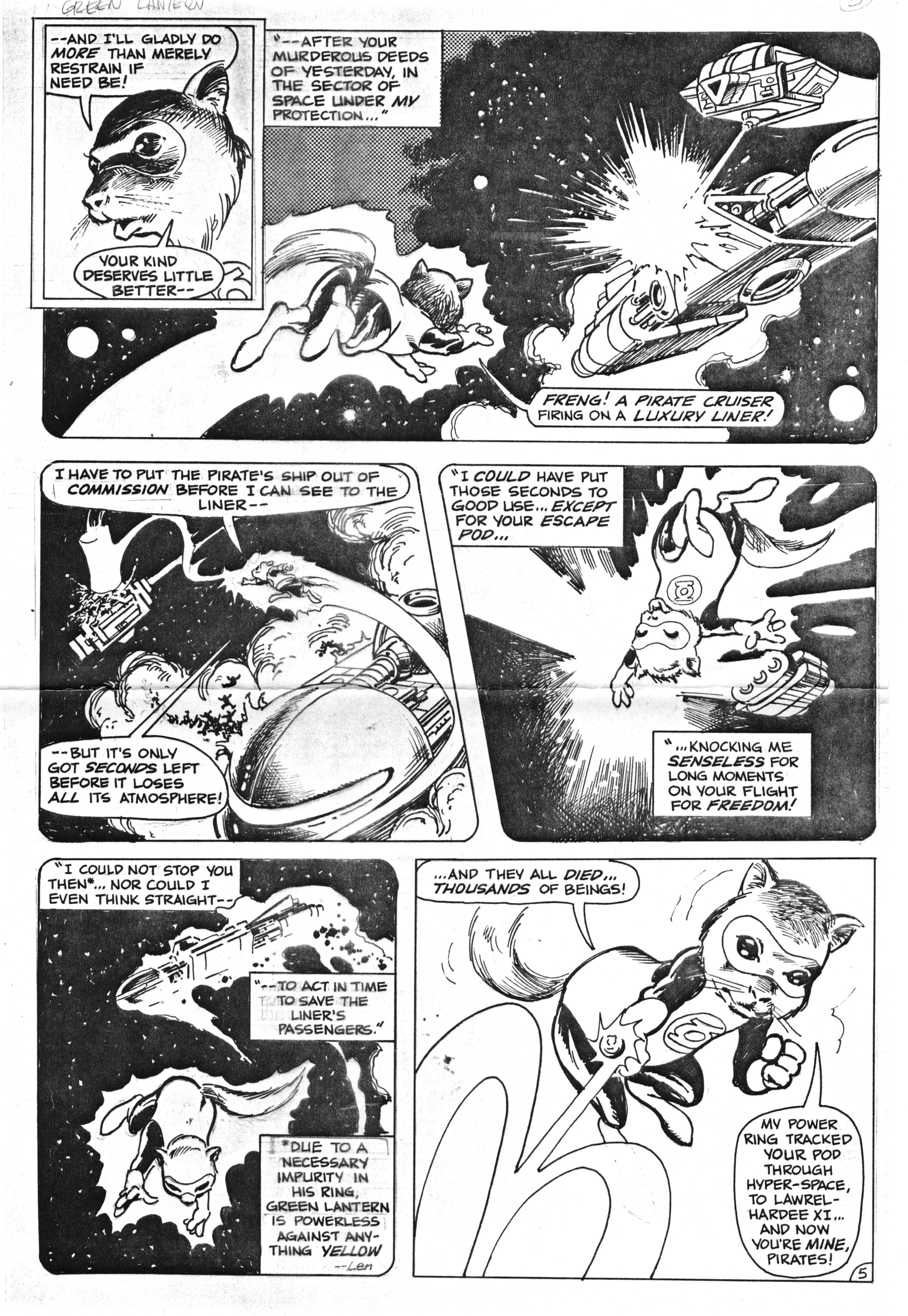
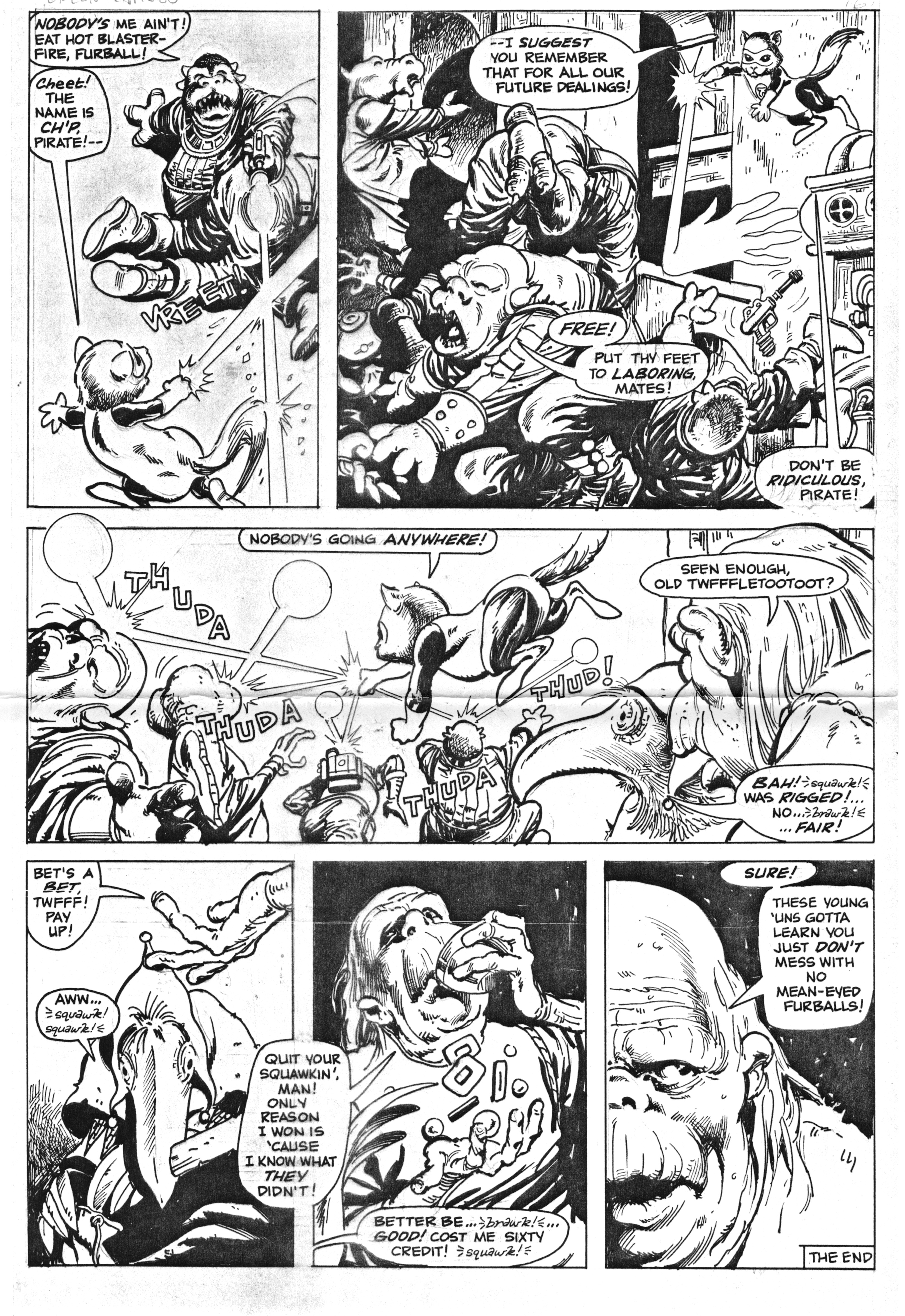
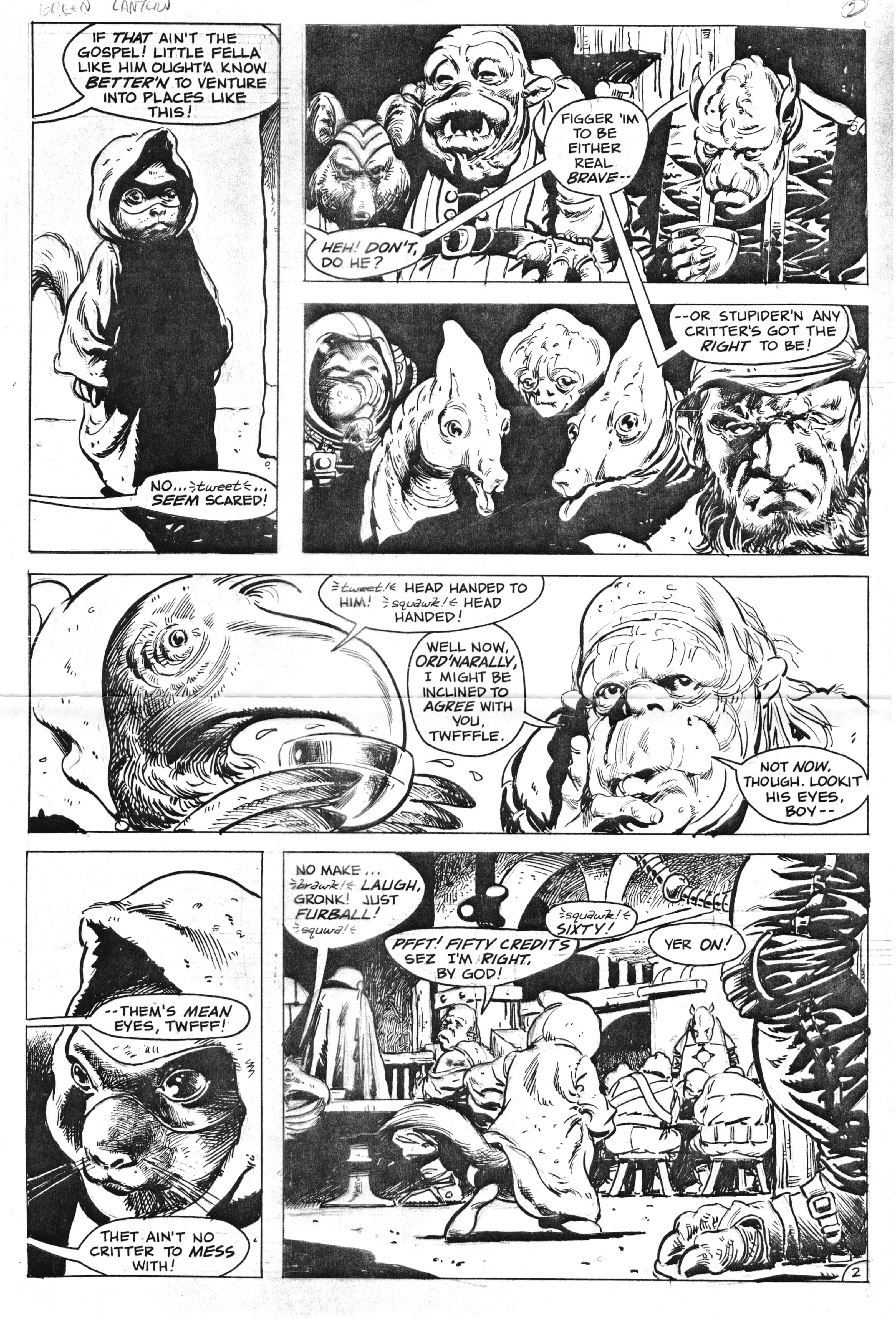
The character of Ch’p, the Green Lantern from the planet H’lven, first appeared in an untitled Tales of the Green Lantern Corps back-up story in Green Lantern #148 (January 1982). Ch’p wasn’t supposed to be a joke, contrary to the eventual fate of the character at the hands of the clueless. He was supposed to a badass chipmunk with a power ring that he ain’t afraid to use. The script was assigned to Don Newton and Don drew Ch’p as a squirrel instead of a chipmunk—a change with which I had no problem because I had loved Don Newton’s artwork for more than a decade before he drew this story and would have been happy with any rodent after which he chose to model Ch’p. The story was beautifully inked by one of Don’s best embellishers, Dan Adkins.

A couple of years later, I wrote a second Ch’p TOTGLC back-up story for Green Lantern #182 (October 1984), this one titled “One Night In a Bar on Lawrel-Hardee XI.” Editor Len Wein wisely assigned this one to Don as well. For the inking, he let Don have a party and do the complete job himself. Don didn’t get to do very many pencil-and-ink jobs at DC Comics, so when this one came along he really went to town in a six-page set-piece that puts the Stars Wars cantina scene to shame!

I just came across full-size Xeroxes of the story, a rare opportunity to check out Don Newton’s stunning art in black and white and without the bad 1980s printing. Enjoy!

Tags: , , , , , , ,

Paul Kupperberg on May 14th, 2017

The sky was just beginning to show its early morning colors when Harry and Flo unlocked the front door of the candy store on the corner of Remsen Avenue and Avenue B and carried the waiting bundles of newspapers inside. Their daily routine was well established after more than a dozen years in the store and it wasn’t much different from the one they had followed for six years before that in the old place in Queens. They went about their tasks with silent efficiency. Harry dumped the bundled papers on the newsstand while Flo went behind the counter, switching on the lights and ceiling fans and setting up for the coming breakfast rush. She filled the large coffee urn with water and started it perking. Next she lit the grill and the deeper fryer. Milk was poured into serving pitchers; the sugar, salt, and pepper shakers refilled. Eggs, bacon, butter, margarine, sliced ham, and American cheese were pulled from the refrigerator and arranged on the preparation countertop next to the grill.

It was Harry’s job to snip the wires around the newspapers and stack them on the newsstand on the wall opposite the cash register. The number seventeen Remsen Avenue bus stopped outside their door so the first customers of the day appeared minutes after the lights blinked on, taking their copies of the New York Daily News, Post, and Times from the stacks in Harry’s hands and dropping their coins in the cigar box next to the papers.

The papers finished, Harry would tie a clean, white apron around his ample stomach and join his wife behind the counter. Flo sold cigarettes and gum and served up take out containers of hot coffee and chit-chat to their early bird patrons. Harry, his back to them at the prep station, silently chopped onions and green peppers and sliced tomatoes. He responded to greetings from the regulars with a wave of his cleaver and a grunt. Harry saved speaking for the important things. One of those was arguing with his suppliers.

“So much?” Harry would slap at whatever invoice had just been handed him disdainfully with his fingertips, his grunted words pushed through the side of his mouth and from behind clenched teeth. “You try rob me?”

“Yeah, Harry,” said Esposito, the driver who delivered the fresh Kaiser rolls and breads, holding out his hand for payment. “That’s it. This’s a gun. Stick ‘em up.”

“Why you gotta bust my balls like this, Harry?” said Goldman the meat man.

“Like I got time for your bullshit?” said Williams the candy supplier.

“Hey, Harry, ever hear the one about I don’t give a crap?” said Winowsky the cigarette distributor.

The only ones who took Harry’s gruffness seriously were the small children. He frightened most of them, at least at first. They would eventually learn that his bark was indeed worse than his bite and would sit on the red faux leather covered stools at the counter and try to provoke answers of more than a grunt of one or two syllables from him. They would pepper him with absurd, trick questions, but Harry would outwit them, all the while pretending their games annoyed him.

During lulls in their day, while he was wiping down the counter or washing out coffee mugs and soda glasses, Flo sometimes watched Harry while pretending to read the newspaper. The store would be quiet except for the buzz of the ice cream freezer and hum of the refrigerator. Even the traffic on Remsen Avenue seemed to taper down to a whisper, and, in the soft heat of summer days under the slowly spinning blades of the ceiling fans, there would come moments when time felt stilled, when there was nowhere else in the world except for there.

And in those moments, time and age and weariness fell away from Harry like withered petals on a flower, revealing the beautiful bloom beneath. Harry had always been a barrel of a man with a large neck, broad shoulders, and powerful arms covered in thick dark hair. When she had first laid eyes on him, he was seventeen but already a man, strong from working for his father, a stone mason in Warsaw. Flo was fifteen and had gone with her mother to pick out her grandmother’s headstone for the unveiling on the first yahrzeit, still some six months way.

He was a young bull, dark and intense, swinging a heavy hammer against wedges sunk into a large piece of granite to split it in half. His hammer sang off the metal wedges and the beautiful young man sang too, in a voice more beautiful than anything she had ever heard. She later found out he was singing opera, but all she heard that day was his rich, sweet baritone filling the air and wrapping around her like a warm embrace.

That first sight of him and sound of his voice was Flo’s most precious memory, more precious than the day he first looked into her eyes and smiled, or their wedding, or even the births of their children. That was the memory from which all the others would spring.

Then someone would come into the store and the moment would disappear. But for a while after, as she made them their malteds or prepared sandwiches, she imagined she could still hear Harry’s song as it slowly drifted out the door and melted away into the sounds of the world.

The last time Flo heard Harry sing outside of her daydreams had been more than a quarter of a century ago, before the war.

For lunch, the store would be full, standing room only as children and adults waited for stools at the counter or seats at the six small tables in the rear. The grown-ups were all workers from neighboring shops and the junkyards and body and fender places along Ditmas Avenue, even some from Brooklyn Terminal Market, a short walk up Remsen Avenue. In the summer, the kids came from the local playground and all around the neighborhood for their fifty cent hamburger, fries, and soda special; during the school year, they came from P.S. 233 a few blocks down Avenue B and as far away as the junior high school up on Ralph Avenue.

Lunch was loud and frantic. People shouting their orders for take out in a cacophony of accents, kids laughing, yelling, screeching with delight in the way that only children can. Diners talking about sports, the Mets, the Yankees, still holding grudges against the Dodgers, and everyone had an opinion on politics, especially Richard Nixon. This was a blue collar neighborhood, readers of the liberal Post and working class Daily News. The only people who bought the Times wore suits and ties to work.

Harry wore a long-sleeve white shirt, black pants, and heavy black shoes every day. When it was warm, he rolled his sleeves up over his massive forearms to his elbows; when it was cold, he put on an ancient, moth-eaten gray cardigan; when it was freezing, he added a scarf around his neck. He claimed not to feel the weather and didn’t own an overcoat but kept, at his wife’s insistence, a tweed cap to cover his crew cut bristle of gray hair against the damp.

Flo had to wait many months until she saw Harry again. Back then, in Warsaw, he was Herschel and she was Feigel, a Yiddish name that means “bird.” Of course, even as a girl, Feigel was no delicate bird. She was a sturdy girl of average height, with brown eyes and hair that was, before it turned gray and lost its brilliance, a rich chestnut. She never deceived herself that she was anything but plain and knew she wasn’t going to mature into any sort of beauty. All her life, everyone told her she was the very image of her mother at the same age. She adored her mother, a kind and loving woman, extraordinary in spirit and soul but ordinary on the outside.

While she waited for her grandmother’s yahrzeit to draw closer, necessitating a return visit to the mason, Feigel went to the library and asked for a book about opera. Secular music wasn’t a part of her family’s Orthodox life. Singing was reserved for prayer in the temple. Herschel had a deep, full voice like Cantor Ganzfried who she always loved listening to while she snuggled against her mother in the women’s section of the synagogue on Saturday mornings. A friendly librarian pointed her towards the library’s small collection of phonograph records and took her into a small private room where she was allowed to listen to them on the Victrola. The girl gasped in recognition at the very first recording. It was Herschel’s song.

“That composition is La Donna e Mobile, from an Italian opera called Rigoletto by Guiseppe Verdi,” said the librarian. “The man singing it is Enrico Caruso, the greatest baritone the world has ever known. He made this recording in 1908. I fear we’ll never have another like him.”

An electric thrill ran through Feigel. To her ears, the recording sounded distant and hollow, yet even in her memory, Herschel’s voice was full, clear, and more beautiful than the songs of the summer birds.

In the months that followed, Feigel would return to the library to listen to that recording dozens of time until she had committed the lyrics of the Italian ballad to memory. It became a constant refrain playing behind every thought and wafting through her dreams. Whenever she heard that music she saw his face in his mind’s eye and she wanted to hear it always

La donna è mobile, qual piuma al vento, muta d’accento—e di pensier.”

Flo couldn’t recall how young Feigel had endured those endless months dreaming of Herschel. It may have begun as a school girl crush on an older boy, but any hint of doubt was banished the moment she and her mother walked into the stone mason’s yard and, glazed in stone dust, his dark hair falling across his forehead, he greeted them. He smiled at Feigel’s mother and then he turned his gaze on her. Even before he spoke, her heart leapt like a deer and she blushed.

Herschel blushed too, ripping his eyes from her as though against their will and, fumbling his words and his feet, he turned the subject to business with her mother. Feigel’s hands were shaking and from somewhere came the sound of La Donna e Mobile. It wasn’t until Herschel looked back at her with dark eyes wide with wonder that she realized she was singing softly, to herself.

The summer afternoons passed quickly. There was a steady demand for ice cold cans of solda, candy, gum, and cigarettes, egg creams and shakes, ice cream cones and ices, and when there were no customers to wait on, there was always something to do. Shelves were restocked, the cooler filled with cans of Coca-Cola, Sprite, Like, and RC, or the grill scrubbed down and the oil in the deep fryer changed. Every afternoon, Harry would lift the wooden treads behind the counter and mop the floor. Tuesday and Thursday afternoons, the distributor pulled his truck up to the curb and hurled wire bundled stacks of magazines and comic books at their door. Harry would lug them to the back of the store and check the delivery against the included invoice. So many copies of Time Magazine or Life or Popular Mechanics or Playboy, check, check, check, check, then the previous issues had to be pulled from the magazine stand and replaced by the new ones. Unsold copies were supposed to go into the trash after having their covers torn off to be returned to the distributor for credit. Harry sold all his coverless returns to a used paper dealer who in turn sold them to secondhand bookstores for half price resale to the public.

Late afternoons and evenings in the summer had a rhythm of their own. Hot, weary workers dripped off the number seventeen bus, one arriving every six minutes according to the schedule, and popped in for a newspaper, a pack of smokes, or a cooling soda before making the two of three block trudge home. Only the men had the time to waste. The women who worked outside the house had to shop and prepare dinner so it would be waiting for their husbands when they got home.

People in the neighborhood went out to eat during the week and those who did usually went to the Cobe Diner on Ditmas, or Zip’s deli and the Chinese place over on Avenue A. After dinner, the teenagers took over. They arrived in singles, couples, and groups. They filled the counter and the tables to overflowing, downing sodas and ice cream and shared orders of greasy French fries doused in ketchup. They came out on dates or to flirt with whoever it was they hoped to date. They were brash and loud and their laughter was the music that made Flo happy now. Years ago, when they were living above the old store in Queens, their own children had been a part of the nightly cacophony.

Harry didn’t smile, but she knew he liked having the kids around. It made the store come alive and, yes, it gave him something to grunt and complain about. They were noisy, they stole candy bars and penny candies and then read the magazines and comic books with fingers still sticky from their ill-gotten sweets. Theft was the one crime Harry would not forgive. The punishment wasn’t a call to the offender’s parents but a lifetime banishment from the store with no possibility of parole. “A thief is a thief is a thief,” he growled once to a father who had come in to plead for a reprieve for his Clark bar stealing son. “I don’t want him no more in my store. You don’t like, you don’t gotta come in neither.” For Harry, that was an oration.

Even as a young man, Herschel had to be coaxed into speaking, especially about his feelings. But that didn’t matter to Feigel. When he sang, he told her everything that was in his head and his heart. That day, though the girl could just barely hold to a tune, Herschel had no trouble understanding her music and added his powerful voice to her whispered, “Sempre un amabile, leggiadro viso, in pianto o in riso—è menzognero.”

Feigel’s mother later confessed that she didn’t know what shocked her more, that her daughter was singing opera or that she was singing it with a handsome boy who had the voice of an angel and eyes that saw the soul behind Feigel’s face.

Having herself suffered the difficulties of a plain girl in finding a husband, Feigel’s mother was quick to note the attraction and even quicker to give it her blessing. What wasn’t to like? He was Jewish, observant, young, and strong, and he learning the family business from his father. And he clearly adored her.

Herschel courted Feigel for several months until her seventeenth birthday. At the celebration of that occasion, the shy stonecutter took her father aside and formally asked permission to wed his daughter. Feigel’s father laughed. “Would you leave and forget about her if I said no?” he asked.

“No, sir,” Herschel said, bewildered by the question.

They were married on June 24, 1938 at her father’s house in Warsaw. Maybe it was memory playing tricks on her thirty years later, but she remembered there always being music in their lives together in Poland. Herschel brought with him a Victrola his father had taken in trade for a job for a music shop owner, and phonograph records, mostly opera, but also polkas and waltzes, and even some Polish recordings of American popular music. And when there was no phonograph, Herschel sang, sometimes softly to himself, often at full voice, all shyness and self-consciousness borne away by his joy of song.

“You should be on the stage, Herschel,” family, friends, and strangers told him. Once, a producer ordering an engraved cornerstone for his new theater heard the young man’s singing from the yard and raced outside prepared to offer whoever he found there a generous contract. The mason’s apprentice thanked the man for his offer but said a stonecutter had no place on the stage.

There was no music in their lives anymore. Harry hadn’t sung since the war and he refused to listen to musical programs on the radio or television. Harry wouldn’t even allow a jukebox in the store, claiming he couldn’t stand all the noise. The gonifs running the jukebox and pinball machine business were generous enough to allow them to take a pair of pinball machines instead. Unlike music, their flashing lights and raucous bells, whistles, and klangs didn’t grate on his nerves.

Sometimes one of the kids would come in with a little transistor radio blaring whatever it was that passed for music and Harry would snap at him, “Shut’im off or put on the game, yeah?”

They kept the store open until ten during the summer. Someone always needed something last minute, a pack of cigarettes or to satisfy a craving for something sweet, but they came straggling in now, tired and subdued at the end of a long, hot summer day. That last hour was calm and soothing, like her mid-afternoon reveries. Not that she had time to daydream. Cleaning up from the day and preparing what they could for tomorrow’s six a.m. opening kept them busy, working side by side as they always had, with an understanding that made words between them unnecessary.

As comfortable as she had grown in their silent relationship, Flo sometimes missed they way it had been. They were married only a few months when the German blitzkrieg rolled into Poland and, in an instant, Feigel and Herschel’s world collapsed. Arrangements were made for Feigel, her mother, and three sisters to leave, literally with the clothes on their backs, with her husband, father, and two brothers to follow.

Feigel begged Herschel to come with her, but he refused to leave until he had done all he could to help the rest of his family to safety.

“Don’t do anything stupid,” Feigel whispered to him in the dark the night before she was to leave. “You’ll get out, come to America. I’ll be in New York City. We have family who will take us in.”

“Don’t you worry about me,” he said. She remembered thinking he was trying so hard to be brave for her, but while he loved her like a man he was still a boy. “Open your window and sing. I’ll hear you, wherever you are in New York City.”

And so she sang, the first music she had ever heard from him. “La donna è mobile, qual piuma al vento…” she sang in the dark and he held her close and listened until she was through.

“After all this time, do you even know the words mean?” he asked.

Feigel shook her head. “No. They sound so pretty in Italian, I was afraid I might find out they meant something terrible in Polish.”

“It’s a song sung by a Duke to the daughter of his court jester Rigoletto, who he’s trying to seduce. He says,” and here he began to sing, fitting the words of their native tongue into the music.

“Woman is fickle, like a feather in the wind she changes her voice—and her mind. Always sweet, pretty face, in tears or in laughter—she is always lying. Always miserable is he who trusts her, he who confides in her—his unwary heart! Yet one never feels fully happy who on that bosom—does not drink love! Woman is fickle, like a feather in the wind, she changes her voice—and her mind, and her mind, and her mind!”

“It is terrible,” she cried out in dismay. “Do you think I’m a lying, fickle woman?”

“It’s not terrible, my Feigellah,” he laughed, covering her cheek with kisses. “It’s a man saying no matter how horrible she may be, he can’t live without a woman’s love.”

“Could you live without my love?” she said, drawing him closer.

“No, even if you aren’t a cold, deceiving harpy. You wait for me in New York City. I won’t be far behind.”

Herschel would be eight years behind Feigel. His father, brothers, and he waited too long and were forced to flee into the wilderness, living on the run from Nazi patrols for many weeks until they were taken in by a Polish resistance unit. They lived like animals in caves and dark cellars and fought for over a year, when Herschel was captured and sent to the Treblinka work camp. He would never learn the fate of his father or brothers, but he would escape his work detail one winter morning and remain on the loose for two more years. He was captured again and, still healthy enough to work, labored on the burial detail at the Majdabek, the first of the Nazi extermination camps to be liberated in July of 1944. As they fled before the approaching Allied army, the Germans made every effort to kill as many Jews as they could. Herschel was shot in the throat and left to die.

Half dead from starvation and loss of blood, the army medics did what they could to make him comfortable until he died. But Herschel wouldn’t die. He hung on, his dry, cracked lips forming words without sound. No one knew what he was trying to tell them. They never would have thought he was singing.

When it became clear Herschel had no plans to die, a medic from Brooklyn named Silverman took over his care. Silverman was touched by the young man’s tenacity and consumed with curiosity over what he was trying to tell them. Herschel’s injuries made it impossible for him to speak and he was too weak to even hold a pen. The corpsman called in some favors and had Herschel transferred to a behind the lines hospital unit where one of the surgeons specialized in throat wounds.

Many operations later, late in 1945, after the wars on both sides of the world had ended, Silverman came by for a last visit before he was shipped home. “Look at you now, Harry,” Silverman said, calling him by an Americanized version of his name in Yiddish, their common language. “A year ago, you were nothing but skin and bones, now you’re like a horse. And the doctor tells me you’re healing nicely from the last surgery.”

The rumble that came from his mouth sounded like he was saying, “Yes, can talk. Little.”

Silverman’s smile was radiant. “That’s great, Harry, really great. I have to go. Now, I have your wife’s address in New York you gave me and I’ll look her up as soon as I get back and let her know what’s going on. And I’ve got a cousin, a lawyer, he can help her figure what it takes to get you to the U.S., okay?”

Harry nodded. “Tak,” he grunted. Polish for yes.

The men shook hands and before he left, Silverman said, “There’s something I’ve always been meaning to ask you, Harry. When you were first liberated, you kept trying to tell us something but nobody could understand. Do you remember that? Do you recall what you were trying say that was so important?”

The corner of his mouth twitched, the closest thing to a smile Silverman had ever seen on his face. Harry nodded.

“Singing. Rigoletto.” Harry swallowed hard and winched in pain. “For my wife.”

Corporeal Silverman told her the story on his first telephone call. Feigel, now called Florence, had only learned from that Herschel had survived the war some months earlier. New information of his status as a displaced person was slow to arrive and hard to find out. If it hadn’t been for Silverman and his help, she wasn’t sure if she would have ever been reunited with her husband and the father of their now six year old daughter, Rose, conceived that night he last sang to her.

Then one day, Harry did come to America. He walked off the ship that had brought him across the ocean and into Flo’s arms. On the surface, she could see how very changed he was from the boy she had been forced to leave in Poland, but once she felt him in her arms, she knew it would be alright.

“Thank god, thank god. I missed you so, Herschel. I missed you more than the music,” she said.

“Yes. Missed you,” his ruined voice grunted in his ear.

She pulled away from him in shock.

“Herschel. Your voice. I thought you were getting better…?”

He touched his throat and shook his head. “Music gone.”

They were alone in the store. Harry was sweeping the floor and Flo was washing the last of the glassware at the sink. That moment on the dock was the bittersweet start to their life. They were together again, newlyweds after a long separation during which she had been sure he was dead. That he lived and was here now, with or without a voice, was miracle enough for her, come what may. But she would always mourn the loss of the music.

La donna è mobile, qual piuma al vento, muta d’accento—e di pensier. Sempre un amabile, leggiadro viso, in pianto o in riso—è menzognero.”

She wanted that to be the last thing she heard as she lay dying. She wanted Harry to be singing it to her, it didn’t matter whether it was in the voice of an angel or a croaking frog.

And without any awareness she was doing so, Flo started softly to sing. At first, she could hardly hear herself over the running water, but as she went on, her thin voice grew louder, and she was suddenly aware that Harry was standing on the other side of the counter, broom in hand, staring at her. She stopped.

“What you doing?” he barked.

Flo looked at tired old man across from her but for some reason, suddenly all she saw was the beautiful, strong young boy, pale with stone dust, swinging his mason’s mallet, and filling the world with his voice and his song.

“I’m singing,” she said.

Harry made a violent gesture and turned away from her. “Don’t got time for nonsense. Finish. We go home.”

“Harry.”

He ignored her and returned to sweeping, but now he chopped at the scarred linoleum with the broom, sending the accumulated dirt scattering.

“Harry,” Flo said again.

“Don’t bother me. Don’t remember no songs.” He still wouldn’t look at her.

“Yes, you do, Harry. You remember this. La donna è mobile, qual piuma…”

Harry’s back stiffened and he dropped the broom.

Piuma al vento, muta d’accento—e di pensier.”

“Got no time for this bullshit,” he growled and stormed towards the door.

“Please, Harry. Sing for me. I miss our music,” Flo said softly, in Polish. “I didn’t know until just now that I can’t stand it. I can’t take another minute without our music, Harry.”

Harry stopped in his tracks and stood like a statue for long moments. Then, as he slowly started to turn back to face her, she heard something. It sounded like rocks rattling around in a coffee can, but it was Harry’s ruined voice rattling in his chest and forcing its way past his scarred throat, broken and harsh, in a deep, discordant rumble but with every word understandable.

He sang to her, “La donna è mobile, qual piuma al vento, muta d’accento—e di pensier,” and it was the most beautiful sound Flo had ever heard.

More beautiful, if possible, than the first time Feigel ever heard Herschel sing.


Tags: , , , , , , , ,

Paul Kupperberg on January 13th, 2017

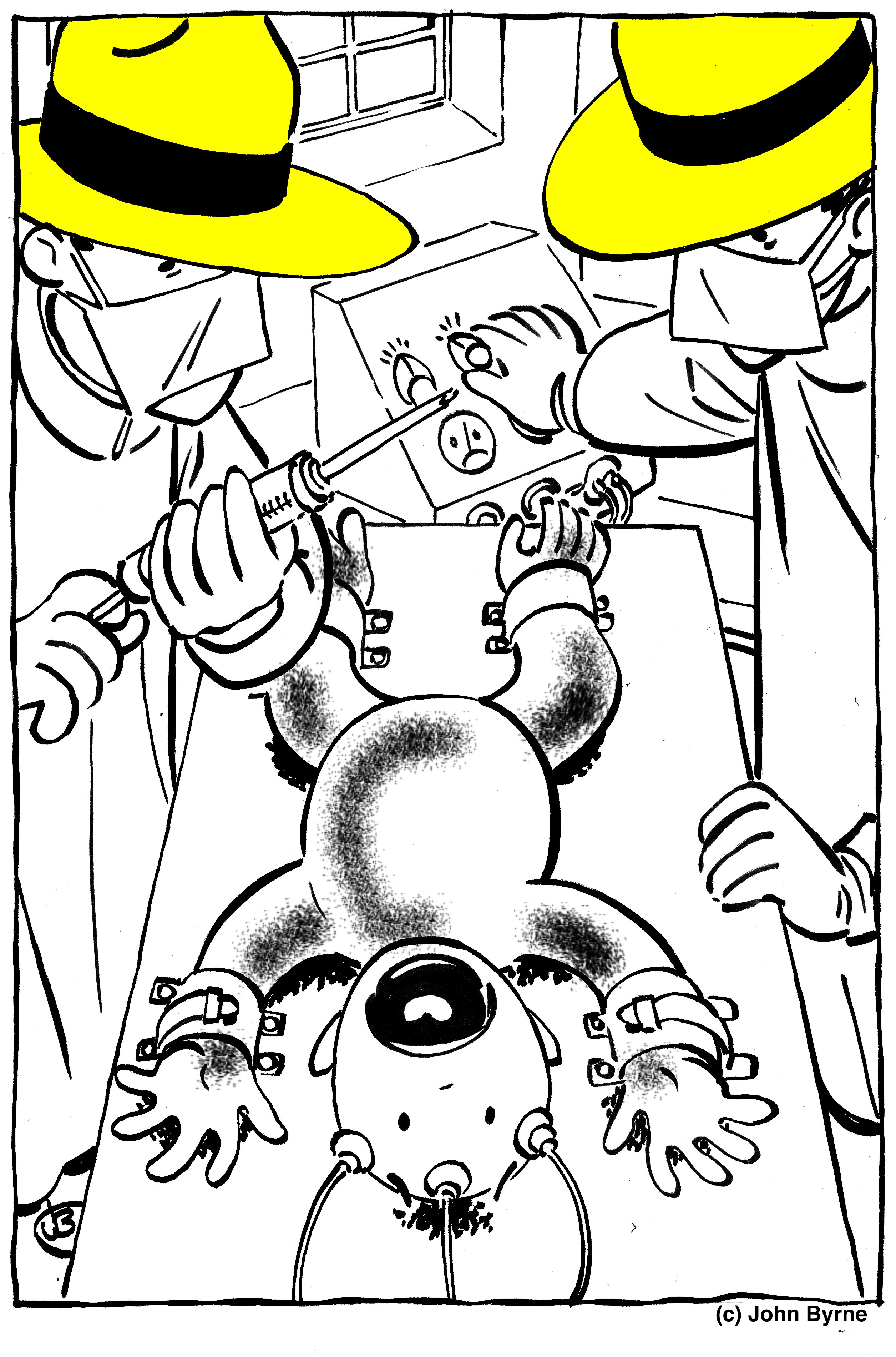
In 2013 I was asked by the non-profit Primate Rescue Center to contribute a story to a benefit project, Panels for Primates appearing on its Act-i-vate website. I based my piece on a skewed view of a beloved childhood favorite, H.A. and Margret Reyes’ Curious George. And knowing that my old friend John Byrne had a soft spot for animals, I hit him up to supply the illustration.

Sorry, George!

The Curious Little Monkey

The curious little monkey lived in the jungle in Africa. He was a good little monkey who spent his days swinging through the trees, eating bananas, and playing with the other little monkeys.

One day, he saw a man in the jungle wearing a big straw hat. The man watched the little monkey swinging through the trees and thought, “I will take that little monkey home with me.”

Knowing how curious little monkeys can be, the man dropped his big straw hat on the ground right where it could be seen and hid himself from sight behind a big tree. As the man knew would happen, the little monkey was curious, having never before seen a man or a hat. He dropped to the ground and looked, curiously, at the hat.

The little monkey was curious why the straw hat had been on the man’s head, so he picked it up and put it on his own head. The hat was so big, it covered the little monkey’s head so that he could not see or hear.

That was when the man grabbed him and shoved him into a sack.

The curious little monkey’s screams of fear echoed through the jungles.

His monkey mother had taught him the dangers of being curious about lions and leopards and hyenas and cheetahs and wild dogs, but she had never warned him about man. Now he was trapped in a sack and being carried away from the jungle by one of them.

By the time the other little monkeys who heard his screams came scampering along, the man had carried him far away.

They would be curious what happened to him for a long, long time.

* * *

The curious little monkey awoke aboard a big ship sailing on the ocean. The man in the big hat had released him from the sack and told him that he was being taken to live in a zoo in a city on the other side of the ocean. The little monkey was sad to leave the jungle and the other little monkeys, but very curious about his new home.

The man sent the little monkey out to play on the deck of the big ship. He happily clamored up the great mast and swung from the many ropes that hung from it. The sailors laughed and playfully chased him here and there, to and fro. He was given bananas and strange, sweet treats to eat, and at night, the man in the big hat tucked him into a soft, warm bed where he would sleep and dream of the adventures that lay ahead in his new life.

When the big ship arrived in the city on the other side of the ocean, the man in the big hat took the little monkey by the hand and brought him home to a house painted yellow like a banana. There, the little monkey was fed a big meal and put to sleep in a cozy bed. He was so happy in his new life that he had already forgotten the other little monkeys he had left behind in Africa.

The next morning, the man in the big hat telephoned the zoo that was to be the little monkey’s new home.

What a wondrous device, the little monkey thought curiously, and, as soon as the man in the big hat was gone, he climbed up on the desk and began to play with it himself. He pushed the little buttons and gibbered his little monkey talk into the part that he, like the man, held up to his face.

“Yes, yes? Who is this?” shouted a voice from the part that he held up to his face.

“Ook oot!” answered the little monkey.

“Screeecchh!” he screeched in his little monkey way and hung up the phone.

The little monkey had telephoned the police station!

“Dear oh dear, someone is in need of help!” cried the police operator.

The police operator checked her computer and saw where the call had come from. She believed it was a real emergency. She did not know it was just the curious little monkey being curious.

She radioed a police car and sent it racing to the house painted yellow like a banana.

A thin policeman and a fat policeman ran into the house, but instead of finding someone in need of help, they found the curious little monkey.

The curious little monkey thought it was all a game and, laughing in delight, tried to run away from the policemen. But the fat policeman was not playing and, pulling his Taser from his holster, shot 500,000 volts of electricity into the curious little monkey, dropping him to the floor, convulsing and screeching before the world went dark.

* * *

“Okay, double check the readings and let’s reset to go again,” said the man with the white coat and big glasses.

The little monkey woke up and was curious why he was strapped to a table in a room that reeked of medicine and urine. He was catheterized and his head hurt where the man with the white coat and big glasses had drilled holes through his skull to insert the electrodes. He remembered the man with the big straw hat taking him on the big ship sailing on the ocean where he had played with the sailors and been given bananas and strange, sweet treats to eat, and the cozy bed in the house painted yellow like a banana where he had been put to sleep, drowsy from the big meal he had been fed…

But that was not real.

In his fear, the curious little monkey had dreamed this wondrous adventure of a new life, far from the jungle and the other little monkeys to escape the horror that the man in the big hat had taken him to endure.

In real life, men did not come into the jungle and trap curious little monkeys in sacks to bring them to the city to roam free for fun and play and adventure.

In real life, freedom was found only in the jungle, with the other little monkeys, as far away from men in big straw hats as possible. In real life, men put them in zoos or in cages or strapped them to tables and drilled holes in their heads in which to insert electrodes in the name of something they called “science.”

“Very well. Up the voltage to the next stage for a ten second jolt…”

The little monkey was curious why anyone would want to keep hurting him, until it hurt too much to be curious about anything anymore.

Tags: , , , ,

Paul Kupperberg on January 11th, 2017

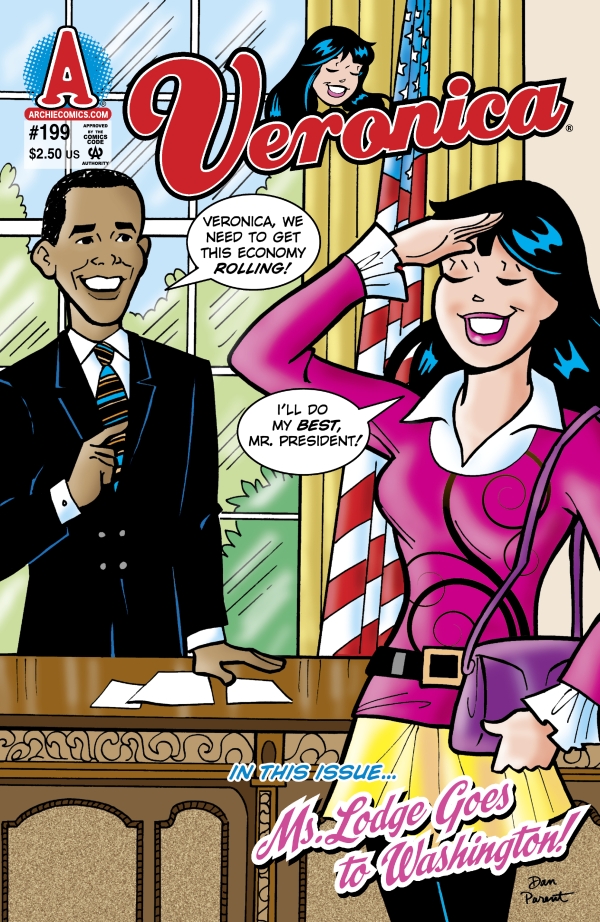
NOT the cover to the issue featuring this story…’cause this story’s never been published. Art by Dan Parent. Cover and story (c) Archie Comics

Declassified at last! The untold tale of ““How Veronica Lodge Saved the United States of America From Committing A Terrible Mistake!”, a 10-page script written in October of 2009 for Archie Comics that, as far as I know, was never drawn and, for reasons unknown to me, never published.

But now that we’re nearing the end of the Obama administration, I thought it was time the story was revealed…and that great patriot Veronica Lodge to at last receive her due!

* * *

“How Veronica Lodge Saved the United States of America From Committing A Terrible Mistake!”

Page 1

  1. FULL-PAGE SPLASH: We open in the OVAL OFFICE of the WHITE HOUSE, where the PRESIDENT is seated behind his desk, reviewing the thick folder of information before him with a look of great concern. Standing before the desk to brief the PRESIDENT are GENERAL REED and a serious, middle-aged man in a dark suit, MR. CHASE, who has a folder of his own that he will consult and pull things out of during the course of the story. There is a laptop computer plugged in on the PRESIDENT’S desk, lid open but facing away from us; we shouldn’t see the screen until requested; it’s a set-up for a gag on page 5.

1 PRESIDENT:      …I’ve read the report TWICE, gentlemen, and all I can ask is–HOW could something like this have happened?!

2 CHASE:      Mr. President, after a lengthy investigation, we have at LAST determined…

3 TITLE (cont. from CHASE’S balloon):      HOW VERONICA LODGE SAVED THE UNITED STATES OF AMERICA FROM COMMITTING A TERRIBLE MISTAKE!

4 CREDITS:      Script: PAUL KUPPERBERG / Pencils: NAME / Inking: ANOTHER NAME / Lettering: YOUR NAME / Coloring: ROY G. BIV / Managing Editor: MICHAEL PELLERITO / Editor/Editor-In-Chief: VICTOR GORELICK

Page 2

  1. GENERAL REED is speaking, the PRESIDENT listening with great interest.

1 REED:      As you know, sir, the computers controlling the country’s DEFENSE SYSTEM developed a small program glitch.

2 REED:      Over time, the program that watches radar and satellite images for enemy missile attacks became CORRUPTED.

2. The PRESIDENT looks very concerned with what he’s hearing from the two other men.

3 CHASE:      As a result, one of the computers believed the SIMULATED ATTACKS stored in its memory were REAL!

4 REED:      That first computer spread the corrupted file to the system…

  1. TWO-SHOT of REED and CHASE.

5 REED:      …But because it was just a simulation, no one detected a problem!

6 CHASE:      In fact, we might only have learned of it once it was TOO LATE…

  1. CHASE has pulled a picture of VERONICA, a smiling close-up, out of his folder to show to the PRESIDENT.

7 CHASE:      …If not for THIS young lady–VERONICA LODGE, of Riverdale!

8 PRESIDENT:      Isn’t that HIRAM LODGE’S teenaged daughter?

Page 3

  1. CLOSE-UP on the picture of VERONICA held up by CHASE.

1 CHASE:      Yes, sir. It began last Saturday afternoon when Miss Lodge was, from all reports…

  1. CUT TO A FLASHBACK (as we’ll be doing often in the pages ahead): it’s a CLOSE-UP of VERONICA, in the same pose as the picture in the previous panel, but she’s now frowning instead of smiling.

2 VERONICA:      …BORED!

  1. PULL BACK to see that VERONICA is sitting in the middle of her bed, surrounded by CDs, her laptop, her cellphone, her iPod, pieces of clothing, scattered magazines, etc. And she’s cross legged, chin on her fist and pouting…bored!!

3 VERONICA:      Archie and the boys are playing softball!

4 VERONICA:      Betty’s babysitting her sister!

5 VERONICA:      I’ve listened to every CD, read every magazine and tried on all my clothes!

  1. VERONICA is hopping off the bed, looking determined.

6 VERONICA:      And NOW I’m talking to myself!

7 VERONICA:      I better DO something before I go NUTS! And the best cure I know of for boredom…

  1. VERONICA is snatching up her purse as she marches out the door.

8 VERONICA:      …Is SHOPPING!

Page 4

  1. CUT TO: DOWNSTAIRS, as MR. LODGE comes walking from his study, smiling like the cat that ate the canary and rubbing his hands together. With him is his lawyer, portly MR. FLEEGEL, who is smiling over a hand full of freshly signed contracts.

1 LODGE:      Thank you for bringing over those CONTRACTS, Fleegel! This deal will make Lodge Industries a FORTUNE!

  1. VERONICA is sweeping by LODGE and FLEEGEL, waving to them. LODGE’S buoyant mood is suddenly deflated and he’s rolling his eyes.

2 VERONICA:      Bye-bye, daddy-kins! I’m off to do a little SHOPPING!

3 LODGE:      …Which should JUST ABOUT pay for this shopping spree…

  1. BACK IN THE OVAL OFFICE, the PRESIDENT is looking at VERONICA’S picture on the desk before him, smiling. CHASE and REED are looking on.

3 PRESIDENT:      Hmm, yes. I’ve heard stories about Miss Lodge’s LEGENDARY shopping abilities!

4 CHASE:      THIS shopping trip was destined to break ALL records, sir…

  1. CHASE is now holding up a picture of a book cover for a HARRY POTTER-type book, “LARRY HOPPER AND THE SILVER BIRDS OF PYRAS” featuring a teen-age wizard riding on the back of a giant silver bird for the still smiling PRESIDENT to see.

5 CHASE:      …But it wasn’t the ONLY record being broken that day. You’re familiar with THIS, I’m sure.

6 PRESIDENT:      The latest LARRY HOPPER book? Sure, we ordered it for the girls when it went on sale last Saturday ONLINE!

  1. CLOSE-UP of REED.

7 REED:      You and 8 MILLION other fans, sir! The OVERLOAD crashed the computers of…

Page 5

  1. FLASHBACK, to VERONICA standing at the counter in a very fancy jewelry store, handing her BLACK CREDIT CARD over to the elegant SALESPERSON while she admires the glittering new diamond bracelet on her other wrist.

1 SALESPERSON:      …EXPRESS AMERICA CREDIT CARD? Of course we accept it, Miss Lodge!

2 VERONICA:      Thank you! I’ll wear THIS now…

  1. VERONICA is pointing to s stack of jewelry boxes on the counter, everything from larger necklace boxes to ring boxes. The smiling SALESPERSON is happy to be of service. END OF FLASHBACK.

3 VERONICA:      …And you can just deliver the REST to my house!

4 SALESPERSON:      It will be our pleasure, Miss Lodge!

  1. BACK TO GENERAL REED, speaking to the listening PRESIDENT.

5 REED:      Saturday was ALSO the launch of a long-awaited ONLINE MULTI-PLAYER GAME which…

6 PRESIDENT:      Oh, yes, the CHROMAN THE BARBAROUS game!

  1. REED and CHASE are exchanging confused looks. The PRESIDENT is grinning sheepishly as he reaches casually over to the OPEN LAPTOP COMPUTER on his desk, the screen of which we still haven’t seen.

7 CHASE:      You’ve HEARD of it, sir…?

8 PRESIDENT:      I, er…must have read an article about it…

  1. Just as the PRESIDENT’S hand is shown starting to close the lid of the LAPTOP, we finally see what’s on it: the home screen for the CHROMAN THE BARBAROUS ONLINE MULTI-PLAYER GAME, which features an image of a long-haired sword-wielding barbarian.

4 PRESIDENT:      …Or something! So, General…you were SAYING–?

5 REED:      Well, our defense monitors got the first sign of trouble with a…

Page 6

  1. TWO-THIRDS PAGE SPLASH: FLASHBACK: CUT TO a large, DR. STRANGELOVE military monitoring room, with rows of computer and control consoles lined up before a giant-sized digital map of the world, all sorts of symbols and lights on the map that we don’t have to understand…except for several large FLASHING RED DOTS spotted at various points in Europe and the Far East. In the FOREGROUND, a young AIR FORCE AIRMAN wearing a headset is standing up at his seat behind a monitor and shouting out excitedly to the room. The other stations have various military types seated at them, and a few OFFICERS are scattered around the room, including the MAJOR who’s near the AIRMAN. END OF FLASHBACK.

1 AIRMAN (burst):      …RED ALERT!

2 AIRMAN:      It says ENEMY MISSILES are being readied to LAUNCH at America!

3 MAJOR:      HUH?! Since WHEN are we at war with THOSE guys?!?

  1. BACK TO THE OVAL OFFICE, where the PRESIDENT is pacing now, looking disturbed, as he listens to GENERAL REED.

4 REED:      As you know, Mr. President, if an attack is detected, they are PROGRAMMED to automatically RESPOND!

5 PRESIDENT:      But there was no REAL attack, was there?

  1. REED is grimly shaking his head.

6 REED:      No, sir, but the computer THOUGHT there was and…

Page 7

  1. FLASHBACK: a missile with U.S.A. markings on a launch pad, smoke and steam billowing from it somewhere in the dessert. A couple of scared AIRMEN are in the foreground, one of them shouting into a walkie-talkie.

1 AIRMAN (burst):      …THE LAUNCH PROGRAM HAS STARTED–?!

  1. BACK TO THE OVAL OFFICE: CHASE is holding up a stack of pages about 2-inches thick, showing it to the startled PRESIDENT.

2 CHASE:      THIS, sir, is Miss Lodge’s credit card bill!

3 PRESIDENT:      >Gasp!< For the YEAR?

4 CHASE:      No, sir…just THIS MONTH! As we said, this was an EPIC shopping spree…

  1. FLASHBACK, a MONTAGE SHOT: VERONICA is seen in all sorts of exclusive designer stores: shoe stores, clothing stores, handbag shops, jewelry stores, etc. In each instance she has a CREDIT CARD in her hand, and all the images are revolving around a CLOSE-UP of her hand swiping her EXPRESS AMERICA CREDIT CARD through a credit card machine.

5 VERONICA:      …CHARGE IT!!

Page 8

  1. VERONICA is walking happily out of a super-expensive shoe store in the mall, waving her CREDIT CARD is farewell and leaving behind two sweating salespeople each loaded down with a small mountain of shopping bags and shoe boxes.

1 SALESPERSON A:      THANK you, Miss Lodge!

2 SALESPERSON B:      DO come back, ma’am!

  1. VERONICA is walking through the crowded mall, happy but tired out by her afternoon at the mall as she checks her wristwatch.

3 VERONICA:      How time FLIES when you’re shopping…I’m POOPED! I don’t think I can buy one more thing…

  1. VERONICA is marching into the MOONSTONE COFFEE STORE, brandishing her CREDIT CARD.

4 VERONICA:      …Without a delicious double-whipped soy latte caramel mocha frappe PICK-ME-UP!

  1. BACK TO THE OVAL OFFICE: the PRESIDENT is sitting on the corner of his desk, facing REED and CHASE.

5 REED:      Now, sir, Express America had already experienced a system-wide computer crash…

  1. CLOSE-UP OF CHASE

6 CHASE:      …And the internet was OVERLOADED with people ordering Larry Hopper books and playing Chroman the Barbarous, and then …

Page 9

  1. FLASHBACK: In the MOONSTONE COFFEE SHOP, VERONICA is taking a sip of her latte as she hands her CREDIT CARD over to the SALESPERSON behind the cash register.

1 SALESPERSON:      That’ll be $4.89, please!

  1. CUT TO: the military monitoring room we saw on PAGE 6, where everyone is in a bit of a frenzy as little red warning lights flash on their giant map. The MAJOR and the AIRMAN are in the foreground.

2 AIRMAN:      …No one KNOWS, sir! The computer’s going to LAUNCH a missile in 5 SECONDS…!!

  1. CUT BACK TO the MOONSTONE COFFEE SHOP, with CLOSE-UP OF the SALESPERSON’S HAND as it is just about to insert and swipe VERONICA’S CREDIT CARD into through the card reader.

3 SALESPERSON:      This’ll just take a SECOND!

  1. BACK TO THE MONITORING ROOM, TIGHT ON the now sweating AIRMAN as he anxiously watches his monitor, the MAJOR looking on.

4 AIRMAN:      …4 seconds…32

  1. CUT BACK TO MOONSTONE, for the same shop as PANEL 3, except now the hand is swiping the CREDIT CARD through the card reader.

5 SFX:      beep!

Page 10

  1. BACK TO THE MONITORING ROOM: to everyone’s amazement and relief, the big map is flashing in giant letters “LAUNCH SEQUENCE STOPPED”. The AIRMAN is looking at the MAJOR in total disbelief.

1 AIRMAN:      T-the missile DIDN’T LAUNCH! It…it STOPPED…with 1 SECOND left to go…!

  1. BACK TO THE OVAL OFFICE: the PRESIDENT is back behind his desk, looking astonished by what he’s just heard from REED and CHASE.

2 REED:      That coffee was the LAST STRAW! Express America’s computers crashed AGAIN, shutting down the internet for about a MILLISECOND…

  1. FLASHBACK: CUT TO: VERONICA, walking happily out of the coffee store, sipping her latte.

3 CAPTION:      “…Too fast for anyone to notice, but requiring systems EVERYWHERE to REBOOT…including OURS, which also FIXED the original glitch!”

  1. The PRESIDENT is shaking his head in astonishment.

4 CHASE:      The entire incident has been labeled TOP SECRET, sir!

5 PRESIDENT:      That’s an AMAZING story…and Miss Lodge deserves SOME recognition for her part in averting DISASTER…!

  1. CUT TO: another day, at the LODGE HOME: VERONICA is in the front hallway, by the open front door. Standing in the doorway are two SECRET SERVICEMEN, wearing dark glasses and with earplugs in their ears. VERONICA looks very confused; in one hand, she’s holding a box, which contained the GOLD MEDAL on a ribbon that she’s holding in her other hand and staring at.

6 CAPTION:      And so…

7 VERONICA:      The PRESIDENTIAL MEDAL OF SHOPPING…?

the end

Tags: , , , ,